Nothing happens from one or more controls
Note whether the wall control, handheld remote and keypad all fail or whether one still operates the door. That distinction can help narrow the control or receiver side of the problem.

North Vancouver · Garage Door Opener Repair
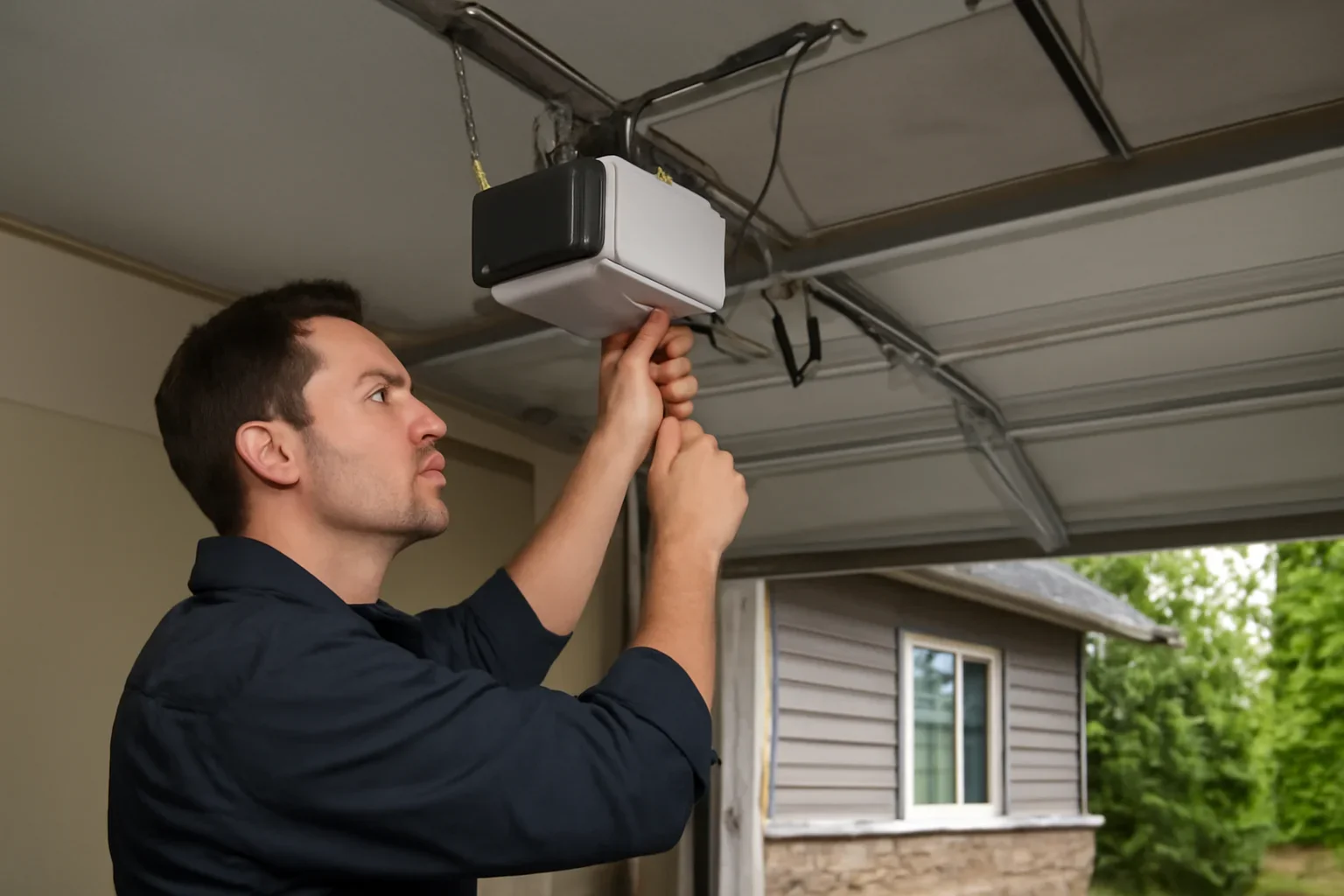
If the opener stops responding, works from only one control, reverses unexpectedly or runs without moving the door properly, start with the symptom rather than assuming the motor has failed.
A useful diagnosis checks the remote, keypad, wall control, sensors, travel behaviour and opener mechanics while also confirming that the garage door itself is balanced and moving correctly.
Start With The Behaviour
The same opener can produce very different symptoms depending on whether the problem is in a control, safety device, operator component or the physical garage door.
Note whether the wall control, handheld remote and keypad all fail or whether one still operates the door. That distinction can help narrow the control or receiver side of the problem.
The fault may involve the opener drive or trolley, but a broken spring, poor door balance or resistance in the physical door can create a similar result.
Safety-sensor alignment, an obstruction, travel settings, floor contact or resistance in the door system can all be relevant to unexpected reversal.
Describe the sound and whether the door moves when it occurs. Noise can originate from the operator, rail, drive system or mechanical resistance elsewhere in the door.
Travel settings may be relevant, but binding tracks, poor balance or another physical obstruction should not be overlooked when the stopping point changes unexpectedly.
Before Blaming The Motor
An automatic opener is intended to move a properly operating, balanced garage door. If the door is heavy, crooked or binding, the mechanical problem should be addressed instead of expecting the opener to overpower it.
If the door suddenly feels unusually heavy or you heard a loud snap, review the spring system rather than continuing to cycle the opener.
A spring or counterbalance issue can dramatically increase the load seen by the opener.
Track, roller or alignment resistance can make normal automatic operation unreliable.
Stop operating a crooked door rather than trying to solve the problem through opener adjustment.
If the door is stuck open, unstable or blocking essential vehicle access, explain that when requesting service.
Complete Opener Diagnosis
Opener repair is not limited to the motor housing. Controls, safety functions, operator mechanics and the door itself work as one operating system.
Determine whether the operator has power and whether the wall station is sending the expected command.
Compare handheld remote, keypad and wall-control behaviour to determine whether the problem is limited to one access method.
Sensor position, obstruction, wiring and indicator behaviour can be relevant when the door refuses to close or reverses.
The programmed stopping position and actual door travel should agree without forcing the door beyond its normal movement.
Trolley connection, rail condition and chain, belt or other drive components can affect movement and noise.
Springs, cables, rollers, tracks and balance should be considered where the opener strains or the door does not move smoothly.

North Vancouver Service Context
Opener diagnosis should follow the actual door and property. North Vancouver garages can sit within very different home layouts, driveway grades and access conditions.
If the garage is attached to occupied space, noise may be a larger concern. If the driveway or garage access is constrained, mention that before service. If the problem affects a strata property, clarify who is authorized to arrange the repair.
Closing & Reversal Problems
Modern residential opener systems include entrapment-protection and reversing functions. A closing problem should be diagnosed before those functions are bypassed or treated as an inconvenience.
Objects in the sensing zone can prevent normal closing. Keep the opening clear before assuming a component has failed.
A sensor or bracket that has been knocked out of its normal position can affect closing behaviour.
Damaged wiring, failed sensor components or a bracket that will not stay aligned require more than clearing an obstruction.
Binding, travel configuration or another mechanical issue can also contribute to closing and reversal problems.
Opener Repair Process
Diagnosis should narrow the problem from the observed symptom to the control, sensor, operator or door component responsible.
Explain which controls work, what lights or sounds occur, how far the door travels and whether the fault is intermittent.
Door balance and mechanical travel should be considered so a spring, cable or track problem is not misdiagnosed as a weak motor.
The appropriate next step may involve a control, sensor, opener component, setting or complete operator replacement.
Controls, closing position and relevant safety/reversal behaviour should be checked after the service is complete.
Repair Or Replace?
Not necessarily. A failed remote, keypad, sensor or serviceable operator component does not automatically justify replacing the complete opener.
A control, sensor, programming issue or serviceable operator component may justify repair when the rest of the system remains reliable and compatible with the door.
Repair the door-system issue first. A poorly balanced or binding garage door should not be solved by installing a stronger opener.
North Vancouver garage door repairReplacement becomes worth comparing when the opener has broader reliability problems, important parts are unavailable, safety functions cannot operate reliably or the existing unit no longer suits the door.
Garage door opener installationIf replacement is already being considered, compare drive type, noise priorities and other desired features against the actual garage and door configuration.
Compare chain vs belt openersWhen It Is Not The Opener
Use the opener page for motor, control, sensor and automatic-operation problems. Use the corresponding mechanical page when the door itself is clearly the problem.
A counterbalance or spring problem can make a working opener appear weak or unable to lift the door.
Spring RepairTracks, rollers, cables or another mechanical component may require attention before normal opener operation resumes.
Cable & Track RepairGeneral repair is a better starting point when several symptoms overlap or the failed component is not obvious.
North Vancouver RepairIf the door is stuck open, a vehicle is trapped or the door is unstable, route the request around the immediate safety/access issue.
Emergency RepairRepair Cost Factors
Pricing depends on the actual fault and whether the problem is contained within the opener or begins elsewhere in the garage-door system.
Before You Book
These answers focus on the symptoms most useful for separating opener, control, sensor and physical-door problems.
The problem can be within the opener or between the opener and door, but a broken spring, poor balance or another mechanical door problem can also prevent normal movement. The door and operator should be considered together before replacing the motor unit.
If the wall control still operates the door, the fault may be isolated to the remote, its battery, programming, compatibility or communication with the operator rather than the complete opener.
An obstruction, safety-sensor problem, travel configuration or resistance in the physical door can all contribute to unexpected reversal. Do not bypass a safety device simply to make the door close.
Yes. A broken or poorly matched spring can leave the door much heavier than normal. Garage-door openers are intended to automate properly balanced doors, not overcome a failed counterbalance system. See North Vancouver garage door spring repair .
Not automatically. The decision depends on which component failed, the condition and compatibility of the existing opener, whether appropriate parts remain available and whether the system still operates safely and reliably after repair.
Follow the manufacturer's instructions for the specific opener. Unexpected reversal or poor closing can also involve the physical garage door, so increasing force should not be used to overcome binding, poor balance or another mechanical problem.
Tell the service team that the property cannot currently be secured. If access, security or an unstable door makes the issue urgent, use the North Vancouver emergency garage door repair pathway.
Cost depends on the diagnosed fault, opener model, parts required and whether another garage-door component is contributing to the problem. Review the garage door pricing page and provide the opener symptoms when requesting service.
Request North Vancouver Opener Repair
Share the opener brand if known, which remote, keypad or wall control responds, any lights or sounds, how far the door moves and whether the door itself feels heavy or uneven.
