Garage Door Material Comparison

Steel vs Wood Garage Doors: Which Is Better for Your BC Home?

Steel usually makes the stronger case when lower routine upkeep, broad design choice and flexible insulated construction matter most. Real wood makes the stronger case when authentic material, natural grain and custom architectural character justify more ongoing care.

Neither material wins every category. Compare the actual door construction, finish, exposure, maintenance expectations and design of your home before deciding.

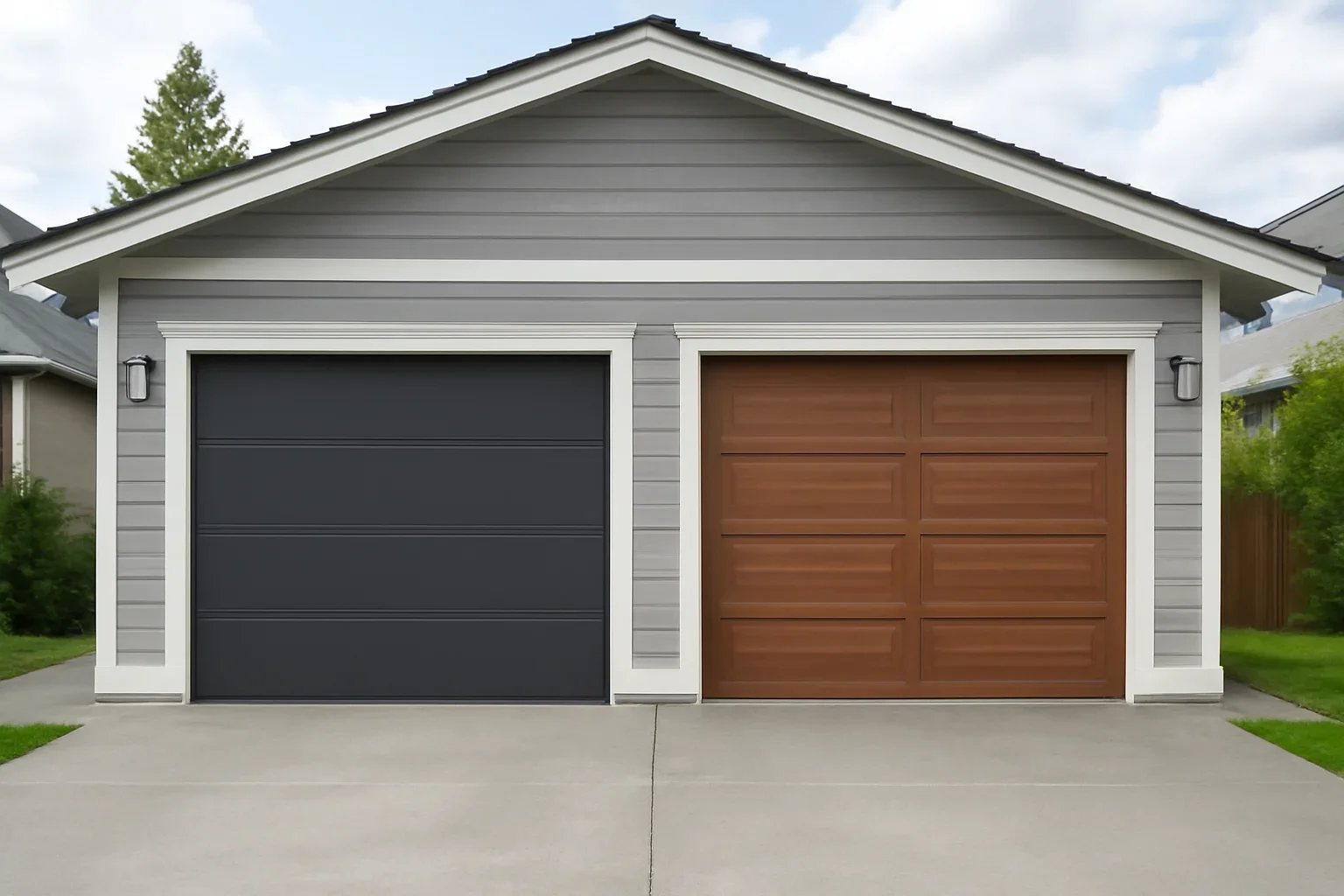
Steel vs wood garage doors comparison for BC homeowners
Lean steel when Lower maintenance and practical flexibility lead the decision.
Lean real wood when Authentic material and custom architectural character come first.
Short answer

Start With the Trade-Off You Actually Care About

Steel garage door

A practical fit for many homes

Steel is worth prioritizing when you want a broad range of styles, insulated construction options and less finish maintenance than natural wood typically requires.

  • Lower routine finish maintenance
  • Single- and multi-layer constructions available
  • Traditional, carriage and modern appearances
  • Wood-grain and wood-look finishes can expand design options
Real wood garage door

A design-first material

Real wood is worth considering when authentic grain, custom detailing and a natural material are central to the architecture and you are comfortable maintaining the finish.

  • Authentic natural variation
  • Strong custom-design potential
  • Paint- and stain-grade options exist
  • Requires recurring inspection and finish care
Side-by-side comparison

Steel vs Wood: The Differences That Matter Most

Compare complete door systems rather than assuming every steel door or every wood door performs the same way.

Decision point
Steel
Real wood
Appearance
Very broad style range, including smooth, embossed and wood-look finishes.
Authentic grain, natural variation and strong architectural character.
Maintenance
Generally lower-maintenance, but finish damage, dirt and corrosion exposure still need attention.
Needs routine inspection and may require repainting, staining or refinishing as the protective finish weathers.
Moisture
Protective finishes matter. Damaged coatings and salt exposure can contribute to corrosion.
Moisture protection is especially important because neglected wood can weather, swell, crack or deteriorate.
Impact
Steel can dent depending on gauge, construction and the force of impact.
Wood does not dent like sheet steel, although it can still be gouged, cracked or otherwise physically damaged.
Insulation
Insulated multi-layer steel constructions are widely available.
Insulated wood-door constructions also exist. Compare the actual door specification rather than the material name alone.
Weight
Construction varies, but steel is generally lighter than comparable solid natural-wood designs.
Real wood can be considerably heavier, making correct spring, track and opener matching particularly important.
Budget
Available across a broad range of constructions and price levels.
Custom real-wood construction can carry a higher initial cost and greater ongoing finish-maintenance commitment.
Best fit
Homeowners prioritizing practical upkeep, insulation options and broad design flexibility.
Design-led projects where authentic material and customization justify additional care.

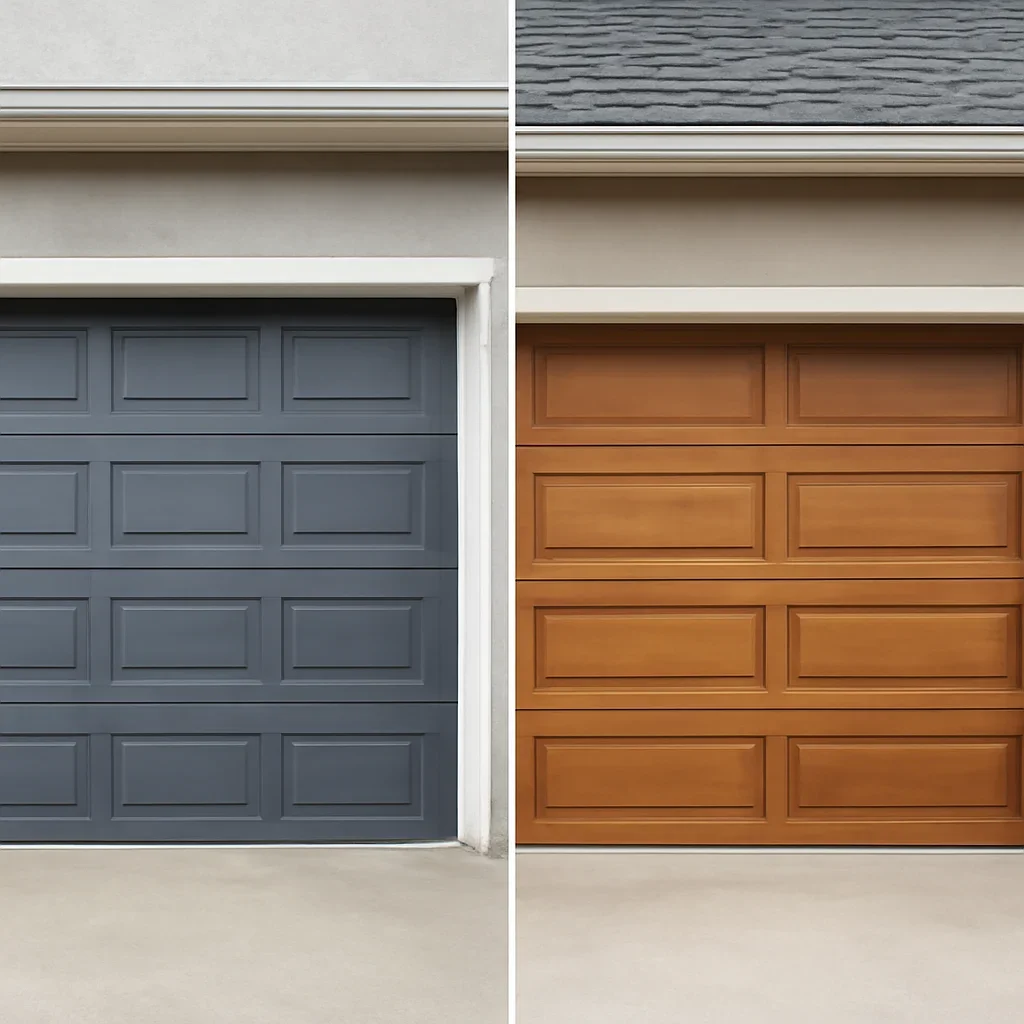
Visual comparison of steel and wood garage door materials
Compare the finished door, not just the raw material. Construction layers, insulation, finish, glazing and hardware can change the result substantially.
Material reality

What Changes When You Choose Steel or Real Wood?

Material affects maintenance and appearance, but it is only one part of the door. Panel construction, insulation, finish, windows, hardware and the operating system still matter.

01
Steel gives you a wide construction range

Steel doors can range from basic single-layer products to insulated multi-layer assemblies with finished interior skins.

02
Wood gives you authentic material character

Real species, grain, stain and custom detailing create visual depth that a printed or embossed wood-look surface is designed to imitate rather than reproduce literally.

03
Both need maintenance — just different maintenance

Steel needs cleaning and attention to finish or corrosion damage. Wood needs regular inspection of the protective finish and refinishing when weathering appears.

04
Neither material makes hardware selection irrelevant

Door weight and construction still need compatible springs, tracks, hardware and an appropriate opener.

BC exposure matters

Do Not Make the Material Decision Without Looking at the Site

A protected suburban garage and a door exposed to frequent moisture or salt air should not automatically receive the same material and finish recommendation.

Coastal exposure does not make steel or wood automatically wrong. It increases the importance of choosing an appropriate finish and following the maintenance instructions for the actual product.
01
Salt-air exposure deserves extra attention on steel

Salt is corrosive. Where a steel door sees salt air or other salt exposure, cleaning and protection of the finish become more important.

02
Persistent moisture raises the maintenance stakes for wood

Real wood depends on its protective finish. Visible weathering, coating failure or deterioration should be addressed rather than left exposed.

03
Drainage and weather seals still matter

Material choice does not replace proper perimeter sealing or sensible drainage at the garage threshold.

04
Follow the selected manufacturer's care instructions

Finishes, overlays and construction methods differ. Maintenance should follow the actual door rather than one universal rule for all steel or wood products.

Insulation comparison

Material Alone Does Not Tell You How Well the Door Is Insulated

Steel and wood doors can both be built with insulation. Compare the complete construction and the way the garage is used instead of assuming one raw material automatically wins.

Detached garage

If temperature control is not important, insulation may be a lower priority than maintenance, appearance and project budget.

Attached garage

Door construction and sealing deserve more attention where the garage adjoins conditioned living space.

Workshop or heated garage

Compare insulation, panel construction and perimeter sealing as a system rather than choosing steel or wood on appearance alone.

Noise priorities

A more substantial insulated construction can behave differently from a basic single-layer door, regardless of the exterior style.

Appearance without oversimplifying

Want the Look of Wood Without Committing to a Real-Wood Door?

Steel doors and composite-overlay systems can create wood-inspired appearances with different maintenance characteristics. That gives design-led projects a useful third path between basic steel and traditional real wood.

Steel

Prioritize practical ownership

Choose around the desired construction, insulation, colour and panel style when authentic natural material is not a requirement.

Plan a new garage door →
Real wood

Make the material part of the architecture

Real wood makes the most sense when the natural material itself is part of the design brief and the owner accepts the corresponding finish maintenance.

Explore custom-home garage doors →
Wood-look alternatives

Separate appearance from material

If the visual goal is warm wood character rather than real timber, ask about steel or composite constructions with wood-inspired finishes before narrowing the project to natural wood.

Discuss material options →
Decision shortcuts

Which Material Fits Your Priorities?

These are starting points, not universal product rules. The final choice still depends on the actual door construction and property.

Lower upkeep
Lean steel

Steel generally requires less finish maintenance than real wood, though cleaning and protection from finish damage still matter.

Authentic material
Lean real wood

If genuine grain and natural material are essential to the architecture, wood provides something a simulated finish does not.

Custom design
Compare both carefully

Wood has strong custom potential, but premium steel and overlay systems can also support highly tailored exterior designs.

Attached garage
Compare construction first

Insulation and sealing can matter more than the steel-versus-wood label when comfort or adjacent living space is important.

Coastal exposure
Compare finish + maintenance

Steel needs corrosion-conscious maintenance where salt exposure is greater; wood needs consistent protection from weather and moisture.

Wood look, less upkeep
Consider a wood-look alternative

A steel or composite construction can provide warm visual character without requiring the same finish routine as natural wood.

Steel vs wood questions

Questions to Answer Before Choosing the Door Material

Use these answers to narrow the material decision, then compare the specific door constructions available for your opening and project.

Is a steel garage door better than a wood garage door?

Not universally. Steel is usually easier to justify when lower maintenance, broad design choice and flexible insulated construction matter most. Real wood is stronger when authentic natural material and custom architectural character are priorities.

Which requires more maintenance: steel or wood?

Real wood generally requires more recurring finish maintenance. Manufacturers recommend inspecting wood regularly for weathering and refinishing when deterioration becomes visible.

Steel still needs cleaning and attention to scratches, damaged coatings and corrosion exposure, particularly where salt is present.

Which garage door material is better for coastal BC?

There is no universal winner based only on the word “coastal.” Steel finishes need protection where salt-air exposure is higher, while real wood requires consistent protection against weather and moisture.

Use the garage-door guide for coastal BC homes for the broader exposure decision.

Is wood warmer or better insulated than steel?

Do not choose based on the material name alone. Insulated multi-layer steel doors are available, and insulated wood-door constructions also exist. Compare the complete product construction and specification for the actual models being considered.

Are wood garage doors heavier than steel doors?

Real-wood doors can be considerably heavier than many steel alternatives. The actual weight depends on size and construction, so springs, tracks, hardware and the opener should be selected for the specific door rather than assumed to be interchangeable.

Can a steel garage door look like wood?

Yes. Manufacturers offer steel and composite systems with wood-grain textures, overlays and wood-inspired finishes. They can create a similar design direction while retaining different maintenance characteristics from natural wood.

Is a wood garage door always more expensive?

Avoid assuming one fixed price relationship for every door. Custom natural-wood doors often occupy higher price ranges, while steel is available across a broad range of constructions and finishes. Size, insulation, glazing, hardware, design and installation conditions also affect the project cost.

See the garage door pricing guide for the factors to compare.

What should I send when asking for help choosing steel or wood?

Share your city, property type, whether this is a new installation or replacement, approximate opening size if known, photos of the home, examples of the look you prefer, insulation priorities and how much ongoing finish maintenance you are comfortable with.

Turn the comparison into a project

Bring the Home, Opening and Maintenance Priorities Into the Decision.

Tell us whether you are replacing an existing door or planning a new installation, the style you want, your city, insulation priorities and whether your preference is authentic wood or a lower-maintenance wood-inspired alternative.

Homeowner comparing steel and wood garage door options in British Columbia

Get a Quote