Start with what changed
Describe the observable problem: uneven movement, unusual noise, visible damage, opener behaviour, poor sealing or repeated service issues.

See how different garage-door situations can lead toward repair, replacement, opener work or preventive maintenance depending on the condition of the complete system.
These are planning examples designed to explain the decision process. They are not presented as individual customer case studies or guaranteed outcomes.
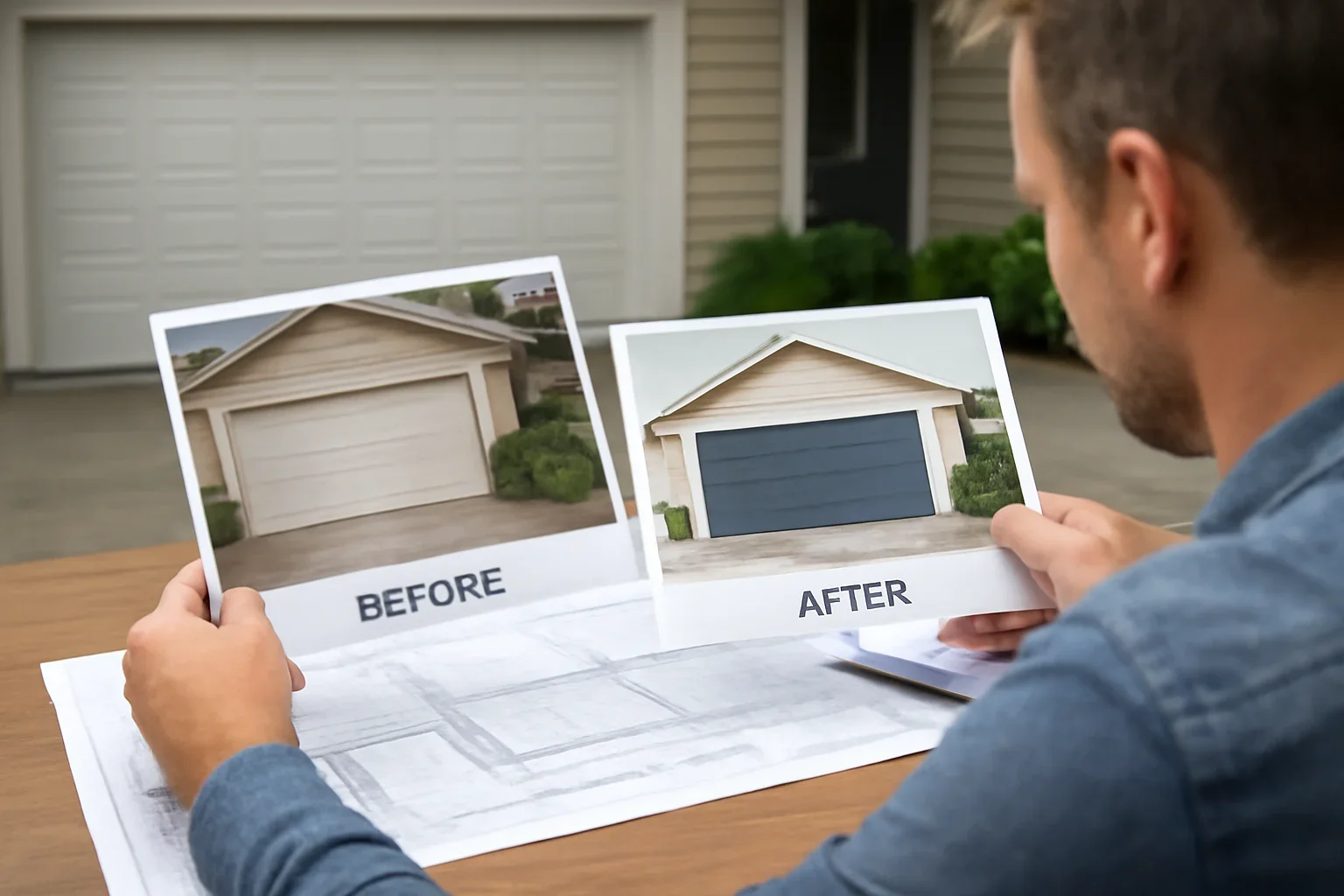
Actual garage-door recommendations depend on the condition of the door, hardware, opener, property and project requirements.
Two garage doors can make the same noise or stop in the same place and still need different work. Each example therefore separates the starting condition from what should be assessed and the decision that follows.
Describe the observable problem: uneven movement, unusual noise, visible damage, opener behaviour, poor sealing or repeated service issues.
Door panels, springs, cables, rollers, tracks, hinges, opener operation and overall balance can affect one another. A useful recommendation should not assume the first visible symptom is the complete problem.
Sometimes that means focused repair. In other situations, repeated problems, wider deterioration or changing property needs make replacement or an upgrade worth comparing.
The examples below are not diagnoses. They show which questions help separate one garage-door decision from another.
This is the type of situation where identifying the failed or worn component matters before jumping to full replacement.
The door may still open and close, but something about its operation has changed or visible hardware wear has appeared.
Springs, rollers, cables, tracks, hinges and opener operation may need to be considered before identifying an appropriate repair scope.
If the main door remains suitable and the problem is limited to serviceable components, focused repair can remain the more relevant option to evaluate.
Replacement deserves consideration when the condition of the complete door starts to matter as much as the immediate repair.
The door may have significant panel damage, recurring service issues or several areas of deterioration rather than one isolated fault.
Consider the remaining condition of the panels and hardware as well as whether appearance, insulation or everyday use should change.
The useful comparison is what each option solves, what remains unchanged and whether further repair still fits the property's needs.
An opener decision should be separated from a full-door replacement decision when the garage door itself remains appropriate.
The concern may centre on motor behaviour, controls, noise, reliability or features rather than the door panels themselves.
The door's balance, size and operating requirements should be considered before assuming the opener alone is responsible for poor movement.
Depending on the problem and existing equipment, the comparison may be opener repair versus installation of a compatible replacement system.
Not every garage-door visit needs to begin with a breakdown. Maintenance can be useful when operation has changed slightly or weather protection has deteriorated.
The door still works, but rollers may sound different, movement may be less smooth or gaps and worn weather stripping may be visible.
Moving hardware, tracks, door balance, seals and opener operation can be reviewed before smaller issues become more disruptive.
When the overall system remains suitable, maintenance and selected component replacement may be more relevant than redesigning the entire garage-door system.

The symptom is only one input. The condition of the rest of the system and what you want from the garage can change which option deserves consideration.
One worn component is different from several damaged or deteriorated parts.
Panel condition, hardware condition and previous problems all influence whether a targeted repair still makes sense.
A first isolated failure and a pattern of repeated service needs should not automatically lead to the same decision.
Attached living space, daily access, storage, opener noise and comfort priorities can change what matters in the finished system.
Reliability, appearance, insulation, sealing or opener operation may turn a simple repair conversation into a broader upgrade decision.
Project examples are useful for orientation. Comparison and service pages provide the more detailed information needed for a specific choice.
Compare what each path addresses before treating replacement as the automatic answer to every failure.
Door material Steel vs Wood Garage DoorsCompare material considerations when the project has moved beyond repair and into product selection.
Opener decision Chain vs Belt OpenersCompare drive-system considerations when replacing or upgrading a garage door opener.
Project cost Garage Door PricingUnderstand the scope, parts, configuration and product choices that can affect project pricing.
BC conditions Doors for Coastal HomesExplore product considerations where coastal exposure and property conditions influence the selection process.
Local service Find Your Service AreaMove from a general project example to the garage-door pages created for your community.
When real BC Garage Doors projects are published here, they should provide enough factual context to be useful rather than functioning as anonymous marketing stories.
Residential, strata, commercial, renovation or other relevant property context.
What was actually wrong or what the owner wanted to change before work began.
The relevant factors that led toward repair, replacement, installation or another service.
Specific components, door configuration or opener work without vague claims about an undefined “upgrade.”
Before, during or completed-project images tied to the actual project where publication permission exists.
Describe what was resolved or changed without inventing savings, performance improvements or customer reactions.
These answers help translate the examples above into a sensible next step for your own garage door.
The examples on this page are illustrative project scenarios. They explain how different repair, replacement, opener and maintenance decisions can be framed without presenting invented customers, locations or outcomes as completed projects.
Start by identifying whether the problem is isolated or part of wider deterioration. If the main door remains suitable and a serviceable component is responsible, repair may remain the more relevant option. If several problems are accumulating, use the repair vs replacement guide to compare the larger decision.
Not automatically. The decision depends on the extent and location of the damage, the condition of the remaining door and whether an appropriate panel solution is available. Review garage door panel replacement before assuming the entire door has to be replaced.
Potentially, yes. The condition and balance of the garage door and compatibility with the proposed opener need to be considered independently from whether the door itself requires replacement. See garage door opener installation for the dedicated path.
No. Noise can come from different components and may indicate wear, adjustment needs or another mechanical issue. Maintenance is useful for inspection and routine upkeep, but a specific fault may require garage door repair.
Not by itself. Insulation is one consideration, but the complete door construction, weather sealing, installation and how the garage is used also matter. Product selection should be based on the complete project rather than one specification alone.
Describe what the door is doing, visible damage, opener behaviour, property type and location. Photos of the complete door and visible problem can also provide useful context. You can send those details through the service request page.
Start with the symptom, visible condition and what you want the garage to do better. You do not need to decide on repair or replacement before discussing the project.