Broken, stretched or displaced springs
A suddenly heavy door, a loud snap, uneven lifting or a visible spring gap can point toward spring-system trouble.
Spring repair information
Start with what the garage door is doing. This support hub helps you narrow common symptoms, understand what is safe to check, and move into the right repair, opener, spring, maintenance or planning page.
You do not need to diagnose the failed component before requesting service. Symptoms are often more useful than a guessed part.
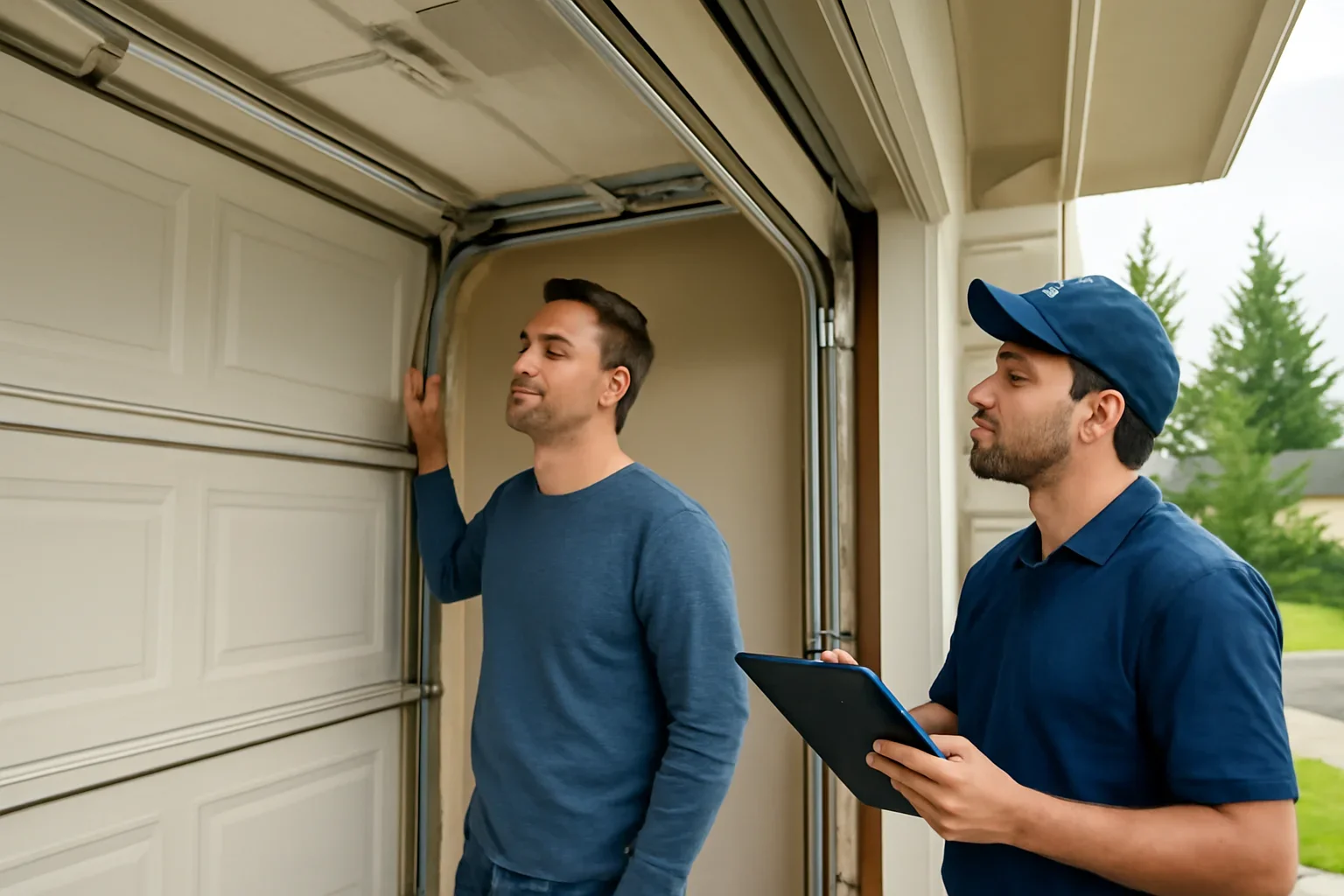
If the door is off-track, a spring or cable appears broken, the door is hanging unevenly, or movement is unstable, avoid mechanical adjustment and use the appropriate repair path.
The same symptom can have more than one cause. Use these paths to narrow the type of help you need rather than trying to identify the exact failed part yourself.
Keep first checks observational and simple. If the door itself looks damaged, unstable or unusually heavy, stop there rather than turning troubleshooting into a mechanical repair.
Check whether the opener has normal power and whether other garage electrical items appear to be working.
A wall control, keypad or second remote can help distinguish a single-control problem from a broader opener issue.
Check the door opening and travel area for an object that is visibly preventing normal movement.
If closing is the problem, check whether something is blocking the sensor path or whether a sensor has obviously been moved.
Note whether the door is level, whether a spring has a visible gap, whether a cable is loose, or whether a roller or track appears displaced.
Springs and cables work with the door's lifting system and can be under significant tension. Visible damage is useful information for a service request, but not an invitation to adjust those components yourself.
A suddenly heavy door, a loud snap, uneven lifting or a visible spring gap can point toward spring-system trouble.
Spring repair informationIf cables appear loose or the door is visibly leaving its normal track position, avoid trying to pull the system back into place under load.
Cable, roller & track repairThe Support hub is the starting point. Use the deeper resource that matches the question you are trying to answer.
Use symptom and service resources when something is wrong with the way the garage door moves, closes or responds.
Use these resources when the question is no longer simply “what broke?” and has become “what should I do next?”
Use the service and location directories when you know the type of work or need the page built around your service area.
A working diagnosis is only part of the decision when the garage door is damaged, older, repeatedly troublesome or no longer meets the property's needs.
Compare what a focused repair addresses with what would change under a complete replacement.
Door ReplacementStart here when the condition of the complete door has become part of the decision.
New InstallationUse the installation page for a new door where dimensions, design, insulation and hardware need to be planned together.
PricingUnderstand the scope and project variables that can change repair, installation and replacement pricing.
Warranty InformationReview the site's current warranty information when coverage is part of your service or product decision.
Technical terminology is not required. Clear observations usually provide a better starting point than guessing which component has failed.
Use these answers to decide which service path fits. The full FAQ page covers additional garage-door questions.
Start with simple observations: confirm the opener has power, try another available control and check for an obvious obstruction. Then look at the door itself. If it is crooked, unusually heavy or has a visibly broken spring or cable, stop troubleshooting and use the appropriate garage door repair path.
Reversing can involve the safety-sensor area, an obstruction, opener settings or resistance in the door itself. Clear an obvious obstruction and observe the sensor area, but do not simply increase opener force to overcome a door that binds or sticks. Start with garage door opener repair if the cause remains unclear.
You may not be able to tell from one symptom alone. Note what the opener does, what the door does and whether there is visible mechanical damage. The opener can be functioning while the door has a balance or hardware problem, so avoid assuming the motor is always the cause.
Noise alone does not identify the cause. It can accompany routine wear as well as roller, track, spring, hardware or opener problems. If the noise is new and the door also moves unevenly, becomes heavy or shows visible damage, stop repeatedly operating it and use the repair page.
Spring systems can store substantial mechanical energy. This Support page is designed to help you identify the symptoms, not instruct you to wind, release or adjust springs. Use the dedicated garage door spring repair page for the correct service path.
Avoid forcing an unstable or visibly displaced door through another opening or closing cycle. Off-track movement can involve rollers, tracks, cables or balance problems. Use the cable, roller and track repair page.
Compare the two when the decision extends beyond one serviceable component, particularly where significant door damage or repeated problems are involved. The repair vs replacement guide is designed for that question.
Tell us what happens when you operate the garage door, whether access is currently blocked, what you can see, and your location. That is enough to start a more useful service conversation.