
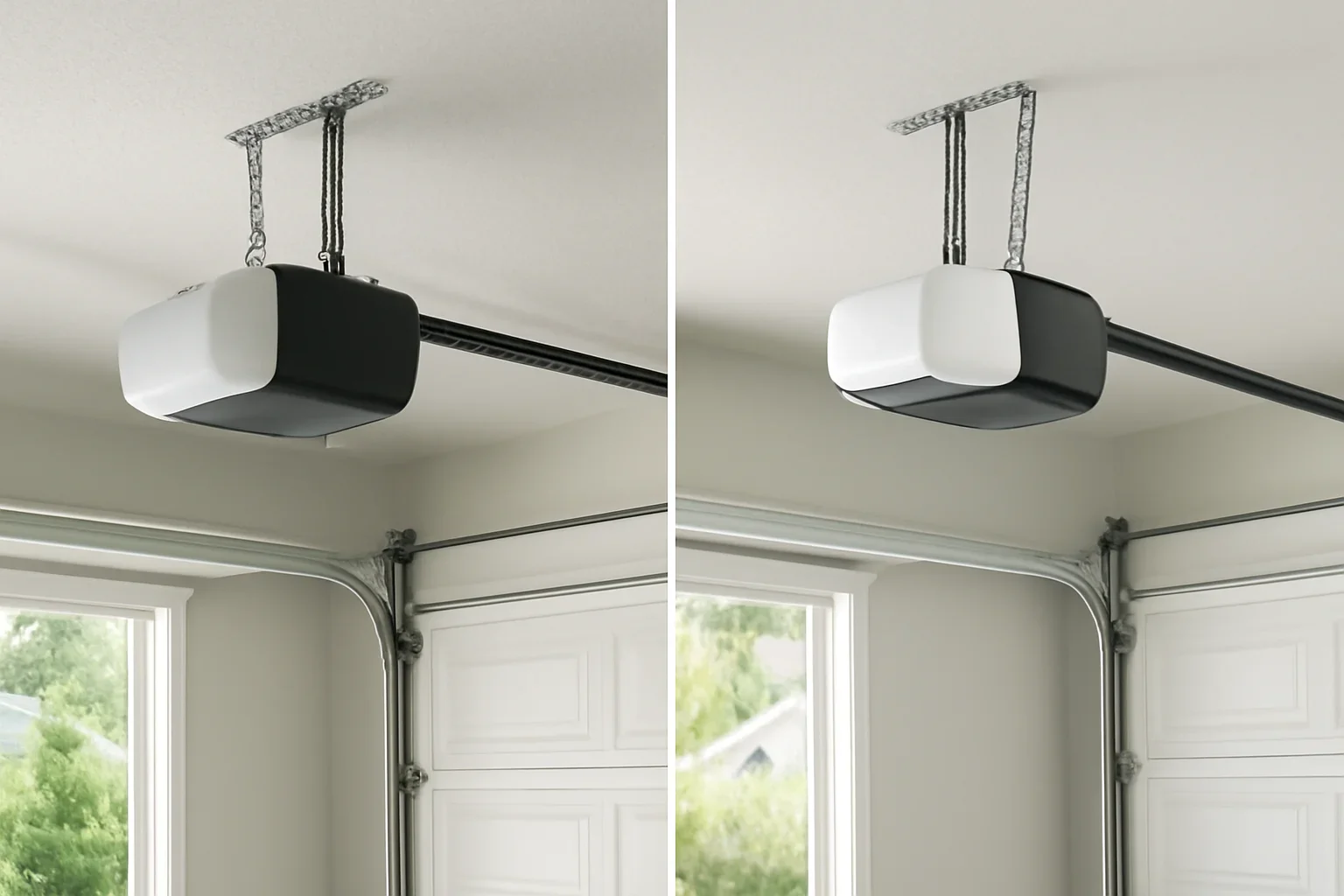
Garage Door Opener Comparison

Chain vs Belt Garage Door Openers

Belt-drive openers are usually the stronger starting point when quiet, smooth operation matters most. Chain-drive openers remain a durable, conventional choice when operating noise is less important and value is a higher priority.

Drive type is only one decision. Door size and condition, lifting requirements, garage layout, motor design, battery backup and smart features also need to match the actual installation.

  • Noise and room placement
  • Budget and everyday use
  • Door and opener compatibility
  • Smart and backup features
Chain vs belt garage door opener comparison for BC homeowners
Quick Answer
Which is better: a chain or belt garage door opener?

Choose belt drive when reducing garage-door opener noise and vibration is a major priority, particularly around attached living space. Consider chain drive when you want a durable, familiar drive system and quieter operation is less important. Then compare the individual opener models for lifting capability, controls, battery backup and other features.

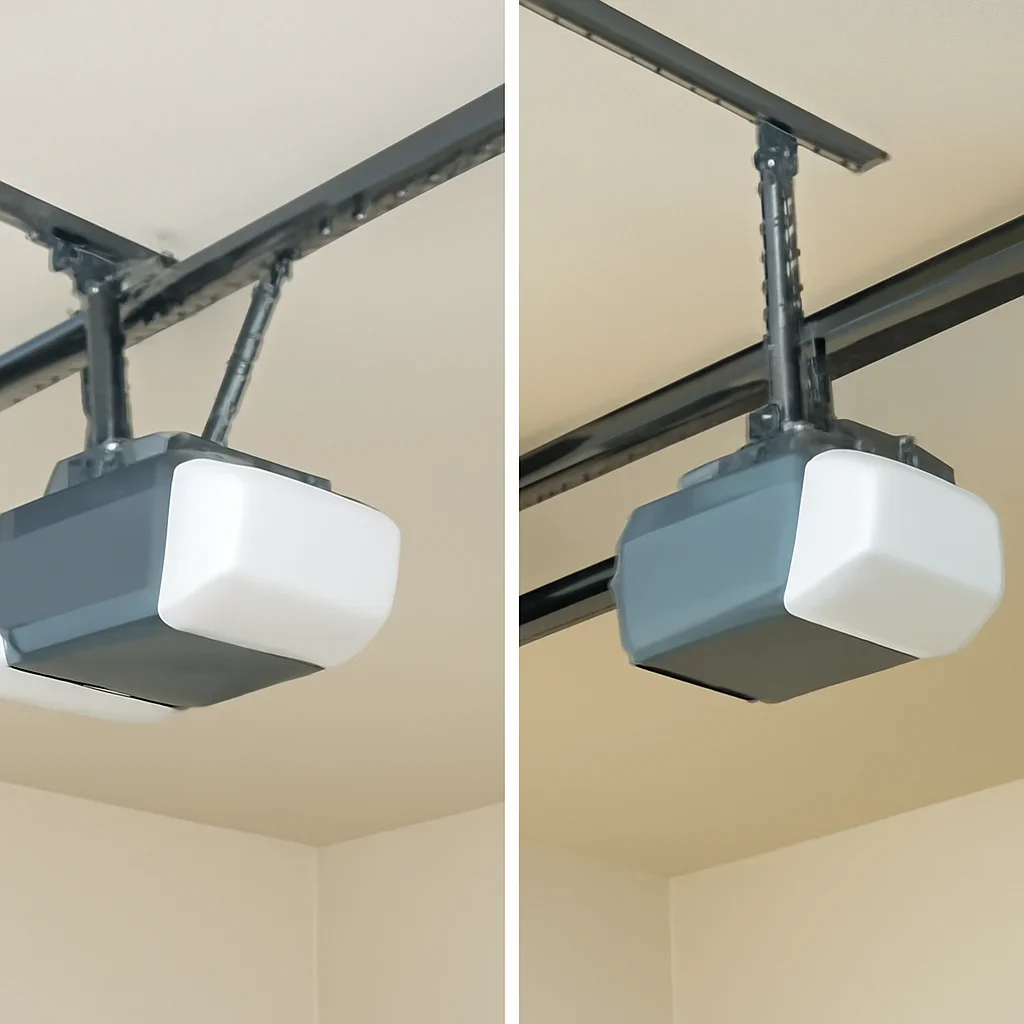
Visual comparison of chain and belt garage door opener options
Side-by-Side Comparison

Start with the differences that affect daily use.

Chain and belt openers perform the same basic job through different drive systems. Noise is usually the clearest distinction, while features and lifting capability need to be compared at the model level.

Drive
Belt drive

Uses a reinforced belt to move the trolley along the opener rail.

Chain drive

Uses a metal chain to move the trolley along the opener rail.

Noise
Belt drive

Usually the preferred option where quieter, smoother operation is a priority.

Chain drive

Typically more audible during operation, which may matter less in a detached or isolated garage.

Typical fit
Belt drive

Worth prioritizing around bedrooms, living space or households sensitive to garage noise.

Chain drive

A practical conventional choice when dependable operation and value matter more than minimizing sound.

Smart features
Belt drive

Available on compatible models with Wi-Fi, app control, lighting and other current features.

Chain drive

Also available with smart controls and other features on compatible current models.

Battery backup
Belt drive

Available on selected opener models rather than being standard to every belt opener.

Chain drive

Also available on selected models, so backup power is not exclusive to belt drive.

Lift requirement
Belt drive

Choose the actual opener model to suit the door rather than judging lifting ability from belt drive alone.

Chain drive

Likewise, drive type by itself does not determine the correct motor or lifting specification.

Choose by Priority

When does each drive system make more sense?

Neither design wins every garage. The useful choice depends on where the garage sits, how much the sound matters and which specific opener models meet the rest of your requirements.

Belt Drive

Belt drive may be the better fit when…

Your priority is reducing operating noise and vibration while keeping the familiar ceiling-mounted trolley-opener layout.

  • The garage is attached to the home.
  • There is a bedroom or living area above or beside the garage.
  • Early-morning or late-night garage use makes sound more noticeable.
  • Smooth, quiet daily operation is a major purchase priority.
  • A compatible belt-drive model offers the other features you need.
Chain Drive

Chain drive may be the better fit when…

You want a conventional, durable drive system and the extra operating sound is less important in the way the garage is located and used.

  • The garage is detached or separated from quiet living areas.
  • Opener noise is not a major household concern.
  • Value is an important part of the purchase decision.
  • You prefer a familiar chain-driven trolley system.
  • A compatible chain-drive model meets the door and feature requirements.
Three Decisions to Keep Separate

Do not ask the drive system to answer every opener question.

Belt versus chain tells you how a standard trolley opener moves. It does not, by itself, settle the correct lifting specification, smart features or compatibility with the garage door.

01 · Lift

Drive type is not lift power.

The opener model still needs to suit the door's dimensions, construction and operating requirements. Do not choose chain simply because you assume it automatically means more lifting capacity.

02 · Features

Smart does not mean belt.

Wi-Fi, smartphone controls, lighting, cameras and other connected functions are model features. They can appear across more than one drive category.

03 · Backup

Battery backup is model-specific.

Selected belt, chain and wall-mounted opener models can include backup power. Decide whether that feature matters, then confirm it on the exact opener being considered.

Compare the Actual Models

After drive type, compare the features you will actually use.

Two belt openers can differ substantially from each other, just as two chain openers can. Narrow the drive preference first, then compare the complete opener specification.

Explore Smart & Integration Options
Wi-Fi / app control

Confirm built-in connectivity and the exact app or smart-access functions on the opener model being considered.

Battery backup

Decide whether powered access during an outage matters to the household, then choose a model that includes or supports the required backup configuration.

Lighting

Compare how the garage is used at night and whether built-in opener lighting is an important part of the installation.

Remotes & keypad

Consider how household members enter the garage and which compatible remotes, wireless keypads or other controls are needed.

Safety devices

The installed system needs the applicable safety sensors and reversing functions required by the opener rather than treating them as optional convenience features.

A Third Option

What if neither chain nor belt solves the real problem?

Chain and belt are common trolley-opener choices, but some garages are better evaluated around a wall-mounted opener. The attraction is different: moving the opener beside the door can free ceiling space and reduce overhead equipment where the door system is compatible.

Ceiling storage

A wall-mounted configuration may be useful when keeping the centre of the garage ceiling clear is a project priority.

Lighting & ceiling design

Moving the opener rail away from the centre can simplify some lighting, ceiling-storage or finished-garage layouts.

Quiet operation

Current wall-mount product families are also positioned around quiet operation, making them another option when sound matters.

Compatibility

Wall mount should not be assumed to work with every garage-door configuration. The actual door, shaft, clearances and opener requirements need to be checked.

Before Buying an Opener

Make sure the garage door itself is ready for a new operator.

A new belt or chain opener should not be used to overpower a door that is mechanically binding, unusually heavy or otherwise in poor operating condition.

Existing Opener Not Working?
01
Door movement

Identify binding, crooked travel, damaged rollers or other mechanical problems before treating the opener as the solution.

02
Balance and counterbalance

If the door is unusually heavy or its spring system is not supporting it properly, address that mechanical condition separately.

03
Door height and rail

Door height can affect the rail or extension configuration required for a trolley-style opener.

04
Ceiling and side space

Check whether the garage layout favours a conventional trolley system or deserves consideration of a compatible wall-mounted configuration.

05
Electrical and connectivity needs

Power location and, for connected models, usable Wi-Fi coverage can be part of installation preparation.

Choose Without Guessing

A five-step chain-vs-belt decision.

Noise is a good starting point, but the final choice should match the door, garage and feature requirements together.

01 · Listen

Decide how much noise matters

Consider whether bedrooms or living spaces are attached to the garage and when the door is commonly used.

02 · Inspect

Check the door

Confirm the garage door itself operates appropriately before choosing an opener intended to automate it.

03 · Measure

Review the garage layout

Door height, ceiling space, headroom and side clearance help determine the compatible opener configuration.

04 · Select

Compare actual models

Once belt or chain is preferred, compare lifting requirements, controls, lighting, backup power and smart functionality.

05 · Install

Match the complete system

Finalize the opener with the door, rail, controls and applicable safety devices considered as one installed system.

Pricing Factors

Do not compare opener price from drive type alone.

A basic chain opener and feature-rich belt opener are not equivalent specifications. Compare the complete product and installation scope.

01
Opener model

Drive type, motor design and product series all affect what is included.

02
Door requirements

Door dimensions, construction and compatible lifting requirements affect which opener models are suitable.

03
Backup & connected features

Battery backup, Wi-Fi, cameras, enhanced lighting and other features can change the opener specification independently of belt or chain.

04
Rail and garage configuration

Door height and installation layout can affect the rail or other hardware required.

05
Existing-door problems

Mechanical garage-door repairs should be separated from the cost of installing a new opener when both are required.

Common Buying Mistakes

Four shortcuts that weaken the chain-vs-belt decision.

The drive system matters, but treating it as a shortcut for power, smart features or door condition can lead to the wrong opener comparison.

01 Assuming chain automatically means stronger

Compare the actual opener's lifting specification and the garage door it needs to operate instead of using the drive material as a power rating.

02 Assuming smart features require belt drive

Connected controls, battery backup and other features are available across multiple current opener categories.

03 Ignoring the room above the garage

Noise that seems unimportant while standing in the garage can matter much more when a bedroom or living area shares the structure.

04 Using a new opener to hide a door problem

A different motor or drive system should not be expected to correct binding, serious imbalance, track damage or another mechanical fault in the door itself.

Opener Comparison Questions

Chain vs belt garage door opener FAQs

Direct answers to the practical questions that matter before choosing a new garage door opener.

Is a belt or chain garage door opener better?

Neither is automatically better for every garage. Belt drive is usually preferable when quieter operation is a major priority. Chain drive remains a durable, conventional option where noise matters less and value is an important consideration.

Which garage door opener is quieter: chain or belt?

Belt drive is generally the quieter choice. It is particularly worth considering when the garage shares walls or ceilings with bedrooms or other living space.

Is chain drive better for a heavy garage door?

Do not choose drive type alone based on door weight. Lifting capability is a separate opener specification, and the garage door should also be properly balanced and operating correctly. Choose a compatible opener model for the actual door.

Can chain-drive garage door openers have Wi-Fi?

Yes. Current chain-drive opener models can include Wi-Fi and smartphone-control functionality, just as belt-drive models can. Compare smart features on the specific product rather than assuming they belong to one drive type.

Can both chain and belt openers have battery backup?

Yes. Battery-backup capability is available on selected current chain and belt opener models. It is also available in some wall-mounted product families. Confirm the feature on the exact opener being considered.

Is belt drive worth considering for a bedroom above the garage?

Yes. Reducing operating noise and vibration is one of the main reasons homeowners compare belt drive where bedrooms or other living spaces are close to the garage.

Should I consider a wall-mounted opener instead?

It can be worth comparing when freeing ceiling space or reducing overhead equipment is important. Compatibility depends on the garage door and available side clearances, so include it in the opener installation assessment rather than assuming it fits every garage.

What if my current opener is noisy but used to be quiet?

A new noise does not necessarily mean you need a different drive type. The opener or garage door may have a repair or maintenance issue. Start with garage door opener repair when an existing system has recently changed behaviour.

Choose the Opener Around the Garage

Tell us what matters more than the words “chain” or “belt.”

Share the garage layout, whether living space is nearby, the door size if known and which features matter most. That makes it easier to narrow the drive type and the actual opener model together.

  • Noise priority
  • Door size and condition
  • Garage and ceiling layout
  • Smart and backup features
Homeowner comparing chain and belt garage door opener options in British Columbia

Get a Quote