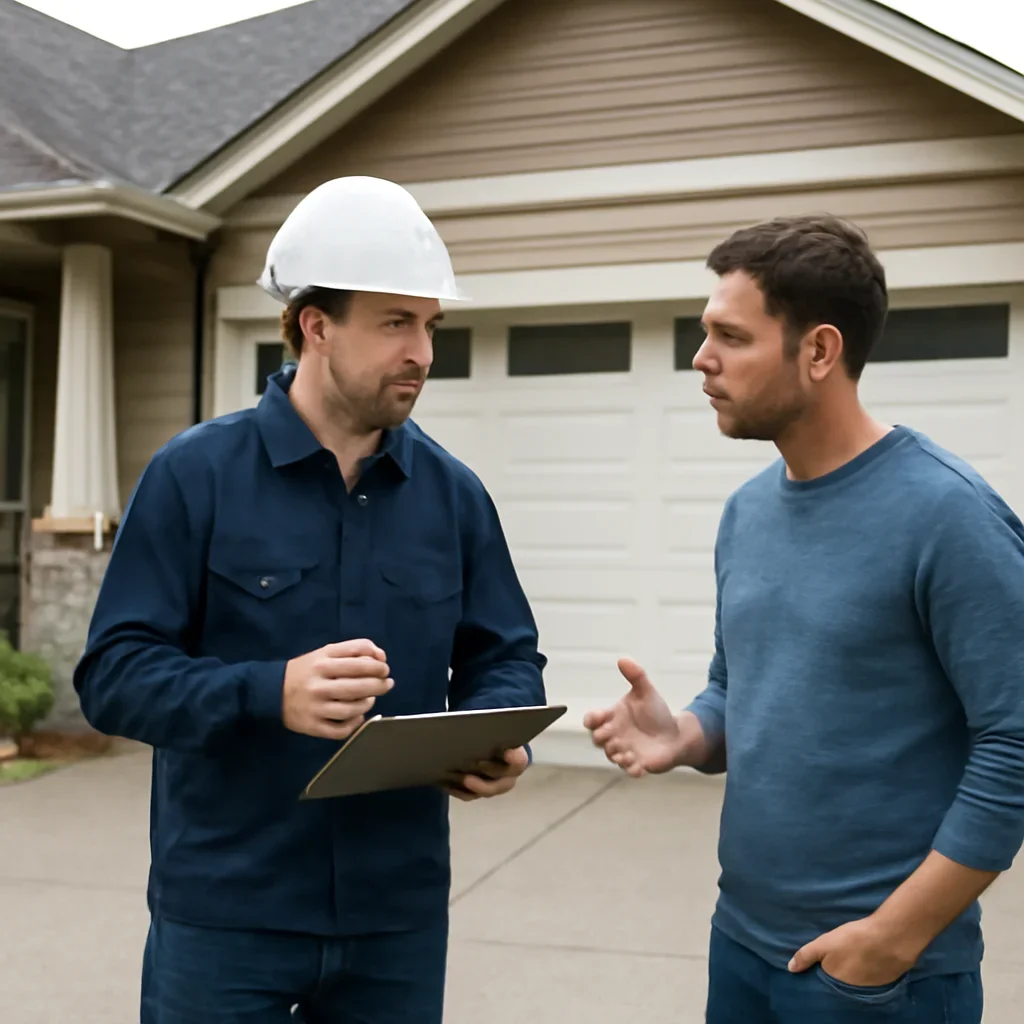
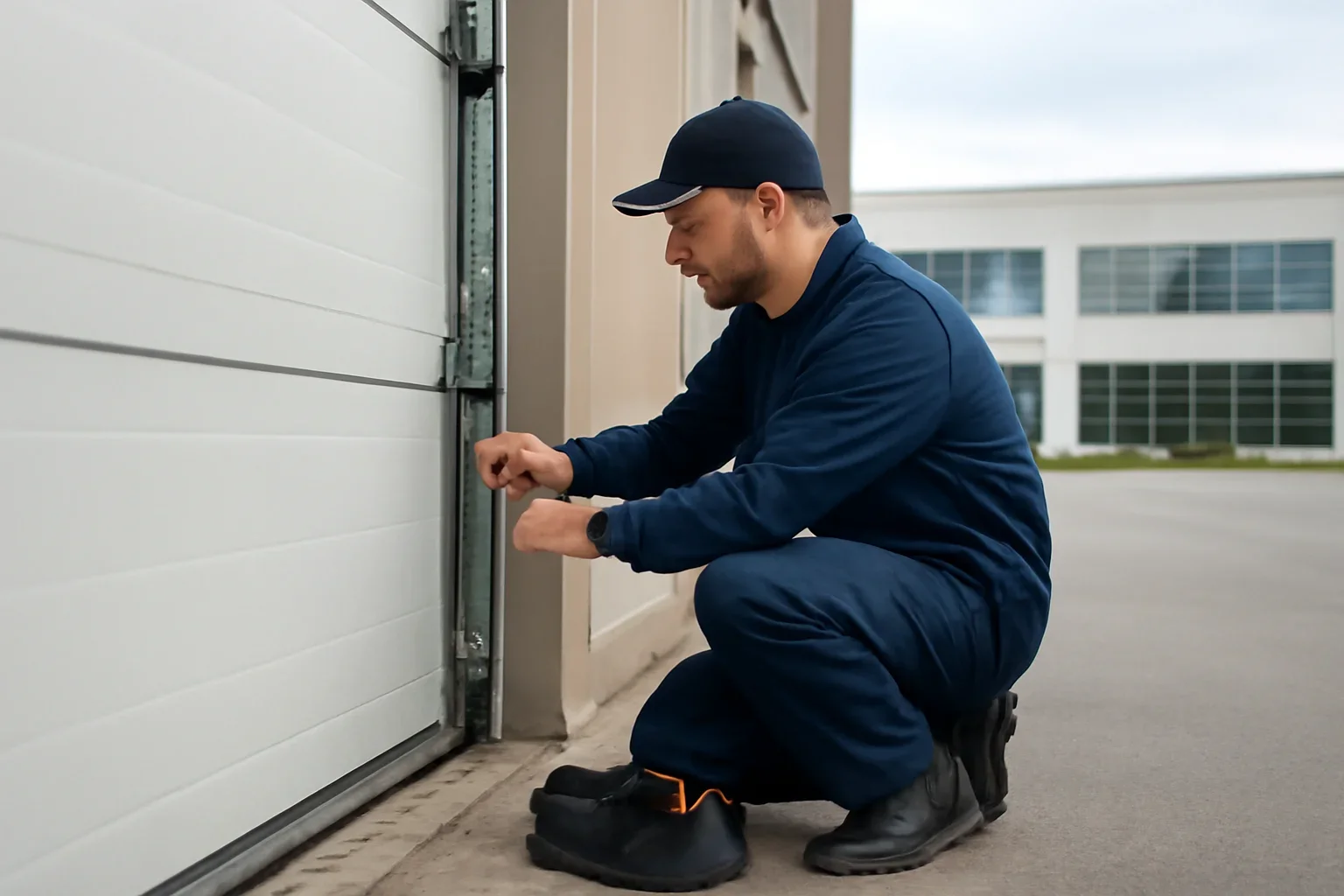
Report where the door stops, whether movement is uneven, and whether normal access through the opening is affected.
Commercial Door Service
Commercial Overhead Door Repair in BC
When an overhead door affects vehicle movement, building access, security or day-to-day operations, the repair conversation needs to start with the site as well as the door.
Tell us what type of overhead door is involved, what changed, whether the opening can still be used safely, and how the failure is affecting the property. You do not need to diagnose the failed component before reaching out.
- Door and operator symptoms
- Access and security impact
- Usage and site coordination
- Repair vs follow-up planning
What is the door interrupting?
Access
Vehicles or normal building movement
Security
The opening cannot be secured normally
Operations
A frequently used door is unreliable
Safety
The door is unstable or moving abnormally
Start with the condition
When is commercial overhead door repair the right service?
Repair is the right starting point when an existing overhead door or operator is no longer functioning normally and the immediate need is to identify and address the fault.
Track, roller, cable, spring or other door-system problems may be involved when travel becomes uneven or unstable.
Controls, safety devices, operator components or the door itself can affect powered operation, so the symptom needs to be separated before assuming the motor is the only issue.
Impact can affect sections, tracks, rollers and other components even when the visible damage appears concentrated in one area.
When the same door is requiring repeated attention, the immediate repair and the longer-term repair-versus-replacement decision should be considered separately.
Why commercial is different
A commercial overhead door is part of an operating site.
The same mechanical failure can have a very different impact depending on how often the door operates, who uses the opening and what business activity depends on it.
Identify the overhead-door configuration rather than assuming every commercial door uses the same tracks, counterbalance system or operator.
Approximate daily use matters because commercial operator and door requirements can differ substantially between low-use and frequently cycled applications.
Explain whether vehicles, staff, tenants, customers or other users normally move through or near the opening.
Say whether the failed door leaves inventory, parking, work areas or another part of the property unable to secure normally.
Restricted approach space, gated access, parkades, tenant areas or other site rules can affect how service needs to be coordinated.
A property manager, facilities contact, owner, tenant representative or another authorized site contact may need to coordinate access and decisions.
Before repair
Take an unstable overhead door out of normal traffic.
A commercial opening can sit directly in a vehicle or pedestrian route. If the door is visibly unstable, off-track or has damaged lifting hardware, continuing normal traffic through the opening can create additional risk.
Do not keep cycling an unstable door
If the door becomes crooked, leaves its normal track path or moves unpredictably, stop treating repeated operator cycles as troubleshooting.
Do not adjust springs or cables casually
Commercial lifting systems can contain loaded counterbalance components. Visible damage is useful service information, but tension adjustments belong in the appropriate repair process.
Follow the facility's own safety procedures
Restrict normal use of an unsafe opening and follow the site's established access-control, equipment-isolation and workplace procedures where applicable.
Specialty-door note:
commercial sites can use sectional doors, rolling doors and other specialized systems. If the opening is a fire-rated, high-performance or another specialty assembly, identify that when requesting service rather than assuming a general overhead-door repair applies.
Narrow the repair
What part of the commercial door system is causing trouble?
The operational symptom may point toward the door, counterbalance hardware, tracks or powered operator. The service scope should follow the actual system rather than the first visible symptom alone.
Damage, loose hardware or problems at hinges and door sections can affect how the complete door travels.
Binding, uneven travel or displaced rollers can point toward track alignment, hardware wear or impact-related damage.
Springs, cables and related lifting components affect the effective weight and balance of the door and require appropriate inspection when operation changes.
Motor response, controls, operating limits and applicable safety devices may need to be considered separately from the physical door.
A collision can create both visible section damage and less obvious changes to tracks, rollers, hardware or door alignment.
Commercial repair planning
What information shapes the repair plan?
Commercial service needs enough information to understand both the mechanical condition and the consequences of taking the opening out of normal use.
Clarify the operational problem
Establish whether access, security, vehicle movement or normal site activity is currently affected.
Identify the system
Document the door type, approximate size, current position, visible damage and any available manufacturer information.
Describe powered operation
If the door is motorized, include what the operator and controls do when a normal opening or closing command is given.
Plan access & coordination
Identify the site contact, access restrictions and times when the opening or surrounding area can be assessed safely.
Separate repair from follow-up work
Address the active fault first, then identify maintenance, replacement or other planning that should be considered separately.
Active repair or planned care?
Repair and preventive maintenance solve different problems.
A door that is already failing needs a repair assessment. Maintenance is most useful while the system is still functional and the goal is to inspect wear before it creates a larger interruption.
Use commercial repair when…
An active problem is already changing normal door operation or the way the site can use the opening.
- The door cannot complete normal travel.
- The opening cannot secure properly.
- The door is crooked, binding or unstable.
- The operator or controls are unreliable.
- Impact or component damage is visible.
Use maintenance planning when…
The door still operates but a facility wants to inspect wear and maintain the system before a specific failure becomes disruptive.
- Operation is generally normal.
- Usage is frequent and wear needs monitoring.
- Noise or movement has begun to change slightly.
- Hardware and safety-related functions need review.
- Maintenance is being planned across managed property.
Longer-term reliability
When should replacement enter the conversation?
A commercial failure does not automatically mean the whole door needs replacement. Compare replacement when the repair is no longer an isolated issue.
Repeated failures
Several substantial repairs over time can justify reviewing whether the current door still fits the operational requirement.
Wider deterioration
Problems across sections, tracks, hardware or other major components can make the decision broader than one failed part.
Changed usage
A door originally suited to lighter use may no longer fit the way the opening is being used today.
Operator or system mismatch
Door size, weight, operating frequency and operator requirements should work as a system rather than being evaluated independently.
Planned property improvements
Security, access, insulation, controls or another property requirement may make a planned replacement worth comparing with further repair.
Managed & multi-user properties
Site contact
Users
Operating window
Building responsibility
Commercial repair often involves more than one decision-maker.
Access permissions, building operations and communication can matter as much as the technical repair when the door serves a managed or shared property.
Identify who can provide access, explain the failure and authorize the relevant work.
Explain who normally uses the opening and whether an alternate route is currently available.
Mention known access restrictions or business hours that affect when the opening can be taken out of normal use.
On strata or managed properties, confirm who is responsible for approving and coordinating the repair before assuming an individual occupant can authorize changes.
Commercial repair pricing
What affects the cost of commercial overhead door repair?
A meaningful price depends on the door, operator and actual fault. The commercial label alone does not determine the repair scope.
Door type and size
Configuration, dimensions, construction and hardware affect the parts and work involved.
Failed components
A track or roller issue, counterbalance problem, operator fault and impact-damaged door are different repair scopes.
Operator involvement
Powered commercial doors can add motor, control and safety-device considerations beyond the mechanical door.
Extent of damage
One failed component differs from an impact or mechanical failure affecting several parts of the door system.
Site access and coordination
Restricted access, occupied work areas and other site conditions can change how the repair needs to be planned.
Before requesting commercial service
What information helps narrow an overhead-door repair?
You do not need a technical diagnosis. Clear information about the door, property and operational impact is more useful than guessing which component failed.
-
Property and opening Describe the type of commercial or managed property and where the overhead door sits within the site.
-
Current door position Say whether the door is open, closed, partially open, crooked, stuck or still operating intermittently.
-
Operational impact Explain whether vehicle movement, staff access, tenant use, security or another normal activity is affected.
-
Door and operator information If safely visible, share manufacturer/model information, approximate dimensions and any label on the commercial operator.
-
Approximate usage Explain whether the opening is used occasionally, throughout the workday or at another recurring frequency.
-
Photos If safe, include the full door, visible damage, tracks and operator without entering beneath an unstable door or moving loaded components.
-
Site contact and location Include the city and the person who can coordinate property access and answer operational questions.
Useful distinction
Urgent failure or planned service?
If the door cannot secure the property, blocks essential access or appears unstable, make that clear in the request. Current timing still needs to be confirmed for the specific site and problem.
Commercial Door Questions
Commercial overhead door repair FAQs
Direct answers for facilities, property and business contacts trying to choose the right commercial door service.
When should I request commercial overhead door repair?
Use commercial repair when an existing overhead door or operator is no longer functioning normally. Common starting points include a stuck or binding door, unreliable powered operation, track or roller problems, impact damage, unusual balance or a door that can no longer secure the opening properly.
What should we do if the commercial door is off-track or unstable?
Take the opening out of normal traffic where practical and follow the facility's established workplace procedures. Avoid repeatedly operating a visibly unstable door or adjusting loaded spring and cable components while waiting for the condition to be assessed.
Does the number of times the door opens each day matter?
Yes. Commercial doors and operators can be selected around different duty requirements, so approximate operating frequency is useful when assessing whether the existing door/operator setup still suits the application.
How do I know whether the problem is the door or the operator?
One symptom can involve either or both systems. Describe what the physical door is doing and what happens when the commercial operator receives a normal command. Do not assume a larger motor or operator repair will correct a door that is mechanically binding or unbalanced.
Do you repair every type of commercial or industrial door?
Commercial sites use different door systems, including sectional and specialty configurations. The information supplied for this page does not establish service coverage for every rolling, fire-rated, high-performance or specialized industrial door. Identify the door type when requesting service so the appropriate scope can be confirmed.
When should a commercial overhead door be replaced instead of repaired?
Replacement becomes worth comparing when problems are no longer isolated, substantial deterioration affects several parts, failures keep recurring or the existing system no longer suits the site's usage. See the repair vs replacement guide for the broader decision.
Can property managers coordinate commercial garage-door service?
A property manager can be the relevant coordination contact when they have authority for the property and repair. Share site-access requirements, the affected door, operational impact and any approval process. For broader managed-property information, see the property managers page.
How much does commercial overhead door repair cost?
Cost depends on the door configuration, operator, damaged or failed components, extent of the problem and site-access requirements. A specific commercial repair needs to be scoped before a meaningful price can be established. See the pricing page for the broader factors.
Commercial Overhead Door Service
Tell us what the door is preventing the property from doing.
Share the property location, door type if known, current position, operating symptom, approximate usage and whether access or security is affected. That gives the repair conversation a practical starting point.
- Site and door type
- Operational symptom
- Access or security impact
- Site contact and usage