
A dent, crease or impact affecting one section can be a reasonable panel-replacement candidate when neighbouring sections have not been materially damaged.
Damaged Garage Door Sections
Garage Door Panel Replacement in BC
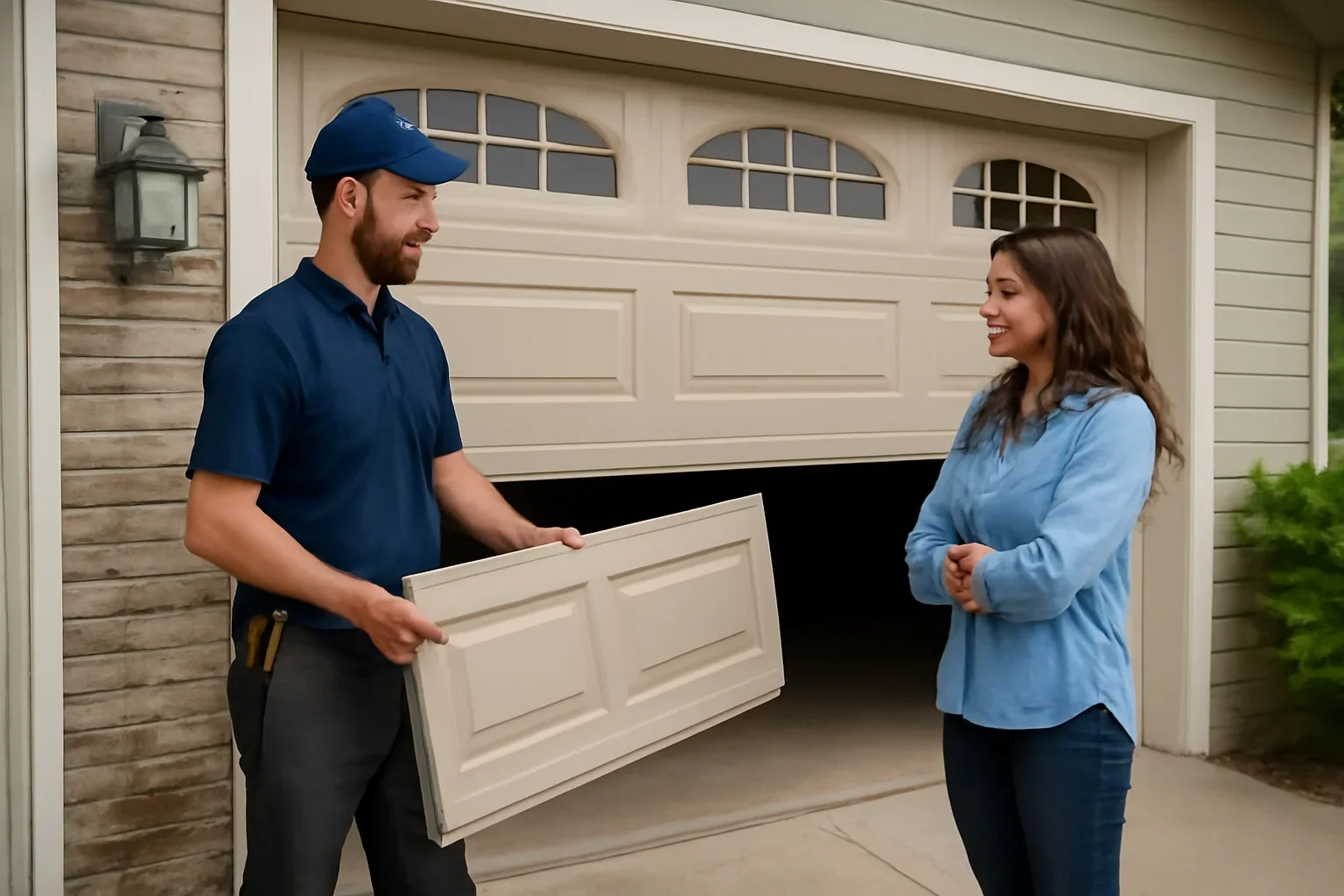
If damage is limited to one section of the garage door, replacing that section may be more practical than replacing the complete door. The first step is confirming that the rest of the system is sound and that a compatible replacement section can still be sourced.
Panel replacement is not automatically possible for every door. Model availability, section dimensions, design, insulation and finish all affect whether a suitable match exists.
- Impact and dent damage
- Single-section assessment
- Model and finish matching
- Panel vs full-door comparison
Quick Answer
Can just one garage door panel be replaced?
Often, yes. A single damaged section can sometimes be replaced when the rest of the door remains serviceable and a compatible replacement section is available. Older, discontinued or custom doors can make matching more difficult, so the actual door model and condition need to be checked first.
Choose the right scope
When does panel replacement make sense?
The best candidates are doors where damage is localized and the remaining sections, tracks, hardware and operating system are still suitable for continued use.
The remaining door should still travel normally without major track, balance, spring or hardware problems that turn the project into a broader repair.
The replacement needs to work with the existing door's model, dimensions, construction and section configuration rather than simply looking similar from the driveway.
If you are otherwise satisfied with the door's appearance, insulation and function, replacing one damaged section can avoid turning isolated damage into an unnecessary full-door project.
Even when a compatible section exists, age and weather exposure can create visible colour differences between the new section and older parts of the door.
Replacement-section reality
The new section has to work with the existing door.
Matching is more than choosing the closest colour. Product line, dimensions, construction and section design can determine whether partial replacement is practical.
Manufacturer and model
Model information helps establish whether the existing door is still represented by a compatible replacement section.
Section dimensions
Width, section height and construction need to fit the existing sectional-door system rather than being chosen on appearance alone.
Panel design and construction
Raised panels, flush designs, grooves, insulation and other construction details can affect compatibility and appearance.
Colour and finish
Even the correct factory colour may appear different beside sections that have weathered or faded over time.
Current product availability
Older or discontinued doors can be difficult to match if the required section is no longer produced or a compatible replacement is unavailable.
A visually perfect match should not be assumed.
Before choosing panel replacement primarily for appearance, confirm both product compatibility and what the new section is likely to look like beside the existing door.
After impact damage
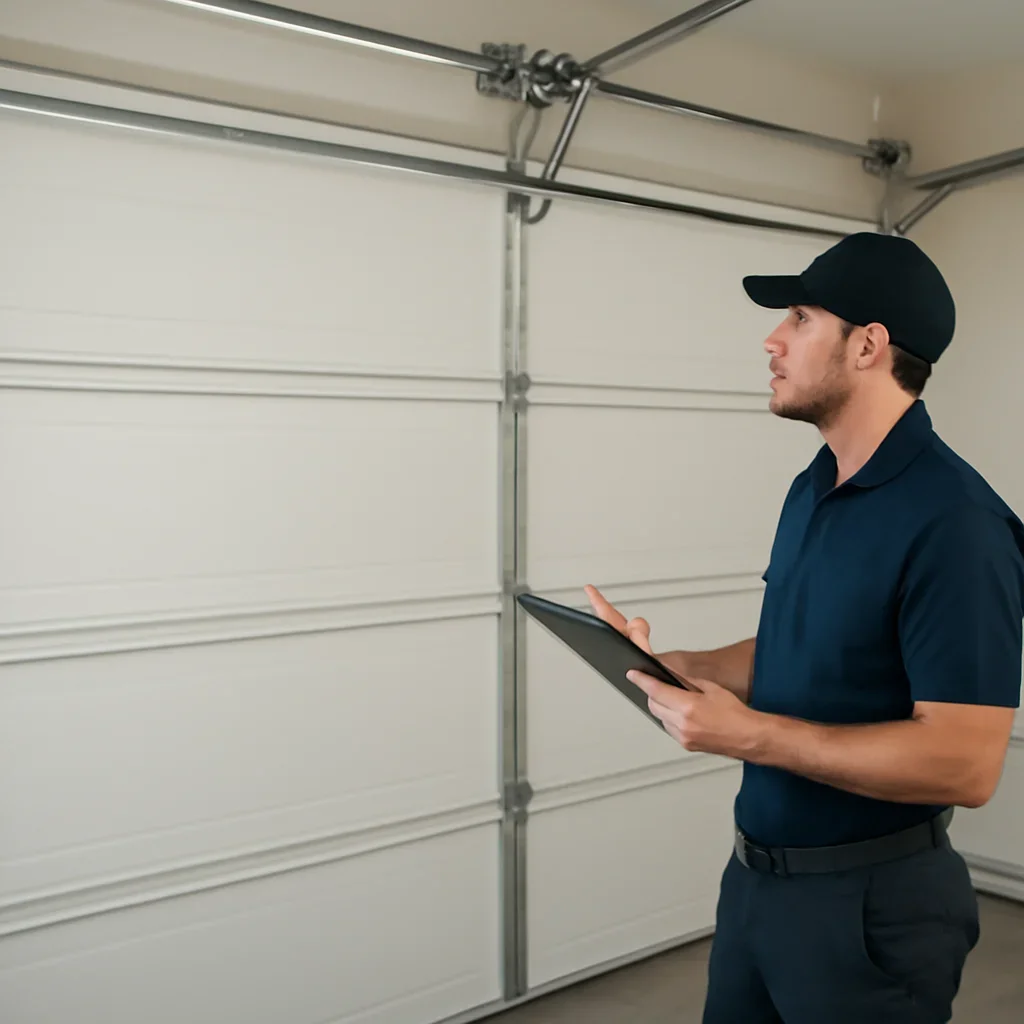
Don't assess a damaged section from the outside only.
A vehicle, equipment or other impact can leave the most obvious damage in one section while also affecting the way the garage door travels. The surrounding hardware deserves attention before the project is treated as cosmetic.
-
Neighbouring sections
Check whether the section above or below the impact has been bent, pulled out of alignment or damaged at the joints.
-
Hinges and attachment points
Interior hardware attached near the damaged section can also be affected even when the exterior damage looks localized.
-
Rollers and tracks
Confirm the rollers remain where they belong and that the track path was not bent or displaced during the impact.
-
Door travel
Note whether the door has become crooked, binding, rough or unusually noisy since the damage occurred.
-
Spring and cable condition
Visible spring or cable damage changes the project from a panel-only question into a broader garage-door repair issue.
If the door is crooked, off-track or mechanically unstable:
avoid forcing it through repeated opening and closing cycles. Use the appropriate repair path rather than treating the problem as cosmetic panel damage.
Partial or complete replacement?
Replace one section or replace the garage door?
The visible damage is only one part of the decision. Availability, matching and the condition of the remaining door can make a partial repair practical or push the project toward complete replacement.
Panel replacement may make sense when…
The damage is isolated and the existing door is otherwise a good candidate to remain in service.
- One section carries most of the damage.
- A compatible replacement section can be sourced.
- Tracks, hardware and neighbouring sections remain suitable.
- The existing door still meets your functional and design needs.
- Any expected colour difference is acceptable.
Full replacement deserves comparison when…
A single replacement section no longer solves the larger product, condition or matching problem.
- Several sections are damaged or deteriorated.
- The required section is discontinued or unavailable.
- The door has broader track, hardware or operating problems.
- The existing door already needs other substantial work.
- You want to change insulation, style or overall door configuration.
Assessment process
How is garage door panel replacement assessed?
The exact process depends on the door, but a sound assessment should establish both whether the replacement section exists and whether partial replacement is sensible for the complete door.
Review the damage
Identify which section is damaged, where the impact occurred and whether neighbouring parts also show visible damage.
Confirm the door
Gather available manufacturer, model, dimensions, construction and section information needed to investigate compatibility.
Check the system
Review door travel, tracks, rollers, hinges and other relevant hardware rather than assuming the section is the only affected component.
Confirm the practical option
Compare replacement-section availability, expected visual match and any additional repairs with the alternative of complete door replacement.
Check operation
After the appropriate work, verify the door sections and hardware move through the normal travel path correctly.
Budget planning
What affects garage door panel replacement pricing?
A useful price depends on the actual replacement section and the condition of the rest of the door. There is no responsible flat panel price that applies to every model and damage scenario.
Replacement-section specification
Door model, width, section height, construction, insulation, design and finish can all affect the section being sourced.
Section availability
A currently available standard section and a difficult-to-source older or custom product are not the same project.
Number of damaged sections
One isolated damaged section should be evaluated differently from impact affecting several parts of the door.
Additional hardware damage
Bent tracks, damaged rollers, hinges, cables or other operating components create repair scope beyond the section itself.
Panel versus full-door economics
When several repairs are required or matching is difficult, comparing the complete replacement option becomes part of responsible pricing.
Before requesting service
What should you send for a panel-replacement assessment?
Clear photos and basic door information can make the first conversation much more useful. You do not need to remove hardware or dismantle anything to collect it.
-
One photo of the complete garage door A full-door view shows where the damaged section sits and gives context for design, colour and neighbouring sections.
-
Close photos of the damage Capture dents, creases, cracks or impact areas from a safe position without trying to straighten the section first.
-
An interior view if safely accessible The inside can show section construction, hinges, reinforcement and whether the damage extends beyond the exterior skin.
-
Manufacturer or model information if visible Share any readable label, model information or documentation already available for the existing garage door.
-
Explain how the damage happened Mention whether the section was hit by a vehicle or object and whether door operation changed immediately afterwards.
-
Include your city Location helps route the request into the appropriate published service-area information.

Panel replacement questions
Garage door panel replacement FAQs
Direct answers to the questions that matter before deciding whether one damaged section can stay a partial repair.
Can I replace just one panel of my garage door?
Often, yes. One section may be replaceable when the remaining door is serviceable and a compatible section is still available. Product model, section dimensions, construction and current availability need to be confirmed before assuming a replacement will fit.
Will a replacement garage door panel match the existing colour?
Not always exactly. Even if the factory colour is correct, existing sections can fade or weather over time. Ask what kind of visual difference should be expected before choosing partial replacement primarily for appearance.
What if my garage door model has been discontinued?
A discontinued model can make compatible section replacement difficult or impossible. If an appropriate replacement section cannot be sourced, compare the condition and cost of the remaining door with complete garage door replacement.
Does a dented garage door always need a new panel?
No. The appropriate response depends on the extent and location of the dent, whether the section has been structurally distorted and whether door operation has changed. Cosmetic damage and a heavily creased or compromised section are different situations.
Should the tracks be checked after the garage door is hit?
Yes, the door's operation and surrounding hardware should be considered after significant impact. If rollers have moved out of position, tracks are bent or the door has become crooked, use the cable, roller and track repair path as part of the assessment.
When is replacing the whole garage door more practical?
Full replacement becomes more relevant when several sections are damaged, a compatible panel cannot be sourced, the existing door has broader deterioration or additional repairs make a partial solution less attractive. Use the repair vs replacement guide for the larger decision.
What information helps identify a replacement panel?
Clear photos of the complete door and damaged section are useful. Manufacturer, model, door width, section measurements and any readable product labels can also help establish what compatible section may be required.
What if the damage is being documented for an insurance claim?
Keep clear photographs of the complete door, damaged section and other visible affected areas, and follow the documentation requirements provided by your insurer. Coverage and claim requirements depend on the individual policy and insurer.
Damaged Garage Door?
Send the damaged section and the full-door view.
Share clear photos, your city and any manufacturer or model information you can find safely. The first question is whether the damage is truly isolated and whether a compatible replacement section is available.
- Full-door photo
- Damage close-up
- Model information if known
- City and operating symptoms