Property security and weather exposure may be affected. Explain whether the door is fully open, partly open or hanging unevenly.
Burnaby Emergency Garage Door Repair
Emergency Garage Door Repair in Burnaby, BC
Use emergency garage-door service when a failure creates an immediate access, security or stability problem—such as a door stuck open, a trapped vehicle, a broken spring or cable, or a door sitting dangerously off its normal track position.
Tell us the current door position and what changed. Do not keep cycling a visibly unstable door or attempt to adjust springs, cables or loaded hardware to regain access.
- Door stuck open or closed
- Vehicle access blocked
- Broken spring or cable
- Off-track or unstable door
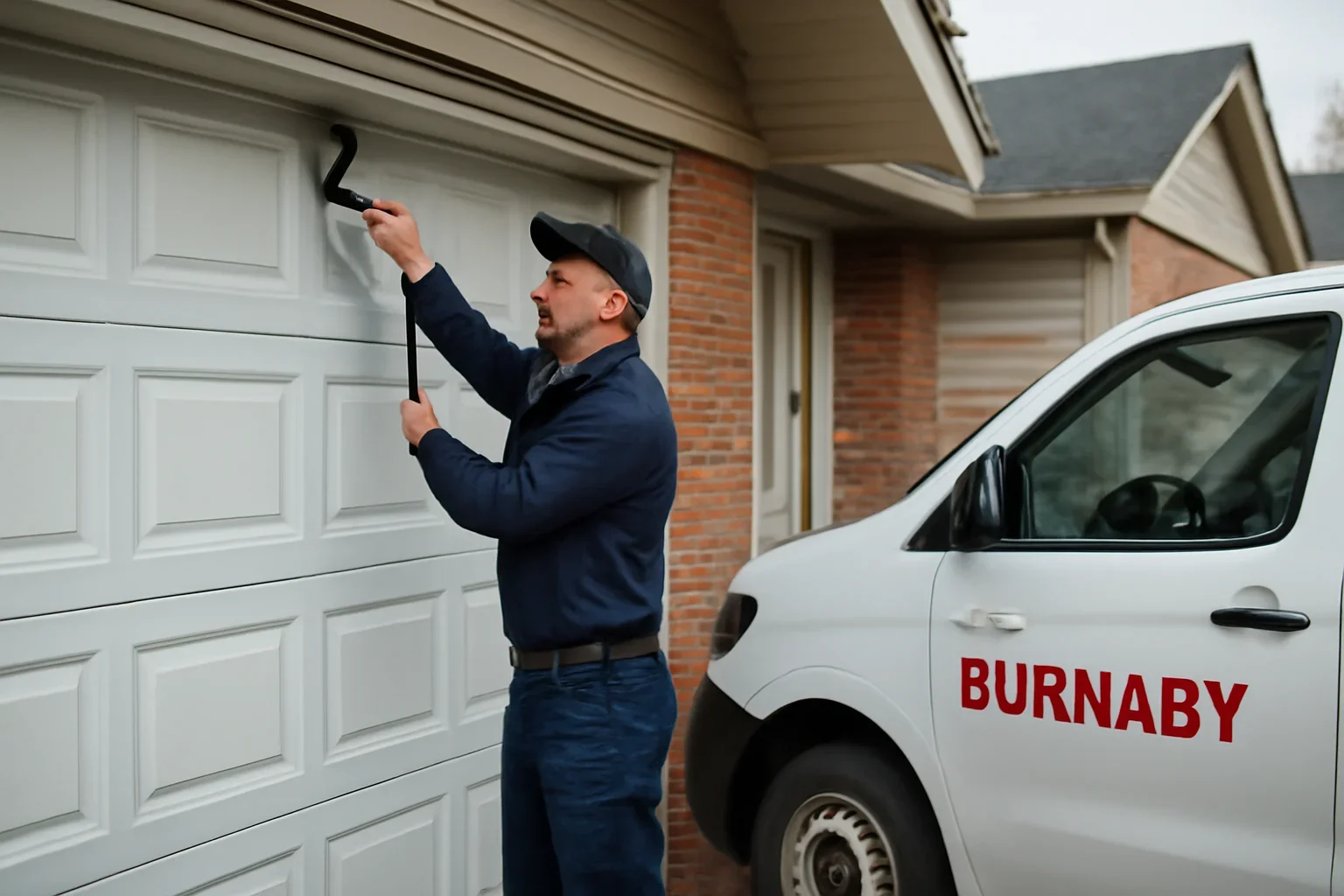
Quick Answer
When is a garage-door problem an emergency?
Treat the problem as urgent when the door cannot secure the garage, a vehicle or normal access is blocked, or the door is visibly unstable because of a spring, cable, track or impact problem. The priority is safe triage first; the permanent repair scope comes after the system is assessed.
Emergency Triage
What is happening right now?
The current door position and its effect on access, security and stability are more useful than trying to identify the failed component yourself.
Tell us whether the door is closed, partly open, unusually heavy or responding at all to the opener. Do not adjust spring or cable hardware simply to free the vehicle.
Stop normal operation. A visibly unstable door can involve rollers, tracks, cables or the counterbalance system and should not be forced through another cycle.
A spring failure can leave the door unusually heavy, while displaced or damaged cables can affect how the door is supported and travels.
Vehicle or other impact can affect sections, hinges, rollers, tracks and cables. Do not assume the visible dent is the only damage.
If the physical door remains straight and stable, opener controls, sensors or motor operation may be involved. If the door is heavy or crooked, the mechanical door takes priority.
While the Door Is Not Working
Protect people first. Do not turn diagnosis into a second problem.
Garage-door systems combine a large moving door, spring tension, cables and powered equipment. A visibly damaged system deserves a conservative response.
Do this.
Keep the first steps observational and focused on keeping people away from the hazard.
- Keep people, pets and vehicles clear of an unstable door.
- Stop repeated opener operation if the door is crooked or unusually heavy.
- Note whether the door is open, closed, partly open or uneven.
- Describe any loud snap, impact or sudden change.
- Take photos only from a safe position.
- Explain whether normal access or security is affected.
Do not do this.
Loaded mechanical components are not appropriate emergency DIY work.
- Do not loosen or adjust garage-door springs.
- Do not pull, reconnect or wind displaced lift cables.
- Do not loosen bottom brackets connected to the cable system.
- Do not force an off-track door through another cycle.
- Do not stand or work beneath a visibly unstable door.
- Do not increase opener force to overcome a mechanical door problem.
Find the Mechanical Cause
Springs
Cables
Rollers & tracks
Door sections
Opener
Multiple faults
The urgent symptom can come from different parts of the system.
A stuck door does not automatically mean a failed opener. Emergency diagnosis should separate the spring and cable system, rollers and tracks, door sections and automatic operator before the repair scope is decided.
A broken counterbalance spring can leave the door unusually heavy and prevent normal powered operation.
Frayed, loose or displaced lift cables can affect support and door position and should not be handled as a homeowner adjustment.
A roller leaving its normal track position or a damaged track can create crooked, jammed or unstable movement.
Impact or structural damage can interfere with travel and can also affect hinges, rollers or adjacent sections.
Controls, sensors or opener hardware may cause a powered-operation failure, but the physical door should be mechanically sound before the opener is blamed.
A spring failure, cable displacement or impact can sometimes create secondary problems, so the visible symptom may not be the complete repair scope.
Burnaby Emergency Context
Property details matter most for access and coordination.
Burnaby's housing mix and site conditions can change how an urgent service visit needs to be coordinated, even though they do not identify the failed garage-door component.
Explain how the garage is used.
If the garage is the household's primary vehicle entrance, say whether a vehicle is trapped or another entry route remains available.
Share restricted approach conditions.
A rear-lane garage, gate, narrow approach or parked vehicles can affect service access. Include those details when they apply.
Identify the authorization contact.
Duplex, multiplex, strata or rental situations can require owner, manager or strata coordination in addition to the physical repair.
Mention unusual driveway grade.
Significant slope can affect vehicle position and working access on some Burnaby properties, but it should not be treated as the cause of the mechanical failure.
Once the Cause Is Clear
Route the problem to the right repair scope.
Emergency describes the urgency. The actual repair may still be a spring, opener, cable, roller, track or broader garage-door repair.
01
General garage-door repair
Use when the door is stuck, damaged or malfunctioning and the failed component remains unclear.
02 Broken springUse when a spring is visibly broken, a loud snap occurred or the door suddenly became unusually heavy.
03 Cable, roller or track damageUse for displaced or frayed cables, damaged rollers, bent tracks or related mechanical travel problems.
04 Opener malfunctionUse when the physical door remains stable and the main problem is controls, sensors, motor response or powered travel.
Immediate Problem vs Longer-Term Decision
Urgent repair and complete replacement are not automatically the same job.
First address the condition affecting safe access or security. Then decide whether the existing door remains practical to repair or whether a replacement deserves comparison.
The emergency may still be one repairable failure.
A broken spring, cable, roller, track or opener problem does not automatically mean the complete garage door needs replacement.
- The main failure is isolated.
- Door sections remain in useful condition.
- Compatible repair components are available.
- The door still suits the property once repaired.
Replacement becomes a separate decision.
Compare a new door when widespread damage or larger condition problems remain after the immediate situation is understood.
- Multiple sections are substantially damaged.
- Several major repairs are needed together.
- Compatible parts or sections cannot be sourced.
- The current door no longer fits the property's needs.
Emergency Repair Process
Start with the consequence, then diagnose the door.
An urgent service request should communicate what makes the situation urgent before narrowing the mechanical repair.
Confirm the current situation
Establish whether the door is open, closed, partly open, crooked or otherwise unstable.
Confirm access and security
Determine whether a vehicle is trapped, normal entry is blocked or the garage cannot secure normally.
Identify the failed system
Check the relevant springs, cables, rollers, tracks, sections and opener rather than assuming one component from the symptom.
Define the immediate scope
Address the failure requiring urgent attention within the appropriate repair and safety procedure.
Separate larger decisions
If other wear or damage remains, identify maintenance, additional repair or replacement as a separate next step.
Before You Request Emergency Service
Give us the information that changes the urgency.
You do not need to identify the failed component. Tell us what the door is doing, what is affected and what you can see safely.
-
Current door position Is it fully open, fully closed, partly open or visibly crooked?
-
Access impact Is a vehicle trapped, is the main garage access blocked, or can the property still be entered another way?
-
Security impact Is the door stuck open or otherwise unable to secure the garage normally?
-
What happened first Mention a loud snap, impact, sudden heavy movement, cable displacement, off-track movement or opener failure.
-
Property and access type Note detached, rental, strata or another property type plus any rear-lane, gate or unusual driveway access.
-
Photos if safe A full-door photo and visible damage can help. Do not handle springs, cables or unstable hardware for a closer picture.
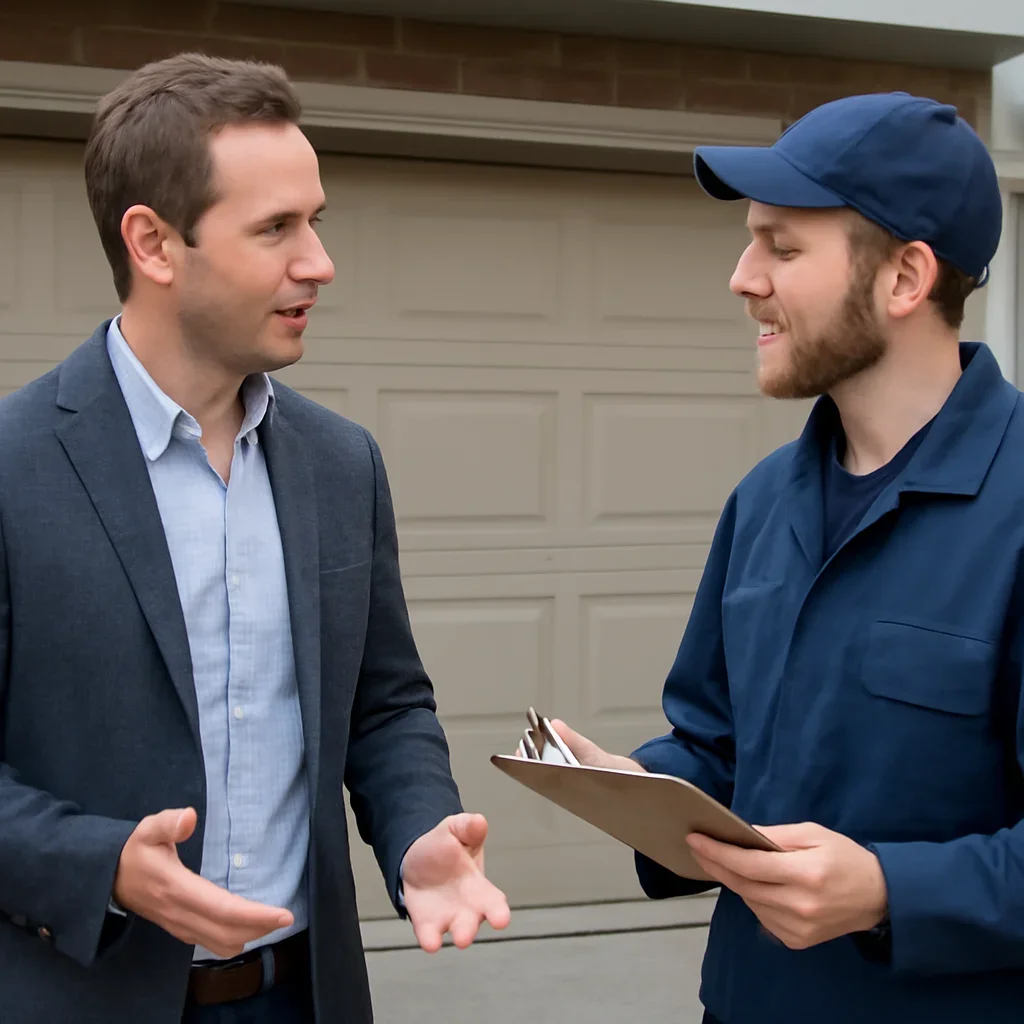
Emergency Repair Pricing
What affects the repair scope?
The word “emergency” describes the impact of the malfunction, not a single repair type. Cost depends on the actual component failure and any related damage.
Failed component
Spring, cable, roller, track, section and opener failures involve different parts and repair procedures.
Extent of damage
A single broken component is different from an impact or failure affecting several connected parts.
Door specification
Door size, construction and installed hardware affect compatible repair components.
Parts required
Compatible springs, cables, rollers, track components or opener parts vary by the installed system.
Follow-up scope
Replacement, maintenance or other non-urgent work should be separated from the immediate failure rather than automatically bundled into every emergency repair.
Emergency Repair Questions
Burnaby emergency garage door repair FAQs
Direct answers for situations where access, security or a visibly unstable garage door makes the problem more urgent.
What counts as an emergency garage door repair?
A garage-door problem becomes more urgent when the property cannot secure normally, a vehicle is trapped, normal access is blocked or the door is visibly unstable because of spring, cable, track or impact damage.
What should I do if my garage door is stuck open?
Keep normal operation stopped if the door is crooked, off-track, unusually heavy or otherwise unstable. Keep people clear, note what happened and request service while explaining that the garage cannot secure normally.
What if my car is trapped inside the garage?
Tell us that vehicle access is blocked and describe the current door position. Do not loosen springs, cables or bottom hardware simply to regain access, especially when the door is visibly damaged or unusually heavy.
Can I use the opener when a spring is broken?
Normal operation should stop when a spring is known to be broken. The opener may be trying to move a door that is no longer properly counterbalanced. See Burnaby garage door spring repair.
What should I do if the garage door is off its tracks?
Avoid forcing the door through another opener cycle. Keep people and vehicles clear if it appears unstable and have the rollers, tracks, cables and connected components assessed. See cable, roller and track repair.
Does every emergency problem require a new garage door?
No. A broken spring, cable, roller, track component or opener fault can have a focused repair path when the rest of the door remains serviceable. Replacement becomes a separate decision when damage or deterioration is broader. See the repair vs replacement guide.
Is emergency garage door service guaranteed immediately in Burnaby?
Do not assume a specific response window from this page. Describe the access, security or stability issue when contacting the team and confirm current Burnaby availability and timing for your situation.
What information helps when I request emergency service?
Share the current door position, whether access or security is affected, what happened immediately before the failure, whether the opener responds and any photos you can take safely without approaching loaded or unstable hardware.
Request Emergency Garage Door Repair in Burnaby
Tell us the door position, the immediate impact and what changed.
If the garage is stuck open, a vehicle is trapped, normal access is blocked or the door appears unstable, include that information first. Then describe any snap, impact, cable problem, off-track movement or opener behaviour you noticed.
- Current door position
- Access or security impact
- Visible spring, cable or track damage
- Photos if safe