Tell us what happens
Share the opener brand if you know it, which controls work, what the door does and whether the problem happens every time or only intermittently.

If the motor runs but the door does not move, the door reverses, a remote stops responding, or the opener refuses to close, the cause is not always the motor. The opener, controls, safety sensors and garage door should be checked as one system before deciding what needs to be repaired.
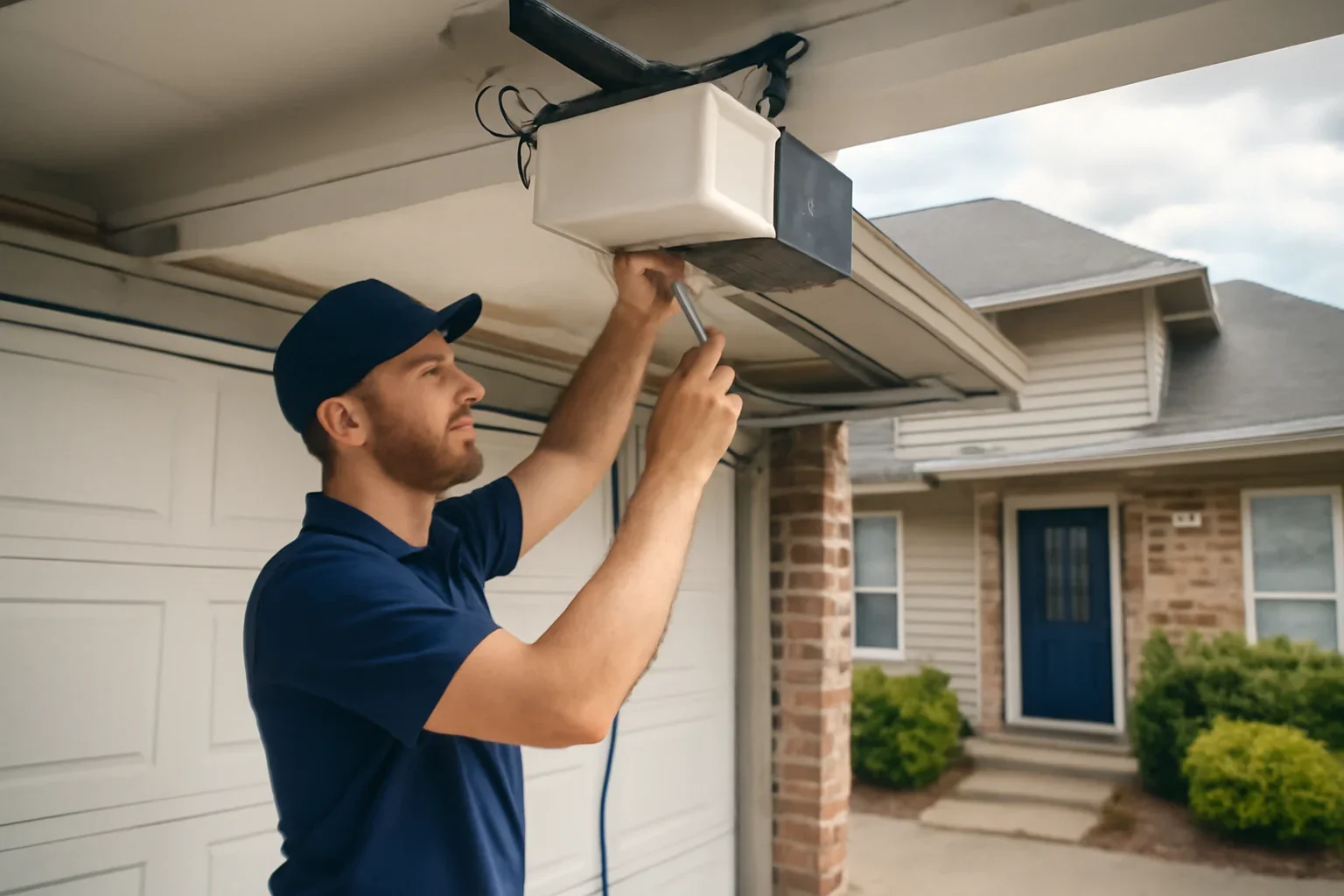
The behaviour of the door usually provides more useful information than simply saying the opener is broken. Note exactly what happens when you use the wall control, remote or keypad.
A garage door opener should not be expected to compensate for a binding, poorly balanced or mechanically damaged door. That is why useful troubleshooting considers both the electrical opener and the moving door system.
If the door itself is hard to move, crooked, or has visible spring or cable damage, the correct starting point may be garage door repair in Langley rather than opener repair alone.
The exact work depends on the opener model and the symptom. Diagnosis should narrow the fault before parts are replaced.
Sensor alignment, obstruction, wiring and sensor condition can affect whether an opener will close the door normally.
A problem affecting only one control may point toward batteries, programming, compatibility or a control-specific issue rather than a complete opener failure.
If the opener runs but the door does not travel correctly, the rail, trolley, belt or chain system and the condition of the garage door may need to be assessed together.
Incorrect stopping points, reversal behaviour or changes in the door's movement can help distinguish adjustment issues from mechanical or electrical faults.
Clicking, humming or inconsistent movement should be considered alongside the opener age, previous repairs and condition of the complete door system.
Langley includes both the City of Langley and the Township of Langley, and garage configurations are not uniform from one property to the next. An opener serving an attached residential garage can present different access, door-size and usage considerations from an opener installed in a separate accessory garage or shop.
That makes the actual door, opening and opener model more useful for diagnosis than assumptions based on the postal address alone.
Tell us whether the garage is attached or separate, the opener brand if visible, which controls still work, and exactly what the door does when you try to open or close it.
The goal is to identify what is actually causing the problem before deciding whether the appropriate next step is adjustment, repair or opener replacement.
Share the opener brand if you know it, which controls work, what the door does and whether the problem happens every time or only intermittently.
The opener, controls, sensors and relevant door movement are considered together so one problem is not mistaken for another.
Once the fault and component condition are understood, the next step can be selected based on repairability, compatibility and the overall condition of the system.
Replacement is not automatically required because an opener has stopped working. The decision depends on what failed, the condition of the remaining components, compatible parts and whether the existing opener still suits the door and household.
A safe photo of the label can help identify the equipment.
Include the wall button, remote and keypad if applicable.
Specific symptoms can help narrow the diagnostic starting point.
Mention a broken spring, loose cable, crooked door or impact damage rather than assuming it is an opener problem.
If the door is stuck open or presents an urgent access issue, say so when requesting service.
These answers cover the decisions homeowners commonly need to make before booking opener service.
Safety-sensor alignment or obstruction is one possible cause, but it is not the only one. Door resistance, travel settings, wiring or other opener and door conditions may also affect closing behaviour.
The opener may be disconnected from the door, the drive system may have a fault, or the garage door may have a mechanical problem such as a spring or balance issue. The door and opener should be considered together before assuming the motor has failed.
Yes. A spring problem can make a door difficult to lift and can change how the opener behaves. If you can see a broken spring or the door suddenly feels unusually heavy, use the Langley spring repair page rather than repeatedly operating the opener.
Not necessarily. If the wall control still operates the door, the issue may be limited to the remote, battery, programming or compatibility. Diagnosis should establish whether the opener itself is involved before replacement is considered.
Replacement becomes more reasonable to compare when failures recur, important components are worn, compatible parts are difficult to source, or the existing opener no longer provides the access or operating features you need.
You can review garage door opener installation before making that decision.
Cost depends on the actual fault, opener model, required parts, door condition and whether related problems are discovered. A remote or sensor issue is a different scope from motor, control-board or drive-system work.
Review the garage door pricing page or describe the problem when requesting service.
You can note which controls work, check for obvious objects in the door's path and record any visible indicator lights without dismantling the opener or door hardware. Avoid adjusting springs, cables or other components under tension.
Share the Langley location, opener brand if visible, which controls still work, and what happens when the door tries to open or close. Those details provide a better starting point than simply saying the opener has stopped working.