Compare the controls
Note what happens from the wall control, remote and keypad and whether any lights or indicators change.

West Vancouver Garage Door Opener Repair
If the remote stops working, the door reverses, the motor runs without moving the door properly or the opener responds only some of the time, the opener is not automatically the failed part. Controls, safety sensors, drive components and the garage door itself should be separated during diagnosis.
Tell us which controls still work, what the door does and whether you hear or see anything unusual. You do not need to identify the failed component before requesting service.
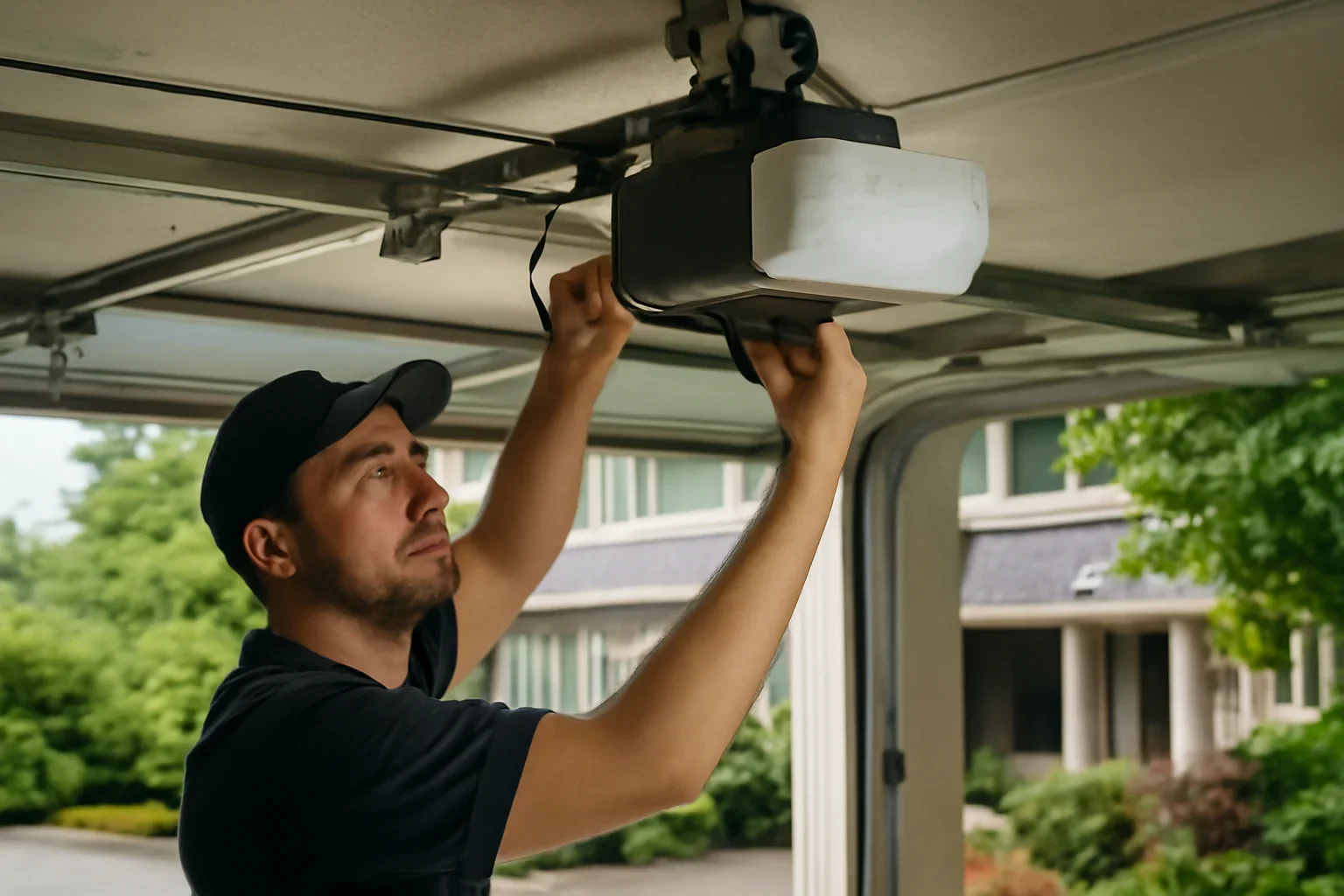
If the door is crooked, has a visibly broken spring or cable, is binding badly or no longer moves in a controlled way, stop repeatedly running the opener and address the mechanical door problem.
A reversing or non-closing door needs diagnosis. Defeating a safety device is not an appropriate repair.
Opener or Mechanical Door?
Garage door openers do not work independently from the door. Springs counterbalance the weight, rollers and tracks guide the door, and safety sensors monitor the closing path.
A spring, track or door-balance problem can therefore make the opener sound weak, stop partway or appear to have lost lifting power.
Diagnostic Scope
The aim is to identify which part of the operating system has changed before replacing components unnecessarily.
Comparing each control helps determine whether the problem is isolated to one accessory or affects the complete opener.
Alignment, obstruction, wiring, sensor condition and environmental interference can affect normal closing behaviour.
Where the door stops, reverses or hesitates provides information about travel settings, sensing and mechanical resistance.
A running motor does not prove that the trolley, chain, belt or other drive components are transferring movement correctly.
Springs, rollers, tracks and cables can change the load seen by the opener and should be considered when movement has become heavy or uneven.
Controls Tell a Story
Comparing the wall control, remotes and keypad can narrow the problem before anyone assumes the logic board or motor has failed.
Check remote batteries, programming and whether other remotes have the same problem.
The issue may be limited to keypad power, programming or compatibility rather than the complete opener.
Power supply, opener electronics, controls and the door's mechanical condition all become relevant.
Look beyond the transmitter. Safety sensors, travel behaviour, obstruction and door resistance may be involved.
West Vancouver Context
Opener diagnosis itself should follow the equipment and symptoms, but the garage configuration can influence priorities around noise, access and how disruptive an opener problem becomes.
View all West Vancouver garage door servicesWest Vancouver permits detached secondary-suite configurations that can include vehicle storage within the same building. Where living space is close to the garage, unusual opener noise and vibration deserve more attention.
A separate garage can have different electrical, wireless-control and access conditions from one incorporated into the main house.
A significant driveway grade does not diagnose an opener fault, but it is useful service-access information when vehicle positioning or working space in front of the garage is limited.
Tell us if the garage serves as a primary household entrance. A control problem has a different practical impact when the door is used repeatedly throughout the day.
Direct sunlight is a manufacturer-recognized source of interference for some safety-sensor installations. Note whether the problem changes with lighting conditions, but do not assume sunlight is the cause without checking alignment, obstruction and sensor condition.
Repair or Upgrade?
One remote, sensor or repairable component does not justify replacing an otherwise suitable opener. Replacement becomes worth comparing when the overall unit is no longer practical to support or no longer fits the way the garage is used.
Opener Repair Process
Separating the opener from controls and mechanical door problems helps prevent unnecessary component replacement.
Note what happens from the wall control, remote and keypad and whether any lights or indicators change.
Determine whether sensors, drive components, controls or the mechanical door are producing the symptom.
Model information, compatibility and the actual operating condition determine the appropriate repair.
Repair can remain appropriate for an isolated fault; broader age, support and feature considerations may justify comparing a new opener.
Before Requesting Service
A few observations can make the first conversation far more useful without requiring you to open, dismantle or adjust the equipment.
If safely visible, photograph the opener label so compatibility and model-specific parts can be considered.
Tell us what happens with the wall control, each remote and the exterior keypad.
Does the door reverse, stop partway, stay closed, stay open or move differently than normal?
Include flashing lights, displayed errors, app diagnostics, clicking, humming or unusual rail/motor sounds.
Mention a broken spring, loose cable, crooked door or damaged track so a mechanical problem is not treated as opener-only repair.
Opener Repair Questions
A blocked or misaligned safety sensor is one possible cause. Travel behaviour, wiring, sensor condition and mechanical resistance in the garage door can also affect closing.
Do not bypass the sensors to make the door close.
That pattern suggests the problem may be limited to the remote, its battery, programming or compatibility rather than the opener motor itself. Check whether other remotes behave the same way.
It can on some systems. Garage-door opener manufacturers recognize direct sunlight as a possible source of safety-sensor interference.
If the door refuses to close at a predictable time of day, mention that pattern. Sensor alignment, obstruction, wiring and condition should still be checked rather than assuming sunlight is the only cause.
The drive or trolley may be involved, but a broken spring, binding track or other mechanical garage-door problem can produce a similar symptom.
If the door has become heavy or crooked, use West Vancouver garage door repair rather than continuing to operate the opener.
Yes. A failed counterbalance system can leave much more of the door's weight for the opener to overcome.
If a spring is visibly broken, review garage door spring repair in West Vancouver .
Not automatically. First identify whether the noise comes from the opener, rail, drive system or garage-door hardware.
If living space is close to the garage and quieter operation is a priority, replacement can be compared after the existing fault is understood. See the chain vs belt garage door opener comparison .
Replacement becomes more reasonable to compare when failures are recurring, compatible parts are limited or the current system no longer provides the operating, noise or access features the household needs.
Review garage door opener installation for the replacement pathway.
Cost depends on the failed component, opener model, required parts and whether a separate garage-door problem is contributing to the symptom.
Review the garage door pricing page and include the model and symptoms when requesting service.
Request West Vancouver Opener Repair
Share the opener brand if known, whether the wall control, remotes and keypad respond, whether the door reverses or stops, and any unusual lights, codes or sounds. If the door is heavy, crooked or visibly damaged, mention that as well so the problem can be routed appropriately.