Burnaby Garage Door Opener Repair

Garage Door Opener Repair in Burnaby, BC

If the opener ignores a remote, only responds to one control, reverses during closing, stops before completing its travel or runs while the door struggles, start by separating an opener fault from a problem with the garage door itself.

Share the opener brand or model if known, what each control does, whether the safety-sensor indicators have changed and whether the door looks heavy, crooked, blocked or mechanically damaged.

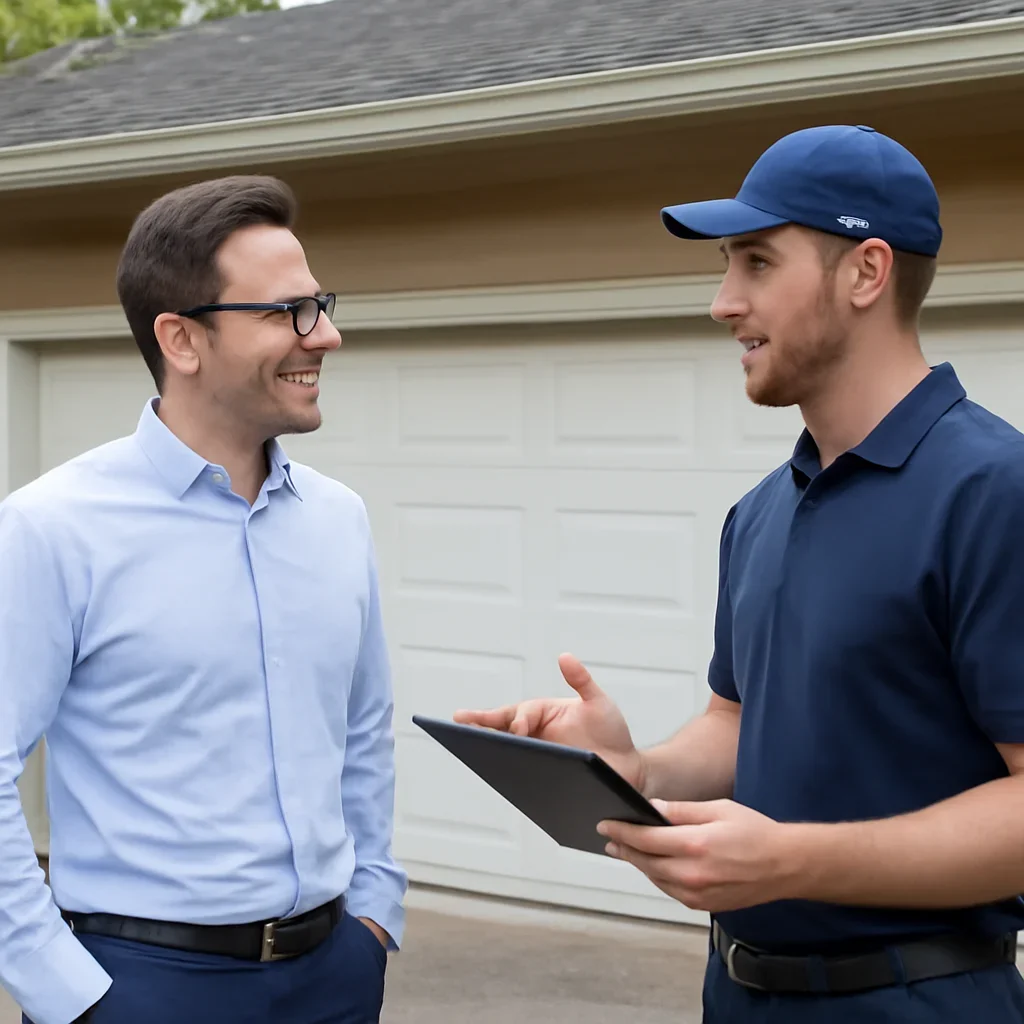
Garage door opener repair at a Burnaby home
Remote fails Compare remote with wall control
Door reverses Check obstruction and sensor context
Opener strains Check the mechanical door too

Start with the behaviour

What Is the Garage Door Opener Doing?

The pattern matters. A remote-only failure points in a different direction from a door that reverses during closing or an opener that struggles to move a heavy door.

01 Remote does not work

Check whether the wall control still operates the opener. A remote-only problem can be different from a complete opener failure.

Controls & compatibility →
02 Wall button does not work

Note whether remotes or other controls still respond. That difference helps narrow the control, wiring or opener side of the system.

Opener repair guidance →
03 Door starts closing and reverses

An obstruction, safety-sensor condition, travel issue or mechanical resistance can all create closing problems. Do not assume the motor is the cause.

Review opener troubleshooting →
04 Door reaches the floor and reverses

Travel settings or a door-related problem may be involved. The closing behaviour needs to be assessed before parts are replaced.

Request diagnosis →
05 Motor runs but the door barely moves

Check the mechanical door as well as the opener. A broken spring or another balance problem can leave the opener trying to move an abnormally heavy door.

Burnaby spring repair →
06 Opener makes new or unusual sounds

Describe the sound and whether door movement changed at the same time. Noise alone does not identify which opener or door component needs repair.

General Burnaby repair →
Do not increase opener force just to make a resistant door move.

If the door is unusually heavy, crooked, off track, binding or has visible spring or cable damage, the mechanical problem should be addressed instead of asking the opener to overpower it.

The most important diagnostic split

Is It Really the Opener, or Is the Door Making the Opener Struggle?

The automatic operator and the garage door are connected systems, but they perform different jobs. Opener repair should not be used to compensate for a mechanically unsound door.

More likely opener / control related

The door appears mechanically normal

Opener-specific troubleshooting becomes more relevant when the door itself appears stable and the problem follows a control, sensor or operator behaviour.

  • One remote works while another does not
  • Wall control and remote behave differently
  • Safety-sensor indicators have changed
  • Closing behaviour is inconsistent
  • Opener lights or diagnostic indicators change
  • Operator fails despite no visible door damage
Continue with opener repair →
More likely door / mechanical related

The door itself is difficult or unstable

A struggling operator can be a symptom rather than the original fault when the spring, cable, roller, track or door balance is wrong.

  • Door suddenly appears unusually heavy
  • Visible broken spring
  • Loose or displaced lifting cable
  • Door travels crooked or unevenly
  • Roller has left the track
  • Door binds or scrapes while moving
Start with mechanical repair →
Garage and opener setup at a Burnaby residential property
Burnaby context matters most when it changes the garage layout. Rear-yard buildings, compact garages and ceiling constraints can affect opener placement and service access without causing the fault.

Burnaby service context

What Local Property Details Are Actually Useful?

Burnaby now includes a wider mix of established homes, small-scale multi-unit housing and rear-lot residential building forms. For opener repair, the useful question is how the actual garage is configured.

01
Attached garage below or beside living space

Garage layout and opener placement may affect what replacement options make sense if the existing operator cannot be repaired.

02
Rear-yard or detached garage

Share how the garage is accessed and whether the opener, controls or power source are located differently from a conventional attached garage.

03
Compact ceiling layout

Beams, storage, lighting and low-clearance track arrangements can matter if opener replacement becomes part of the project.

04
Shared or strata property

If controls or access are shared, explain which remote, keypad, wall control or door is affected before assuming the problem is limited to one opener.

Useful checks before service

What Can You Check Without Adjusting the Door?

Basic observations can make the service request more useful. Stop if the door looks mechanically damaged, unstable or unusually heavy.

01
Compare the controls

Note whether the wall control, handheld remote and keypad behave the same way or whether only one control has stopped working.

02
Look for an obvious obstruction

Check the door opening and sensor area visually before assuming the closing problem is an internal opener fault.

03
Note the sensor indicators

If the opener uses safety reversing sensors, note whether the indicator lights appear normal, off or inconsistent.

04
Watch where reversal happens

Say whether the door reverses immediately, partway through closing or only after reaching the floor.

05
Look at the door itself

A visible broken spring, crooked door, displaced cable or damaged track belongs on the mechanical repair path rather than basic opener troubleshooting.

Narrow the opener system

Four Areas Commonly Involved in Opener Problems

The exact fault depends on the opener model and door system. These categories help organize the diagnosis without assuming a specific part.

01 / CONTROLS

Remote, keypad or wall control

When only one input fails, compare that control with the others before treating the complete opener as failed.

Controls & compatibility →
02 / SAFETY

Safety reversing sensors

Sensor obstruction, alignment or wiring can affect closing behaviour. The safety system should not be bypassed to make the door close.

Opener repair guidance →
03 / TRAVEL

Opening and closing travel

Where the door stops or reverses can help separate travel-related behaviour from an obstruction or mechanical-door problem.

Request diagnosis →
04 / OPERATOR

Motor, drive or internal opener fault

Internal parts or the drive system may be involved when controls, sensors and the mechanical door have been ruled out.

Compare opener replacement →

Opener repair process

Diagnose the Door Before Blaming the Motor

The useful repair sequence starts with the symptom, verifies that the garage door itself can operate correctly, then narrows the controls, sensors and operator.

01
Record the exact symptom

Determine which controls work, where the door stops or reverses and whether the opener produces lights, sounds or other indicators.

02
Check the mechanical door condition

Spring, cable, track and balance problems should be separated from an opener-specific fault.

03
Review controls and safety inputs

Compare remote, keypad and wall-control behaviour and assess the safety reversing sensor system where relevant.

04
Narrow travel or operator faults

Once mechanical resistance and external controls are understood, the opener's own travel or internal system can be evaluated.

05
Test the repaired system

Final operation should include normal door travel and the applicable automatic safety-reversal behaviour.

Repair or replace the opener?

Do Not Use a Universal Age Rule

The better decision depends on the actual fault, whether appropriate parts and support remain practical, whether problems are recurring and whether the homeowner wants capabilities the existing opener does not provide.

01 / LEAN REPAIR

The fault is isolated and serviceable

A control, sensor, wiring, travel or replaceable internal component may support repair when the opener otherwise remains suitable for the door.

Review opener repair →
02 / COMPARE BOTH

Problems are becoming repetitive

Compare the repair scope with a new opener when several faults are accumulating, support is becoming difficult or reliability has become the main concern.

Review pricing factors →
03 / LEAN REPLACEMENT

The project needs a different opener

Replacement can make more sense when the existing operator is no longer a suitable match or the homeowner wants a different drive, control, connectivity or backup configuration.

Opener installation →

If replacement enters the conversation

Choose the New Opener Around the Door and Garage

Smart controls or a different drive type can be useful, but compatibility should come before features. The operator still has to suit the door and physical garage layout.

Door
The opener should be matched to a correctly operating garage door rather than used to compensate for poor balance or mechanical resistance.
Layout
Ceiling height, track configuration, storage, beams and other physical constraints can affect suitable operator arrangements.
Controls
Confirm the remotes, wall controls, keypads or connected-access functions that actually matter to the household.
Drive type
Belt, chain and other operator configurations involve different trade-offs. Choose based on the garage rather than assuming one drive is universally best.
Existing parts
Model-specific remotes, sensors and replacement components may not be interchangeable across every opener generation.

Before requesting opener repair

Four Details Make Diagnosis Easier

You do not need to identify the failed component. Describe the behaviour and provide model information when it can be collected safely.

01 / MODEL

Opener brand and model

If accessible safely, send a photo of the operator label rather than guessing which generation or model is installed.

02 / CONTROLS

What works and what does not?

Explain whether the handheld remote, keypad and wall control all behave the same way.

03 / MOVEMENT

Where does the door stop?

Say whether it fails to start, stops partway, reverses while closing or reaches the floor before reversing.

04 / DOOR

Does the door look mechanically normal?

Mention a heavy, crooked or damaged door, visible broken spring, displaced cable or off-track roller immediately.

Burnaby Opener Repair Questions

Answers Before You Replace the Opener

Many opener symptoms overlap with sensor, control and mechanical-door problems. Diagnose the system before assuming the motor needs replacement.

Why is my garage door remote not working?

Compare it with the wall control and any other remote first. If other controls still operate the door, the problem may be limited to the individual remote, its battery, programming or compatibility rather than the complete garage door opener.

Why does my garage door start closing and then reverse?

An obstruction, safety reversing sensor condition, travel issue or mechanical resistance can cause closing problems. Note where the reversal occurs and whether anything is blocking the opening or sensor path rather than immediately adjusting opener force.

Why does the door touch the floor and open again?

Closing travel can be involved, but the condition of the door itself also matters. The exact cause should be narrowed before changing settings or replacing the opener.

Does a flashing opener light mean the motor is broken?

Not necessarily. Indicator lights and diagnostic signals vary by manufacturer and model and can point to sensor, wiring, travel or other conditions. Send the opener model and describe the light pattern when requesting service.

Can a broken garage door spring look like an opener problem?

Yes. If the spring system is no longer counterbalancing the door correctly, the opener may struggle or move the door only a short distance even though the operator was not the original failure.

See Burnaby garage door spring repair .

Should I increase the opener force if the door will not close?

Do not use additional force to overpower a binding, heavy or unstable door. A spring, cable, track or other mechanical condition may be creating the resistance and should be identified first.

Is it better to repair or replace an older garage door opener?

There is no useful universal age cutoff. Consider the actual fault, parts availability, recurring problems, compatibility with the door and whether you want capabilities that the existing operator does not provide.

If replacement is the better path, see garage door opener installation .

When does an opener problem become an emergency?

The situation becomes more urgent when the garage cannot be secured, essential vehicle access is blocked or the door is mechanically unstable. In that case, use Burnaby emergency garage door repair and confirm current availability.

Burnaby Garage Door Opener Repair

Tell Us Which Controls Work and Exactly What the Door Does Next.

Share the opener brand or model if known, whether the remote, keypad and wall button behave differently, where the door stops or reverses, and whether there is any visible spring, cable, track or door damage.

Opener model Remote / wall-control behaviour Sensor indicators Door movement Visible mechanical damage
Homeowner in Burnaby discussing garage door opener repair needs

Get a Quote