Tell us what changed
Share whether the door is stuck, heavy, crooked, noisy, reversing or showing visible damage.

If your garage door is stuck, crooked, suddenly heavy, unusually noisy or no longer travelling normally, the priority is finding the actual cause. Springs, cables, rollers, tracks, panels and the opener work as one system, so useful repair starts with diagnosis rather than guessing which part failed.
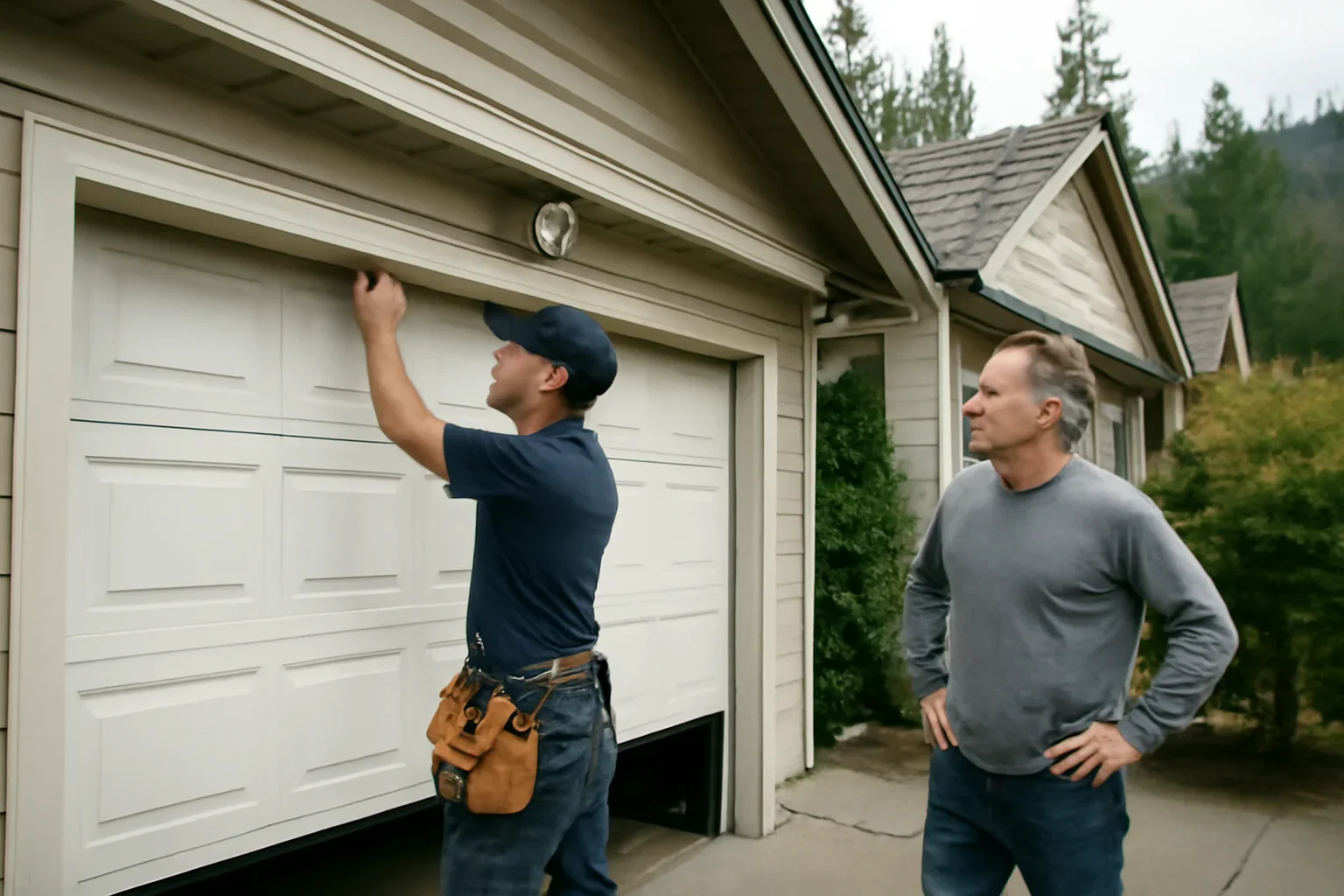
How the problem started is often more useful than trying to identify the failed component yourself. Note whether the change was sudden, whether the door still moves at all and whether one side looks different from the other.
A spring or counterbalance problem is one possibility. Avoid repeatedly making the opener lift a door that no longer moves normally.
Cable, roller, track or related hardware may need attention. Repeatedly cycling a visibly crooked door can make diagnosis and damage more complicated.
The opener may be involved, but springs, door balance, rollers and track conditions can also change how an opener performs.
Increasing noise, vibration or resistance can indicate wear that has progressed beyond routine maintenance.
Do not attempt to wind, unwind or reposition springs or cables yourself. If a door is stuck open, cannot be secured or appears unstable, describe that condition when requesting service.
A door that will not open can involve the spring system, cables, rollers, tracks or opener. A door that reverses can involve opener controls or sensors, but mechanical resistance in the door can also affect operation.
The useful approach is to inspect the components that affect the symptom and determine what actually changed.
These are common repair categories, not diagnoses based on one symptom. The failed component and condition of the remaining system should determine the next step.
Spring problems can make a door unexpectedly heavy or prevent normal lifting.
02 Cable, roller or track problemUneven travel, a crooked door or visible hardware damage can point toward these mechanical components.
03 Garage door opener problemControls, sensors, travel behaviour or opener components may be responsible when the door itself remains mechanically sound.
04 Damaged door panelImpact or deformation can affect appearance, alignment and movement depending on the location and extent of damage.
05 Wear without a failed partNoise or developing wear may still fit preventive maintenance if the door remains operational and stable.
North Vancouver includes both City and District residential settings, from denser ground-oriented housing to detached homes on steeper terrain. The relevant repair factors are the actual garage, access and door configuration rather than a generic city-wide assumption.
North Vancouver's municipal planning identifies steep terrain as a genuine local condition. Driveway grade and vehicle position can affect practical access around a garage during service even though slope itself does not diagnose the failed door part.
The District still has a substantial detached-home housing stock, with garage size, door age and hardware varying considerably between properties.
Townhouse, duplex and other attached configurations can introduce different ownership, access and exterior-component considerations.
Door age does not always match the age of the house. Previous renovations, opener upgrades and replacement hardware are useful details to share if known.
A useful repair process separates diagnosis from assumptions so the immediate fault and the condition of the remaining door can be considered independently.
Share whether the door is stuck, heavy, crooked, noisy, reversing or showing visible damage.
Relevant springs, cables, rollers, tracks, panels and opener behaviour can be considered together.
Once the problem is established, the appropriate repair can be considered without assuming unrelated components need replacement.
Remaining wear, maintenance needs or a possible replacement decision can be separated from the immediate fault.
One failed spring, cable, roller or opener component does not automatically mean the complete door needs replacement. Overall condition, repeated failures, panel damage and whether the existing door still suits the opening are more useful factors.
Stuck open, stuck closed, heavy, crooked, noisy, reversing or moving only partway.
Tell us whether it happened during one cycle or gradually became worse.
Photos of a broken spring, loose cable, damaged panel or crooked door can provide useful context.
Mention narrow or steep access, parked vehicles or other practical conditions around the garage.
A door stuck open is a different situation from a non-urgent noise or maintenance concern.
These answers address the practical decisions homeowners commonly need to make before arranging repair.
A spring or counterbalance problem is one possible cause. A door that suddenly becomes difficult to lift should be inspected before repeatedly using the opener.
If a spring is visibly broken, see garage door spring repair in North Vancouver .
Uneven positioning can involve cables, rollers, tracks or related door hardware. Stop repeatedly cycling a visibly crooked door instead of trying to pull it into position manually.
The symptoms can overlap. Broken springs, binding tracks and poor door balance can affect opener behaviour, while controls, sensors and opener components can fail even when the door itself remains mechanically serviceable.
For opener-specific symptoms, review North Vancouver garage door opener repair .
It is better to stop repeated operation when a door is visibly crooked or moving unevenly. Cable, roller or track problems can affect controlled travel, and continued cycling may make the condition worse.
Sometimes. The answer depends on the location and extent of the damage, door construction, panel availability and condition of the remaining sections.
See garage door panel replacement for the dedicated service.
Replacement becomes more reasonable to compare when extensive damage affects the door, several components are deteriorating, repairs are recurring or the existing door no longer meets the property's practical needs.
Review the repair versus replacement comparison .
Cost depends on the failed component, door configuration, required parts and whether related damage is present. A roller or adjustment issue is a different scope from spring, cable, opener or panel repair.
Review the garage door pricing page and describe the symptoms when requesting service.
Share whether the door is stuck, crooked, heavy, noisy or visibly damaged, when the problem started, whether a vehicle is trapped, and whether the garage can currently be secured. You do not need to diagnose the failed part yourself.