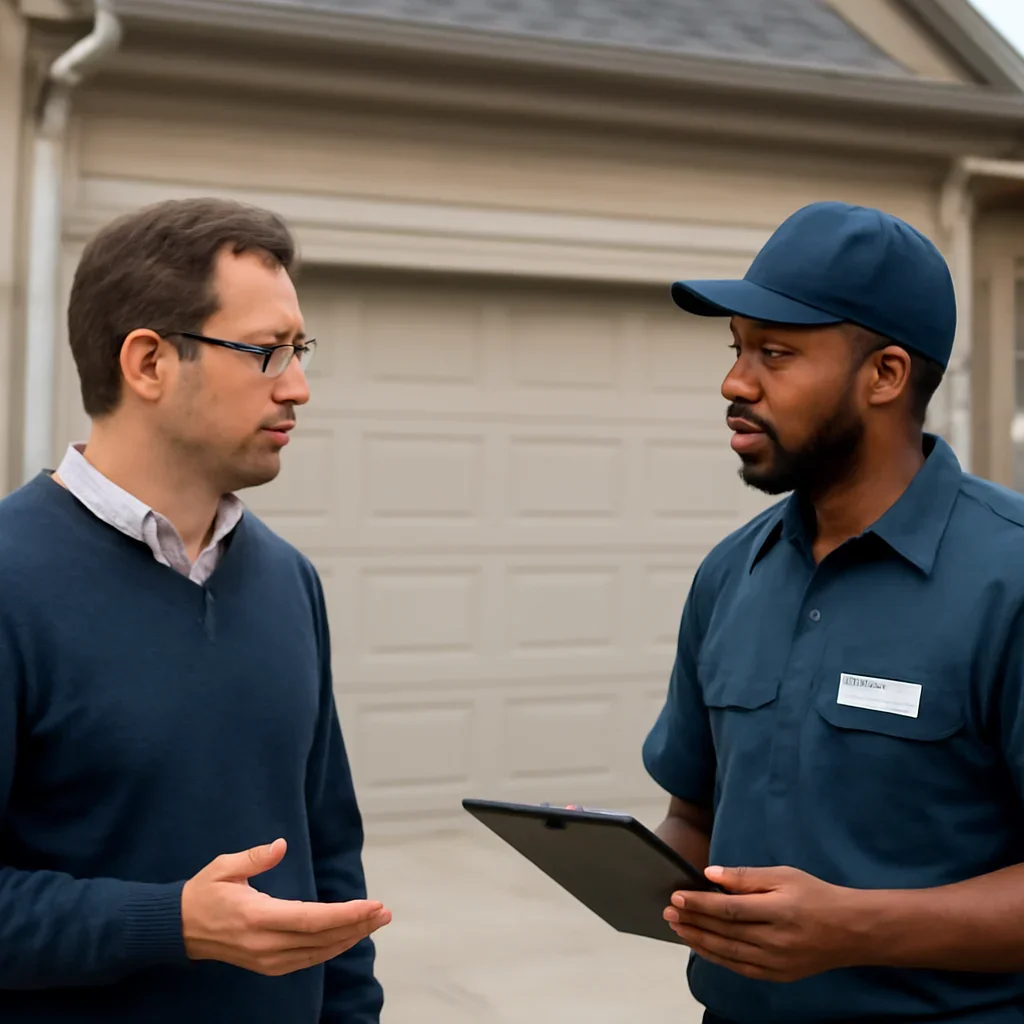
The garage may no longer secure normally. Tell us whether the door is fully open, partly open, crooked or hanging unevenly.
Coquitlam Emergency Garage Door Repair
Emergency Garage Door Repair in Coquitlam, BC
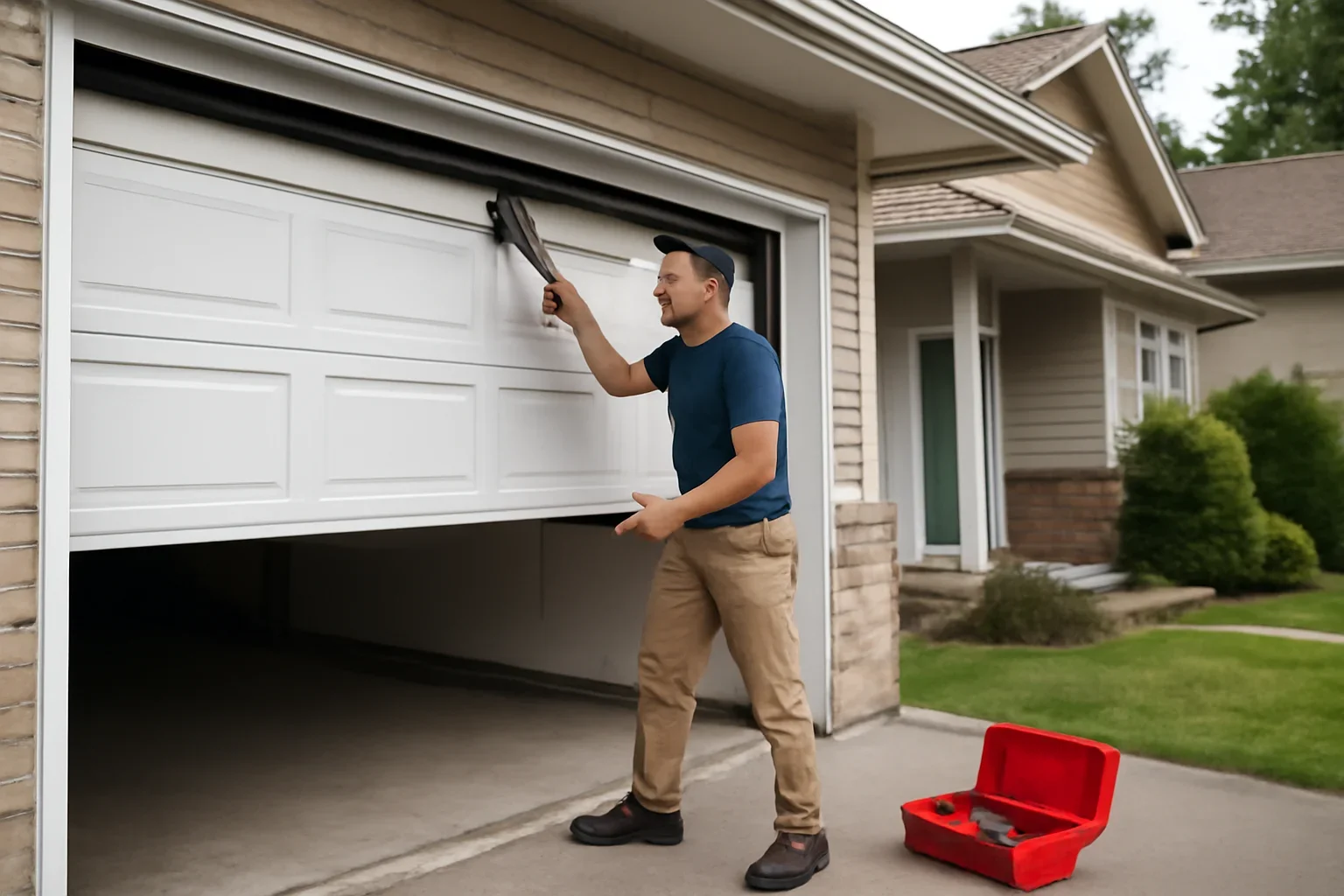
Use emergency garage-door repair when a failure creates an immediate access, security or stability problem—such as a door stuck open, a trapped vehicle, a broken spring or cable, or a door sitting dangerously out of position.
Tell us where the door is now and what changed. If it is crooked, unusually heavy or visibly unstable, stop normal operation and avoid adjusting spring or cable hardware simply to regain access.
- Door stuck open or closed
- Vehicle access blocked
- Broken spring or cable
- Off-track or unstable door
Quick Answer
What makes a garage-door problem an emergency?
The problem becomes more urgent when the garage cannot secure normally, a vehicle or essential access is blocked, or the door is visibly unstable. The first objective is to understand the safe condition of the door; the exact spring, cable, track, opener or section repair comes after diagnosis.
Emergency Triage
What is the garage door doing right now?
Current door position, stability and the effect on access are more useful than trying to name the failed part yourself.
Explain whether the door is closed, partly open, unusually heavy or responding to the opener. Do not alter spring or cable hardware just to free the vehicle.
Stop repeated operation. Rollers, tracks, cables or the counterbalance system may be involved, and forcing another cycle can worsen the condition.
A spring failure can leave the door unusually heavy, while a damaged or displaced cable can affect how the door is supported.
Vehicle or other impact can affect sections, hinges, rollers, tracks and cables. The visible panel damage may not be the complete problem.
If the physical door remains straight and stable, the opener may be involved. If the door became heavy, crooked or difficult to move, diagnose the mechanical system first.
Until the Door Is Assessed
Protect people first. Do not turn one failure into several.
Garage doors combine substantial moving weight with springs, lift cables and powered equipment. A visibly unstable system deserves a conservative response.
What you can safely do.
Keep the first steps observational and focused on reducing exposure to the damaged door.
- Keep people, pets and vehicles clear of an unstable door.
- Stop repeated opener operation when movement is crooked or unusually heavy.
- Note whether the door is open, closed, partly open or uneven.
- Describe any snap, impact or sudden movement change.
- Take photos only from a safe position.
- Tell us whether vehicle access or garage security is affected.
What not to attempt.
Loaded spring-and-cable hardware and unstable doors are not appropriate emergency DIY projects.
- Do not loosen or adjust spring hardware.
- Do not wind, pull or reconnect displaced lift cables.
- Do not loosen bottom hardware attached to the lift system.
- Do not force an off-track door through another cycle.
- Do not stand or work beneath a visibly unstable door.
- Do not increase opener force to overcome a mechanical fault.
Diagnose the Complete Door
Springs
Lift cables
Rollers & tracks
Door sections
Opener
Related damage
A stuck door does not automatically mean a failed opener.
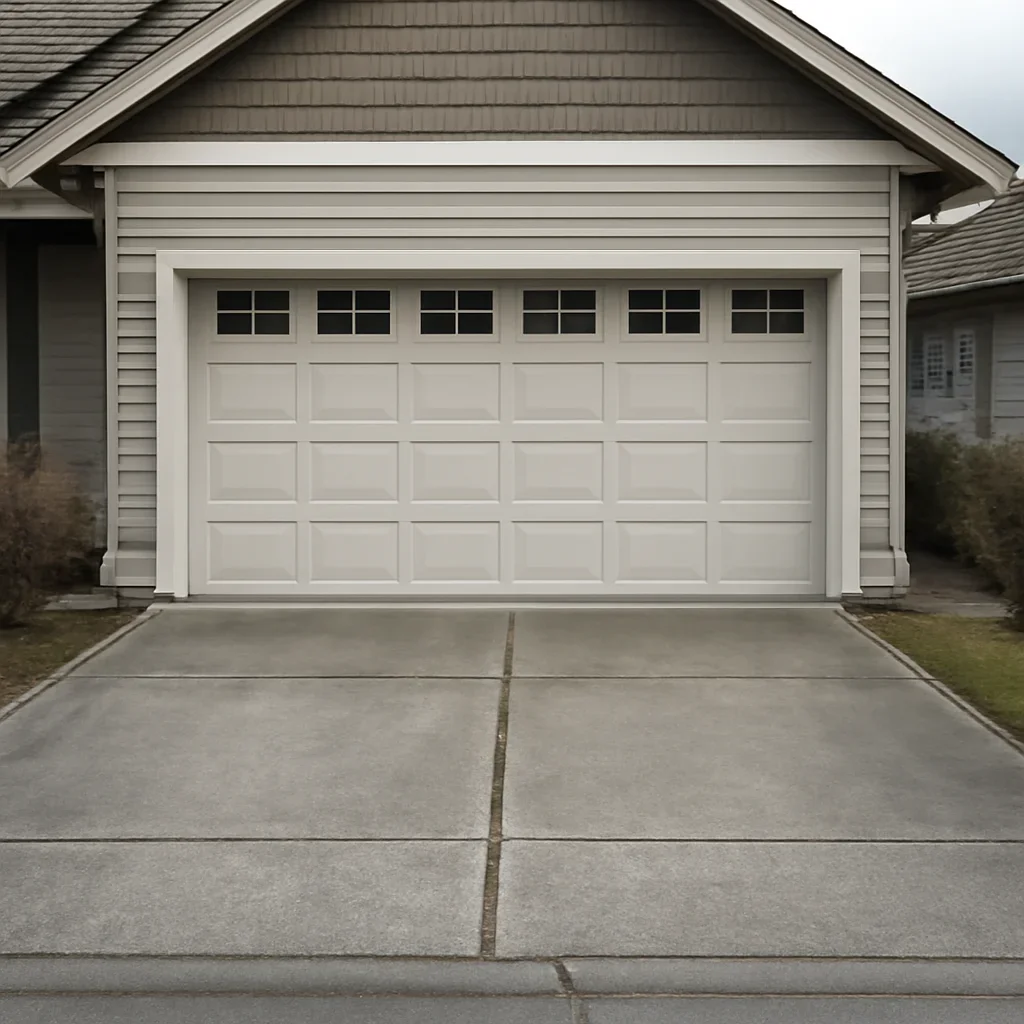
Springs, lift cables, tracks, rollers, door sections and the automatic opener work as one operating system. Emergency diagnosis should identify which part failed before parts are replaced.
A broken counterbalance spring can leave the door unusually heavy and prevent normal opener operation.
Frayed, loose or displaced cables can affect support and door position and should not be treated as a simple homeowner adjustment.
Damaged tracks or rollers leaving their normal position can produce stuck, crooked or unstable movement.
Impact damage can affect panel alignment as well as hinges, rollers and neighbouring sections.
Controls, sensors, drive hardware or the motor may be involved, but the physical door should be mechanically sound before the operator is blamed.
Spring, cable or impact failures can create secondary problems, so the first visible symptom may not represent the complete repair scope.
Coquitlam Emergency Context
Local property conditions mainly change access and coordination.
Coquitlam includes hillside streets, established residential areas and newer multi-unit housing. Those conditions can affect service logistics without determining why the garage door failed.
Describe the driveway approach.
A steep driveway, retaining condition or narrow approach can affect safe vehicle and equipment positioning during an urgent service visit.
Explain how access is affected.
If a vehicle is trapped or the garage is the household's main vehicle access, include that information when requesting service.
Identify the authorization contact.
Multi-unit, rental and managed properties can require owner, manager or strata coordination alongside the physical repair.
Report actual site conditions.
Water or debris around the garage can affect access and threshold conditions, but should remain separate from the mechanical diagnosis.
Once the Cause Is Clear
Emergency describes the urgency. The repair still needs a specific scope.
After the immediate condition is understood, route the work by the system that actually failed.
01
General garage-door repair
For stuck, damaged or unreliable doors when the failed mechanical component remains unclear.
02 Broken garage-door springFor a visible spring break, loud snap or a door that suddenly became unusually heavy.
03 Cable, roller or track damageFor loose or damaged cables, off-track rollers, bent tracks or related travel problems.
04 Garage-door opener problemFor controls, sensors, motor response or powered travel when the physical garage door remains stable.
Immediate Repair vs Larger Decision
An emergency does not automatically mean the complete door needs replacement.
First address the fault affecting access, security or stability. Then decide whether the existing garage door remains practical to repair.
The emergency may be one repairable failure.
A broken spring, cable, roller, track component or opener fault does not automatically mean the complete garage door is finished.
- The primary failure is localized.
- Door sections remain in useful condition.
- Compatible repair components are available.
- The door still suits the garage once repaired.
Broader damage may justify a separate replacement decision.
Replacement becomes more relevant when the emergency reveals extensive damage or several major conditions that make focused repair less practical.
- Multiple sections are substantially damaged.
- Several major repair needs overlap.
- Compatible parts or sections cannot be sourced.
- The existing door no longer suits the property.
Emergency Repair Process
Start with the immediate consequence, then diagnose the door.
The service request should establish what makes the situation urgent before narrowing the mechanical repair.
Confirm door position
Establish whether the garage door is open, closed, partly open, crooked or visibly unstable.
Confirm access and security
Determine whether a vehicle is trapped, normal entry is blocked or the garage cannot secure normally.
Identify the failed system
Review relevant springs, cables, rollers, tracks, sections and opener behaviour.
Define the immediate scope
Address the failure requiring urgent attention within the appropriate repair procedure.
Separate other work
Identify additional repair, maintenance or replacement as a separate next step when appropriate.
Before You Request Emergency Service
Give us the details that change the urgency.
You do not need to identify the failed component. Describe the current condition and what changed without approaching unstable spring, cable or track hardware.
- Door position Is it fully open, fully closed, partly open or visibly crooked?
- Access impact Is a vehicle trapped or is normal garage access blocked?
- Security impact Can the garage close and secure normally?
- What changed Mention a loud snap, impact, sudden heavy movement, cable displacement or off-track movement.
- Opener response Tell us whether the operator is silent, running, straining, reversing or only moving the door partway.
- Site access Mention a steep driveway, gate, retaining condition or strata/property-management coordination when relevant.
- Photos if safe Send a complete-door view and visible damage without handling or moving unstable components.
Emergency Repair Pricing
What affects the repair scope?
“Emergency” describes the impact of the malfunction rather than one specific repair. Cost depends on what failed and whether the failure affected connected components.
Failed component
Spring, cable, roller, track, section and opener failures involve different parts and repair procedures.
Extent of damage
A single failed component is different from impact or mechanical damage affecting several connected parts.
Door configuration
Door size, construction, spring system and installed hardware affect compatible repair components.
Parts required
Springs, cables, rollers, tracks, sections and opener parts vary between garage-door systems.
Secondary damage
Related damage discovered during diagnosis should be separated from the first visible symptom rather than assumed in advance.
Follow-up work
Replacement or non-urgent maintenance should remain separate from the immediate repair unless both scopes genuinely need to be addressed together.
Emergency Repair Questions
Coquitlam emergency garage door repair FAQs
Direct answers for problems involving blocked access, lost security or a visibly unstable garage door.
What counts as an emergency garage door repair?
A garage-door problem becomes more urgent when the garage cannot secure normally, a vehicle is trapped, normal access is blocked or the physical door is visibly unstable because of spring, cable, track or impact damage.
What should I do if my garage door is stuck open?
Keep people clear and stop repeated operation if the door is crooked, unusually heavy or unstable. When requesting service, explain that the garage cannot secure normally and describe the door's current position.
What if my car is trapped inside?
State clearly that vehicle access is blocked and describe whether the door is closed, partly open, unusually heavy or visibly damaged. Do not loosen spring or cable hardware simply to regain access.
Can I use the opener when a spring is broken?
Normal operation should stop when a spring is known to be broken because the garage door may no longer be properly counterbalanced. See Coquitlam garage door spring repair.
What should I do if the garage door is off-track?
Avoid forcing another opener cycle. Keep people and vehicles away if the door appears unstable and have the tracks, rollers, cables and connected components assessed. See garage door cable, roller and track repair.
Does every emergency mean I need a new garage door?
No. A spring, cable, roller, track or opener problem can remain a focused repair when the rest of the garage door is serviceable. Compare replacement when damage is broader. See the repair vs replacement guide.
Do Coquitlam hills or heavy rain make the repair an emergency?
Not by themselves. Driveway grade, runoff and access can affect the service environment, but urgency should come from the door's actual condition, whether access or security is affected, and whether the door is stable.
How quickly can emergency repair arrive in Coquitlam?
Confirm current availability when you contact the team rather than relying on an assumed response time. Explain first if the garage is unsecured, a vehicle is trapped or the door is visibly unstable.
Request Emergency Garage Door Repair in Coquitlam
Tell us where the door is now and what makes the problem urgent.
If the garage is stuck open, a vehicle is trapped, normal access is blocked or the door looks unstable, include that information first. Then describe any snap, impact, cable problem, off-track movement or opener behaviour you noticed.
- Current door position
- Access or security impact
- Visible spring, cable or track damage
- Safe photos if available