Door sections and hardware
Look for visible wear, loose or missing hardware, damaged hinges, roller problems, bent components, panel damage and anything that has changed since the last inspection.

Preventive Garage Door Care · Delta, BC
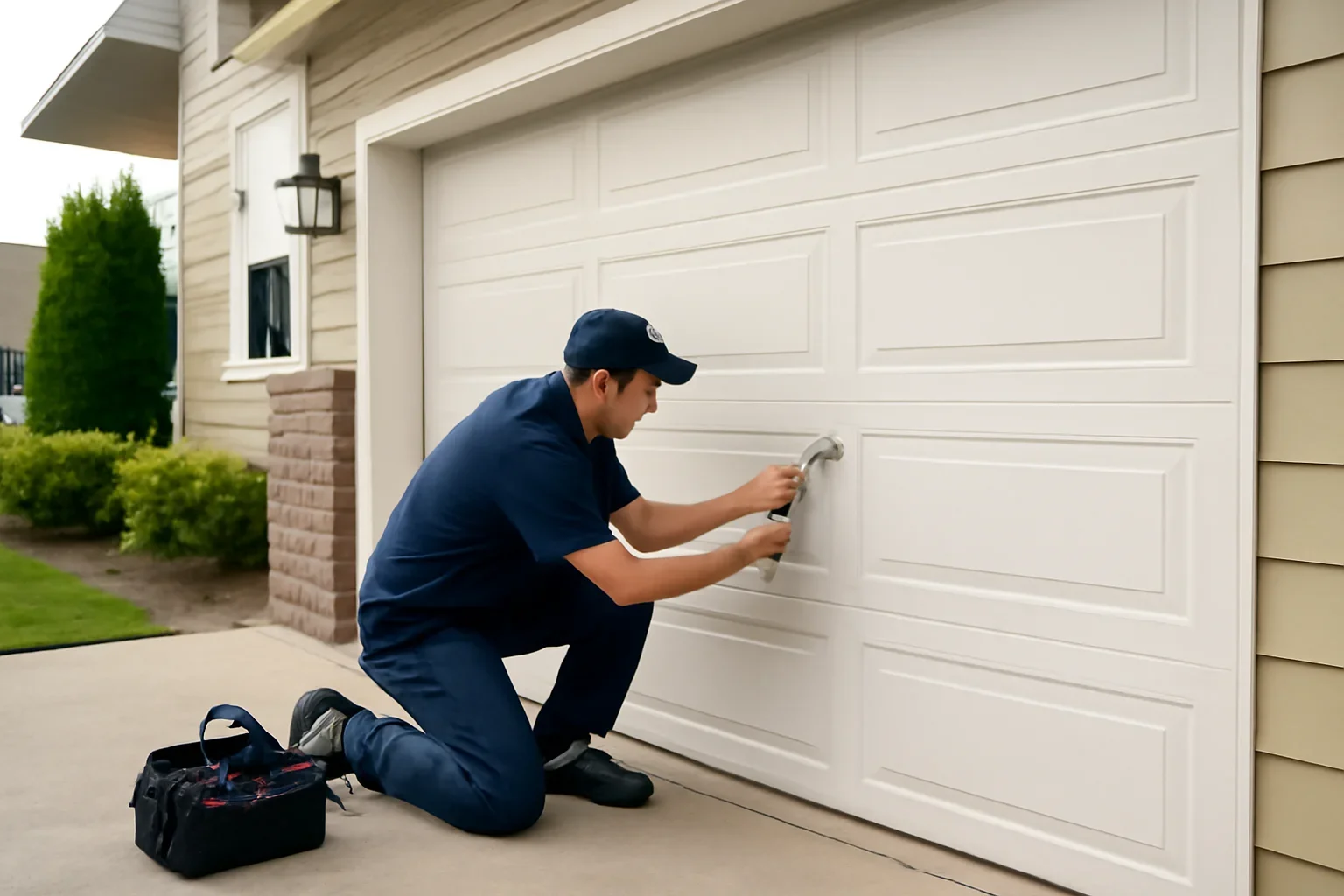
Maintenance is for a garage door that is still operating but needs inspection, lubrication, safety checks and attention to early wear. It can help identify developing problems before normal daily use turns them into a more disruptive repair.
Choose the Right Service
Maintenance is most useful before a major failure. If the door is already unsafe, stuck, unusually heavy or visibly damaged, a repair assessment is the better starting point.
Already dealing with a malfunction? Start with garage door repair in Delta . If the lifting system is the concern, see Delta garage door spring repair .
Delta Maintenance Context
The same checklist should not be interpreted identically on every property. Daily use, garage orientation, drainage, exposure, door material and existing hardware condition can all change what deserves attention first.
Maintenance Scope
Garage door maintenance is more than applying lubricant. The useful goal is to look at the door, lifting system, moving hardware, opener and safety functions as one operating system.
Look for visible wear, loose or missing hardware, damaged hinges, roller problems, bent components, panel damage and anything that has changed since the last inspection.
A properly operating door should move smoothly. Binding, uneven movement or unusual weight can indicate that preventive maintenance has crossed into a repair issue that should be diagnosed properly.
Check the condition and attachment of moving hardware. Normal use can loosen fasteners or reveal wear in rollers and hinges before the problem becomes severe enough to interrupt operation.
Lubrication should follow the instructions for the particular door and opener. Not every component should simply be sprayed with the same product, and lubricant should not be used to hide binding, damaged rollers or another mechanical fault.
Where an automatic opener is installed, sensor condition, closing path and safety-related reversing functions should be considered according to the opener manufacturer's instructions.
Inspect deteriorated seals, daylight around the closed door, debris at the threshold and actual signs of water entry. If a seal needs replacement rather than routine attention, see garage door weather seal replacement .
Maintenance Frequency
There is no single service interval that overrides the instructions for your specific door and opener. A sensible plan combines regular homeowner observation with periodic professional inspection.
North American door-system safety guidance recommends monthly visual and safety checks and suggests an annual visit from a trained technician. Your manufacturer's manual remains the primary guide for model-specific testing and lubrication.
Notice changes. New scraping, shaking, hesitation, uneven travel, gaps at the bottom or a change in opener behaviour are more useful signals than waiting for a fixed calendar date.
Look for obvious damage or wear and confirm that the doorway, tracks and safety-sensor area remain clear. Follow the manufacturer's instructions for safety testing.
A trained inspection can evaluate areas that should not be adjusted by the homeowner and identify wear that is difficult to judge from a simple visual check.
Do not wait for routine maintenance after an impact, sudden heavy operation, damaged spring or cable, off-track movement or a door that no longer travels normally. Move to repair.
Between Service Visits
Homeowner maintenance should stay on the observation and manufacturer-approved side of the system. High-tension lifting components require different handling.
Listen for new scraping, grinding or rattling and watch for shaking, hesitation, uneven movement or unexpected reversing.
Look for obvious roller, hinge, panel or weather-seal deterioration. Do not loosen a component simply because it appears unusual.
Keep stored objects, debris and other obstructions away from the closing path and photoelectric sensor area. Follow the opener manual when testing safety functions.
Do not loosen or adjust springs, lift cables, bottom brackets or other components connected to the counterbalance system. These parts can be under substantial tension.
Maintenance Questions
Maintenance generally centres on inspection, safe operational checks, condition-appropriate adjustment or lubrication and identifying developing wear. The exact work depends on the door, opener and what the inspection finds; it should not be treated as a fixed list of adjustments for every system.
Follow the maintenance schedule in the manufacturer's manuals for the door and opener. As broader industry guidance, regular homeowner safety checks and periodic professional inspection are recommended, with DASMA suggesting monthly visual/safety checks and an annual trained-technician visit.
Do not assume every moving or metal surface should be sprayed. Lubrication points and products vary by door and hardware. Follow the manufacturer's maintenance instructions rather than coating the tracks indiscriminately. A dirty, damaged or misaligned track needs the appropriate cleaning or repair, not lubricant used to mask the problem.
Sometimes, if the noise comes from normal dry or loose hardware that is suitable for maintenance. Grinding, binding, severe vibration or noise associated with crooked or difficult travel should be diagnosed as a possible repair problem rather than assuming lubrication will fix it.
It can on properties that are genuinely more exposed, but the effect is not uniform across Delta. North Delta, Ladner and Tsawwassen have different settings. Inspect the actual door for moisture entry, deteriorating seals, finish damage or corrosion rather than assuming every Delta garage has a marine-exposure problem.
No. Springs and connected lifting hardware can be under high tension. Do not loosen or adjust springs, cables, bottom brackets or related supports as a DIY maintenance task. A suspected spring problem needs appropriate professional assessment.
Usually not. If the door is already stuck, unusually heavy, crooked, off-track or no longer opening and closing normally, start with Delta garage door repair so the active fault can be diagnosed.
Share your area of Delta, property type, approximate age of the door if known, how frequently it is used, and anything that has changed such as new noise, shaking, slow travel, gaps or opener behaviour. Safe photos of the full door and visible concerns can also provide useful context.
Request Delta Maintenance
Tell us where you are in Delta, how the garage door is used and what has changed since it was operating normally. If there is already a broken spring, damaged cable, off-track condition or serious movement problem, mention that so the request can start with the appropriate repair service instead.