A Sudden Bang or Snap
A torsion spring can release abruptly when it fails. The noise may occur even when nobody is standing beside the door.

Heard a sharp bang, found the garage door suddenly too heavy to lift, or watched the opener struggle to move it? A broken or failing spring can leave the door without the counterbalance it needs to operate normally.
Garage door springs and the hardware connected to them can be under high tension. Do not loosen springs, cables, drums or bottom brackets yourself. If the door is crooked, unstable or partly open, keep people and vehicles clear of the opening.
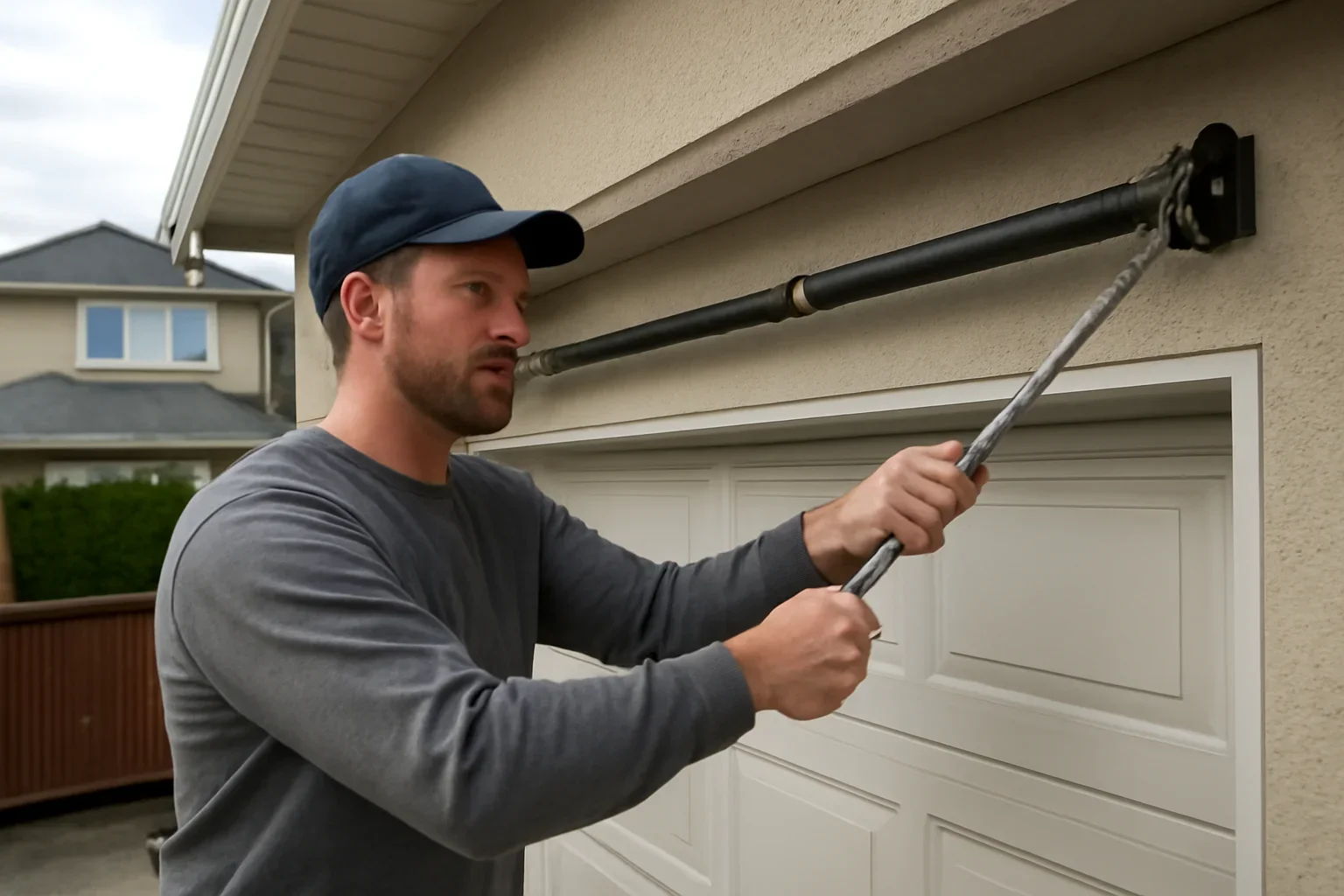
Avoid repeatedly operating the garage door. Do not touch, unwind, adjust or remove the spring, cables, bottom brackets or other tensioned hardware. A broken spring is normally replaced as part of professional spring service rather than repaired by reconnecting the broken coil.
You do not need to identify the spring specification yourself. Start with what changed and what you can see safely from a distance.
Not sure it is the spring? Start with White Rock garage door repairA torsion spring can release abruptly when it fails. The noise may occur even when nobody is standing beside the door.
The spring system counterbalances much of the door's weight. When that assistance is lost, normal movement can become difficult or unsafe.
A broken torsion spring above the opening can leave a visible separation in the coil. Look only from a safe position and do not handle the spring to confirm the failure.
An automatic opener may stop or strain when the door has lost proper counterbalance. This does not automatically mean the opener motor needs replacement.
A crooked or uneven door can involve springs, cables, drums or other lifting hardware. Stop operating a visibly unstable door until the cause is identified.
The two systems work differently and use different hardware. Knowing which general type you have can help describe the garage door, but spring identification and replacement specifications should be handled professionally.
A torsion spring system is generally mounted above the garage-door opening. The spring works with a shaft, drums and lifting cables to counterbalance the door as it moves.
When a torsion spring snaps, a distinct gap may appear in the coil. The spring and connected hardware should not be adjusted or handled by the homeowner.
Extension springs are typically positioned beside the horizontal tracks and stretch as the door operates. They use a different counterbalance arrangement from torsion springs.
Industry safety guidance calls for containment safety cables through extension springs so a failed spring is less likely to travel uncontrolled.
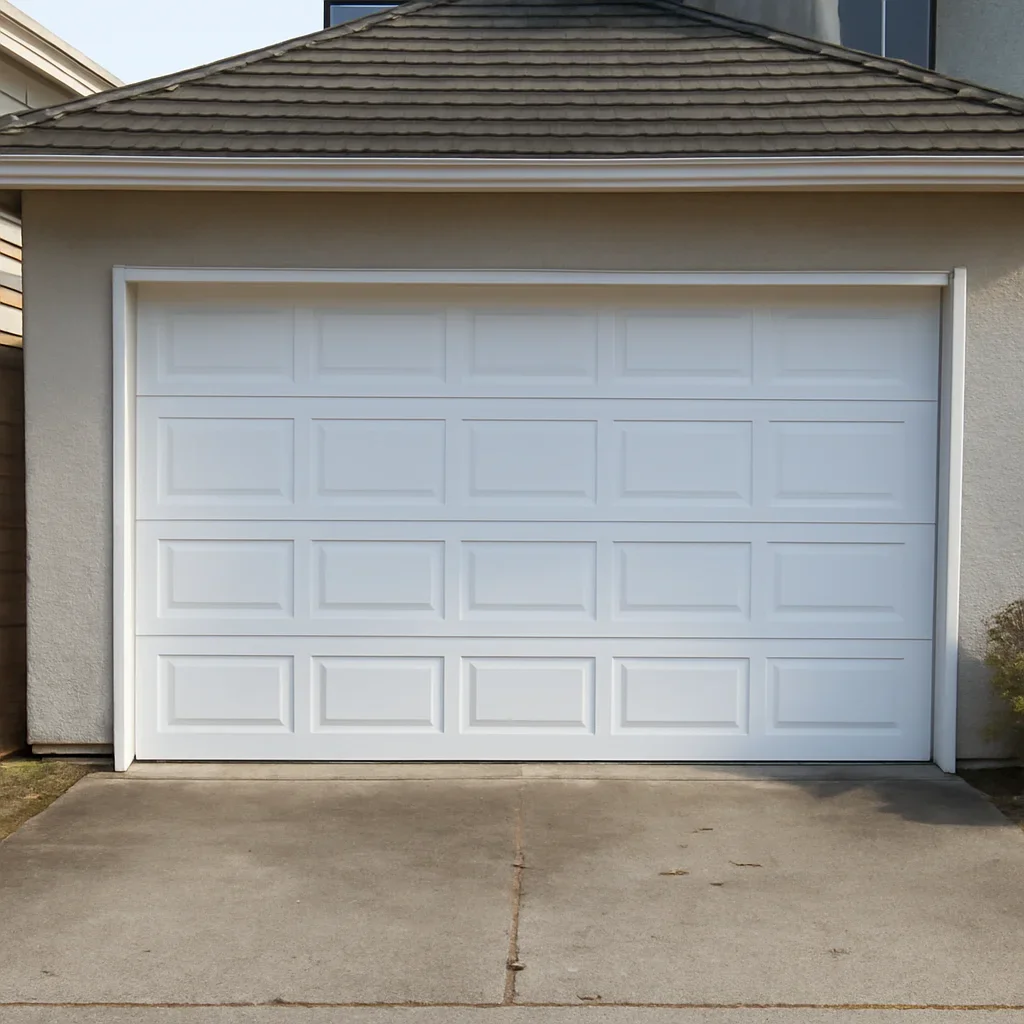
White Rock's marine setting and steep hillside are real local factors, but neither replaces an inspection of the individual garage door.
Spring wear is closely connected to door use and the counterbalance system. On more exposed properties, corrosion on springs and related metal hardware is an additional condition worth documenting during inspection.
The objective is to restore proper counterbalance and confirm that related lifting components have not been overlooked.
Identify whether the door uses torsion or extension springs and determine the existing spring configuration.
Replacement spring selection should match the door and counterbalance requirements rather than being based only on visual similarity.
Lifting cables, drums and their connection points should be checked for wear, damage or conditions related to the spring failure.
The condition of bearings, brackets, fasteners and nearby counterbalance hardware should be reviewed where applicable.
Once spring work is complete, the door should be correctly counterbalanced rather than depending on the opener to overcome excessive weight.
After the mechanical door system is functioning correctly, the opener can be checked under normal load for any separate problem.
There is no responsible single price without knowing the door and spring system. Torsion and extension setups, one-spring and multi-spring doors, and related hardware conditions can require different parts and work.
A useful quote should explain what is being replaced and whether additional lifting hardware requires attention.
Review garage door pricing informationDirect answers to the questions that commonly arise when a door becomes heavy, stuck, uneven or suddenly stops operating.
Common warning signs include a loud bang, a garage door that suddenly feels much heavier, a visible gap in a torsion spring, uneven door movement or an opener that lifts the door only a short distance. Do not touch or adjust the spring to confirm the problem.
Avoid repeatedly operating a door that may have a failed spring. Without correct counterbalance, the door can be much heavier and less predictable than normal. If the door is open, partly open, crooked or unstable, keep people and vehicles clear and request professional service.
Garage door spring replacement is not an appropriate routine DIY repair. Springs and connected hardware can be under high tension, and industry safety guidance recommends that spring-system repairs be handled by trained door-system technicians.
Usually not by itself. A broken spring is a counterbalance-system failure and does not automatically mean the door panels or complete garage door need replacement. The condition of the door and related hardware should be assessed separately.
If the door has a two-spring system, DASMA recommends replacing both springs when one breaks. Both springs have generally experienced the same door cycles, and the completed system still needs to be correctly matched and balanced for the specific door.
Yes. An opener may strain, stop or move the door only a short distance when a spring is broken or the door is out of balance. The mechanical door and spring system should be evaluated before assuming the opener motor requires replacement.
It can be relevant on more exposed properties, but it should not be assumed to be the cause of a particular failure. White Rock has a marine setting, and Canadian building research recognizes salt-laden sea spray as a corrosion consideration for susceptible materials. Inspect the actual spring and related hardware for corrosion rather than diagnosing by location alone.
Cost depends on the spring system, door configuration, number and specification of springs, and whether cables, drums, bearings or other hardware also require attention. Review the garage door pricing information and request a spring-specific assessment rather than relying on one generic price.
Share your White Rock location, whether the door is open or closed, what changed before the problem appeared, whether you heard a bang or snap, and any safe photos taken without touching springs, cables or unstable hardware. Mention a steep or restricted driveway if it could affect access.
Tell us what happened, whether the garage door is open or closed, whether you heard a snap or bang, and what you can see safely. If possible, include photos taken from a safe distance without touching the spring or related hardware.