
A broken spring, cable problem, obstruction, damaged track, opener issue or another mechanical condition may prevent normal travel.
Burnaby Garage Door Repair
Garage Door Repair in Burnaby, BC
When a garage door becomes stuck, crooked, unusually heavy, noisy or unreliable, the first job is identifying whether the problem is in the springs, cables, rollers, tracks, sections, opener or more than one part of the system.
Start with the door's actual behaviour rather than guessing at a component. A symptom that looks like an opener problem, for example, can sometimes begin with a heavy or binding garage door.
- Stuck or uneven doors
- Springs, cables, rollers & tracks
- Opener-vs-door diagnosis
- Damage and repair planning
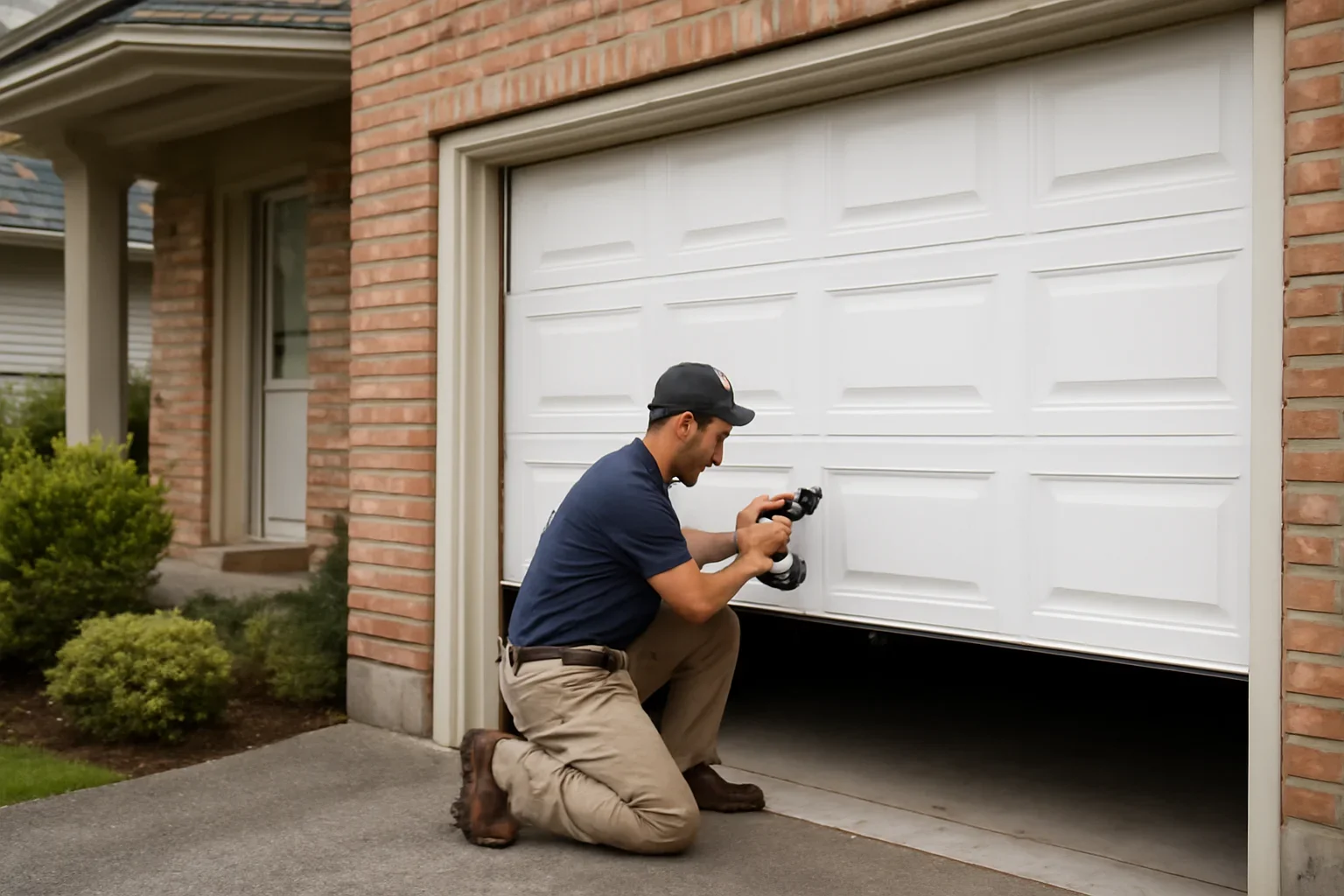
Quick Answer
What should you do when a garage door stops working normally?
Stop trying to force the door if it is crooked, off-track, unusually heavy or has visibly damaged springs or cables. Describe what happened and the door's current position, then have the complete system checked so the repair addresses the cause rather than only the most obvious symptom.
Start With the Symptom
What is the garage door doing?
You do not need to diagnose the exact part before requesting service. These behaviours provide a safer and more useful starting point.
Uneven or crooked movement can involve cables, rollers, track position or the counterbalance system and should not be forced through another cycle.
A major change in door weight or balance can point toward a spring-system problem rather than a weak garage-door opener.
Rollers, tracks, hinges, damaged sections or another alignment issue can create resistance and abnormal movement.
The operator may need repair, but first determine whether a heavy or binding door is making the opener work against abnormal resistance.
Check more than the damaged section. Hinges, rollers, tracks, cables and adjacent sections can also be affected by an impact.
Full-System Diagnosis
Springs
Cables
Rollers
Tracks
Sections & hinges
Opener
A garage door is a connected system.
Repair should account for how the failed component interacts with the rest of the door. Replacing one worn piece without understanding why it failed can leave the original problem unresolved.
Counterbalance springs support the door's weight. A broken or improperly functioning spring can make the door unusually difficult to move and increase strain elsewhere.
Frayed, loose or displaced lift cables require careful inspection because they work with the spring system and can remain under significant tension.
Worn or damaged rollers can contribute to shaking, noise, resistance and poor travel through the tracks.
Bent, damaged, loose or displaced track conditions can interfere with movement and create additional stress on other components.
Impact damage can affect more than appearance. Inspect adjacent sections, hinges and roller positions before deciding whether the problem is only cosmetic.
The automatic opener should move a mechanically sound door. If the door itself is heavy or binding, repairing only the opener may not address the underlying issue.
Know When to Stop Operating It
Some garage-door problems should not be tested repeatedly.
Springs, cables and bottom hardware can remain under substantial tension. A visibly unstable door should be treated differently from an ordinary squeak or remote-control problem.
The door suddenly became heavy.
Do not attempt to adjust or replace spring components yourself. Route the problem to spring repair.
A cable is loose, frayed or displaced.
Avoid handling the cable or bottom bracket. Keep normal operation stopped until the condition is assessed.
The door is visibly crooked or unstable.
Do not force the opener to continue moving an off-track or heavily misaligned door.
The door or track has been struck.
Keep people and vehicles clear if the door appears unstable and have the complete affected area inspected.
If the garage cannot secure normally, vehicle access is blocked or the door appears mechanically unstable, say that clearly when requesting service.
Burnaby Property Context
Local conditions affect access and wear—not every diagnosis.
Burnaby contains a wide range of residential building forms and site conditions. Use those details where they genuinely affect how the garage is accessed or used.
Diagnose the installed system.
Existing residential doors can have different spring, track, roller and opener configurations. Start with the hardware that is actually installed.
Clarify responsibility and access.
Duplex, multiplex, rowhouse or managed-property garages can add owner, tenant, strata or access coordination to the physical repair.
Share unusual driveway conditions.
On properties with significant grade, the driveway and working area can matter for service access even though slope does not identify the failed garage-door component.
Separate water from mechanics.
Where rain or runoff reaches the opening, inspect seals and visible hardware, but treat surrounding drainage as a separate property condition.
More Specific Repair Paths
Use the narrower service when the failed system is clear.
This page is the right starting point for a general malfunction. Once the problem is identified, the more specific service page can provide deeper guidance.
01
Broken or damaged spring
Use the Burnaby spring page when a spring is visibly broken or the door has suddenly become unusually heavy.
02 Cable, roller or track problemUse the component-repair page for frayed cables, damaged rollers, bent tracks or related movement problems.
03 Powered operation problemUse opener repair when controls, sensors, motor response or powered travel remain the main concern after the door itself is considered.
04 Localized section damageA damaged section may sometimes be addressed separately when the rest of the door remains serviceable and a compatible section is available.
05 The door still works normallyUse maintenance when the goal is preventive inspection and upkeep rather than correcting a current failure.
Repair or Replace?
One failed part does not automatically mean a new garage door.
Use the extent of damage, condition of the remaining door, repair history and future goals instead of one arbitrary age cutoff.
Focused repair may make sense when…
The failure is localized and the remaining door system is still practical to keep.
- A spring, cable, roller, hinge, track or opener component is the primary problem.
- Door sections remain structurally useful.
- Major repair needs have not become repetitive.
- Required compatible components can be sourced.
- The existing door still meets your practical needs.
Replacement deserves comparison when…
The repair is becoming one part of a larger condition or property decision.
- Multiple door sections are substantially damaged or deteriorated.
- Several major components require significant work.
- Substantial repairs have become recurring.
- Compatible door sections or components are unavailable.
- You also want to change insulation, appearance or overall door construction.
Before You Request Repair
Describe the behaviour before trying to name the failed part.
A few clear details can help establish the right repair path without asking you to handle springs, cables or unstable hardware.
-
What changed? Describe whether the door became stuck, crooked, noisy, heavy, slow, damaged or stopped responding to the opener.
-
Where is the door now? Say whether it is fully open, fully closed, partly open or sitting unevenly.
-
Was there a sound or impact? Mention a loud snap, grinding, vehicle impact or other event that happened immediately before the problem.
-
Does the opener respond? Explain whether the motor runs, clicks, flashes, strains or does nothing when a control is used.
-
Is normal access or security affected? Say whether a vehicle is blocked, the garage is stuck open or the door cannot secure the property normally.
-
Photos if safe Send a full-door view and visible damage if practical. Do not handle springs, cables or an unstable door to take a closer picture.

Repair Process
Find the cause before deciding the scope.
The repair path should move from the reported symptom to the complete door system and then to the component or components actually requiring attention.
Confirm the symptom
Establish door position, movement, unusual sounds, visible damage and whether normal property access is affected.
Check the complete door
Review relevant springs, cables, rollers, tracks, hinges, sections and opener behaviour rather than one symptom alone.
Identify the root condition
Separate the primary failed component from secondary wear or damage that may have developed around it.
Define the repair scope
Determine whether focused repair is appropriate or whether broader replacement deserves comparison.
Review normal operation
After the repair, the complete system should be checked for appropriate movement and relevant opener operation.
Repair Pricing
What changes the cost of a Burnaby garage-door repair?
A repair price cannot be reduced to the symptom alone. A noisy roller, broken spring, damaged track and impact-damaged door are different scopes.
Failed component
Springs, cables, rollers, tracks, sections and opener components involve different parts and labour.
Extent of damage
One isolated component is a different repair from a door affected across several connected parts.
Door specification
Door size, construction and installed hardware can affect the compatible repair components.
Part availability
Compatible parts or matching sections may not have the same availability for every existing door.
Repair versus replacement
When several major issues exist together, compare the repair scope with the larger replacement decision rather than relying on one component price.
Avoid Making It Worse
Five repair mistakes worth avoiding.
A malfunctioning garage door combines moving weight, spring tension and powered equipment. More testing is not always more information.
Continuing to cycle an unstable or off-track door can add stress to rollers, tracks, cables and the opener.
Counterbalance components can remain under substantial tension and should be handled within the appropriate professional repair scope.
A heavy or binding physical door can make a working opener sound weak or strained.
A spring, cable, roller, track or compatible section problem may have a focused repair path when the rest of the door remains useful.
Condition, extent of damage, repair history, parts availability and future goals provide a better decision framework.
Burnaby Repair Questions
Garage door repair FAQs
Direct answers for homeowners trying to decide what type of garage-door problem they have and what to do next.
Why is my garage door stuck?
A stuck door can involve springs, cables, tracks, rollers, the opener or an obstruction. If the door is visibly crooked, unusually heavy or unstable, avoid forcing it and have the complete system diagnosed.
Why is one side of my garage door lower than the other?
Uneven positioning can involve a cable, roller, track or counterbalance problem. Do not keep cycling a visibly crooked door because the condition can place additional stress on connected components.
Can a broken spring make the opener look weak?
Yes. The spring system helps counterbalance the door's weight. A spring problem can make the door substantially harder for the opener to move. See Burnaby garage door spring repair.
Can a frayed garage door cable be repaired safely at home?
A frayed, loose or displaced cable should not be treated as routine DIY maintenance because cables work with the spring and bottom-bracket system. Avoid handling tension-loaded hardware and arrange professional assessment.
Does a noisy garage door always need repair?
No. Some ordinary noise can relate to maintenance, but grinding, impact sounds, severe shaking or a sudden change in operation deserves diagnosis. If the door otherwise works normally, Burnaby garage door maintenance may be the more appropriate starting point.
Can one damaged garage-door panel be replaced?
Sometimes. It depends on the extent of the damage, condition of the rest of the door and availability of a compatible section. See garage door panel replacement for the focused decision guide.
When should I compare repair with replacement?
Compare replacement when several major parts or sections are deteriorated, substantial repairs are recurring, compatible components are unavailable or you also want to change the door's construction, insulation or appearance. See the repair vs replacement guide.
What if my Burnaby garage door is stuck open or a car is trapped?
Explain the current door position and whether access or property security is affected when requesting service. If the door is unstable or the situation is urgent, use Burnaby emergency garage door repair and confirm current availability.
Request Garage Door Repair in Burnaby
Tell us what the door is doing before trying to diagnose the part yourself.
Share the current door position, what changed, whether there was a snap or impact, what the opener does and whether normal vehicle access or property security is affected.
- Current door position
- Noise or movement symptom
- Visible damage if any
- Photos if safe