Remote Does Not Work
If the wall control still operates the door, the issue may be isolated to the remote, programming or another control-related fault.

If the wall button works but the remote does not, the door reverses before closing, the opener lights flash, or the motor runs without moving the door, the symptoms can point to very different faults. The first step is finding out whether the problem is actually in the opener, its controls and sensors, or the garage door itself.

The most useful description is not simply “the opener is broken.” Note which command works, where the door stops, what lights or sounds you notice, and whether the door itself moves normally.
If the wall control still operates the door, the issue may be isolated to the remote, programming or another control-related fault.
An obstruction, misaligned safety sensor, sensor wiring problem or travel-setting issue can produce this type of behaviour.
Safety sensing, travel settings, physical obstruction or resistance in the door system all need to be considered rather than simply increasing force.
The drive mechanism, trolley connection or door hardware may be involved. A disconnected or mechanically difficult door should not be treated as a remote-control problem.
Wall controls, wiring, lock modes, electronics or control-board issues may need to be separated from a basic power-supply problem.
This may not be an opener fault. Door balance, springs, rollers, tracks and other mechanical resistance should be checked before the opener is asked to compensate.

An automatic opener moves a door that should already be mechanically capable of travelling through its opening. If a spring has failed, a cable is damaged, a roller has left the track or the door has become unusually heavy, repairing the opener alone does not solve the underlying problem.
A useful diagnosis therefore works outward from the symptom instead of assuming the motor unit is at fault.
The distinction matters because the opener should not be used to overcome a door that is mechanically unsafe, damaged or badly out of balance.
These observations can make the service request more useful without dismantling the opener or working on loaded springs and cables.
Confirm that the unit has normal power and whether other electrical equipment on the same circuit appears affected. If the outlet or household wiring itself is faulty, that may require separate electrical work.
Note whether neither control works, only the wall control works, or only one remote is affected. That difference helps isolate the fault.
Check for an obvious obstruction, dirty lens or a sensor that has been bumped out of position. Do not bypass the safety sensors to force normal operation.
Flashing indicators, clicking, humming or a repeatable stopping point can be useful diagnostic information. A short safe video may also help explain an intermittent problem.
A broken spring, displaced cable, crooked door or damaged track changes the repair priority. Do not continue cycling the opener simply to test whether it will overcome the problem.
Springs and cables can remain under substantial stored tension. If either appears damaged, stop using the automatic opener and direct the service request to the appropriate door repair.
The answer depends on what has actually failed, the condition and compatibility of the existing opener, parts availability and what you need the system to do after the repair.
Many opener repairs involve controls, sensors, programming or mechanical components within the garage-door system. A failed household receptacle, new circuit or relocated outlet is a different issue.
In British Columbia, Technical Safety BC states that electrical permits are often required for electrical installations and alterations, including installing or moving outlets. Chilliwack falls within Technical Safety BC's electrical-permit jurisdiction rather than the municipal exceptions listed by the provincial safety authority.
Controls, sensors, opener operation and the garage-door system can be assessed as part of determining the actual fault.
If the problem requires a new circuit, outlet relocation or other regulated electrical alteration, the appropriate electrical scope should be confirmed separately.
If the garage is part of a strata property, establish what equipment belongs to the owner and what falls under strata responsibility before authorizing broader work.
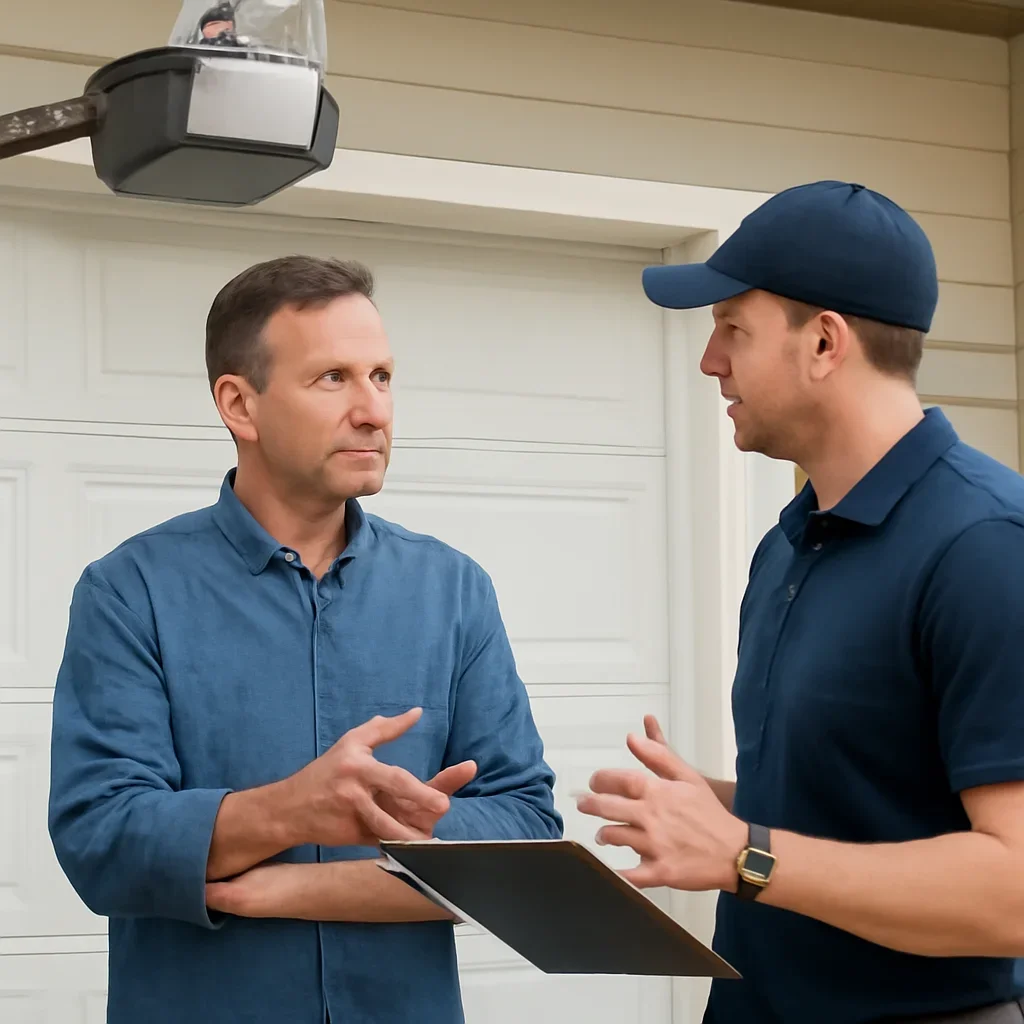
Good diagnosis identifies the failed part before deciding whether an adjustment, component repair, door repair or opener replacement makes sense.
Establish which controls work, how far the door travels and what the opener does immediately before the fault appears.
Look for spring, cable, roller, track or balance problems that could be creating abnormal resistance for the opener.
Review sensors, controls, wiring at the opener, diagnostic indicators and relevant travel or drive behaviour.
Choose the next step based on the identified fault rather than replacing equipment simply because the door stopped working.
These answers focus on the symptoms homeowners usually need to understand before deciding what type of service to request.
Safety-sensor problems are one possibility, but they are not the only cause. An obstructed or misaligned sensor, damaged sensor wiring, travel-setting problem or physical resistance in the door can all affect closing. Note any flashing lights and whether the sensors appear aligned before requesting service.
A reversing door may be detecting an obstruction, losing the safety-sensor signal, encountering excessive resistance or reaching an incorrect travel setting. The cause should be diagnosed rather than simply increasing the opener's closing force.
If the wall control operates the door normally, the problem may be isolated to the remote, its battery, programming or a control-related issue rather than the complete opener. Bring or identify all affected remotes when describing the problem.
Yes. The opener moves the door; it is not intended to substitute for a properly functioning counterbalance system. A broken spring can make the door unusually heavy and place excessive load on the opener. Use the Chilliwack spring-repair service if a spring is visibly broken or the door has suddenly become very heavy.
It depends on the failed component, overall condition, compatibility with the door, parts availability and repair economics. An isolated sensor or control fault is a different decision from a major motor or electronic failure. Diagnosis should come before the repair-versus-replace decision.
Many openers include a manual emergency-release mechanism, but it should only be used according to the manufacturer's instructions and with the doorway clear. If a spring is broken, a cable is damaged or the door is unsupported, do not assume manual operation is safe.
Routine opener diagnosis does not automatically mean household wiring will be altered. If the project requires a new circuit, moving an outlet or other regulated electrical installation work, separate electrical requirements may apply. Technical Safety BC administers electrical installation permits in Chilliwack.
Share the opener brand and model if visible, the exact symptom, which controls still work, any flashing indicator pattern, where the door stops and whether there is visible spring, cable or track damage. Photos or a short safe video can also make an intermittent fault easier to describe.
Share the opener brand if known, which controls work, what happens when you press the button and whether you can see any spring, cable, track or sensor problem. That gives the service conversation a more useful starting point.