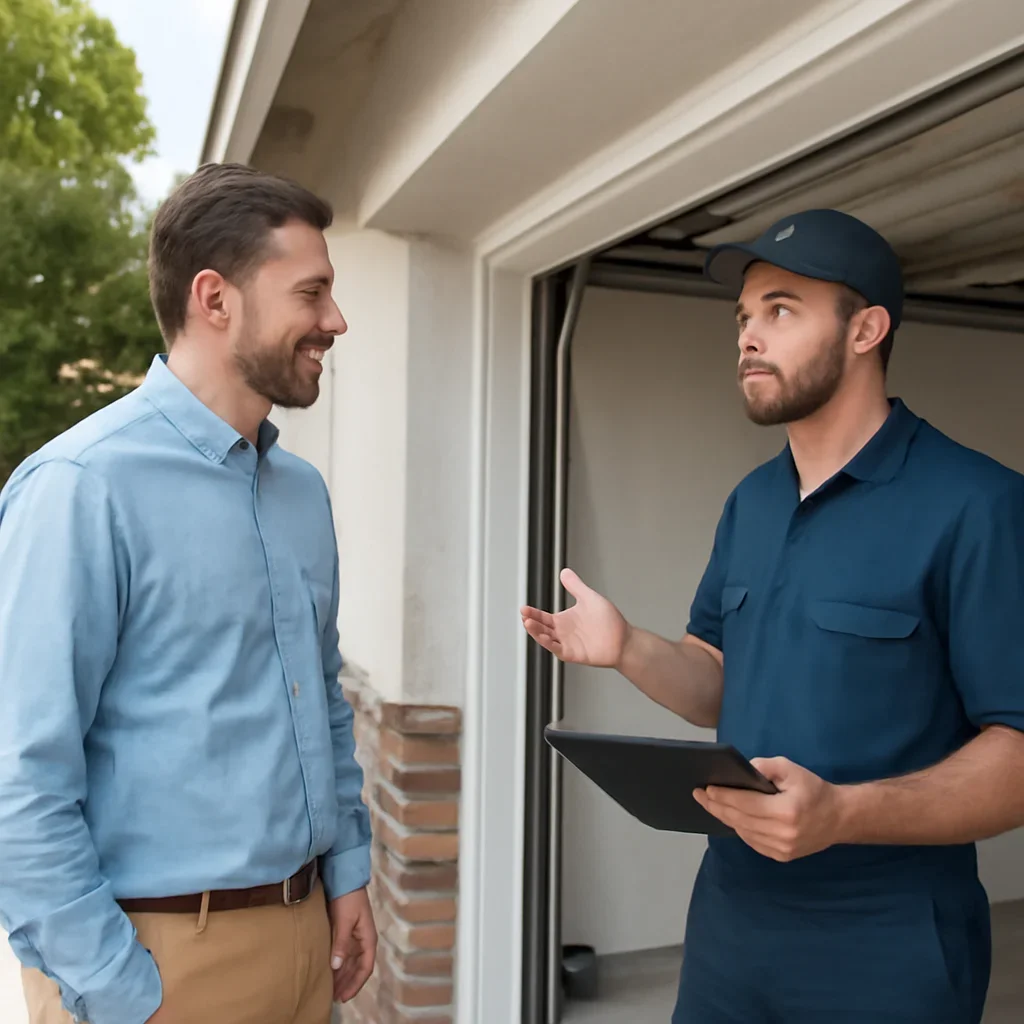
A Loud Bang or Snap
Springs can release abruptly when they fail. A sudden bang from the garage can therefore be the first sign of a spring problem.

Heard a sharp bang, found the garage door suddenly much heavier, or noticed the opener can no longer lift it normally? A broken or failing spring can leave the door without the counterbalance it needs for controlled movement.
Garage-door springs, lift cables, drums and bottom brackets can be under substantial tension. Do not loosen, wind, disconnect or remove these components yourself. If the door is crooked, off track, partly open or visibly unstable, keep people and vehicles clear.
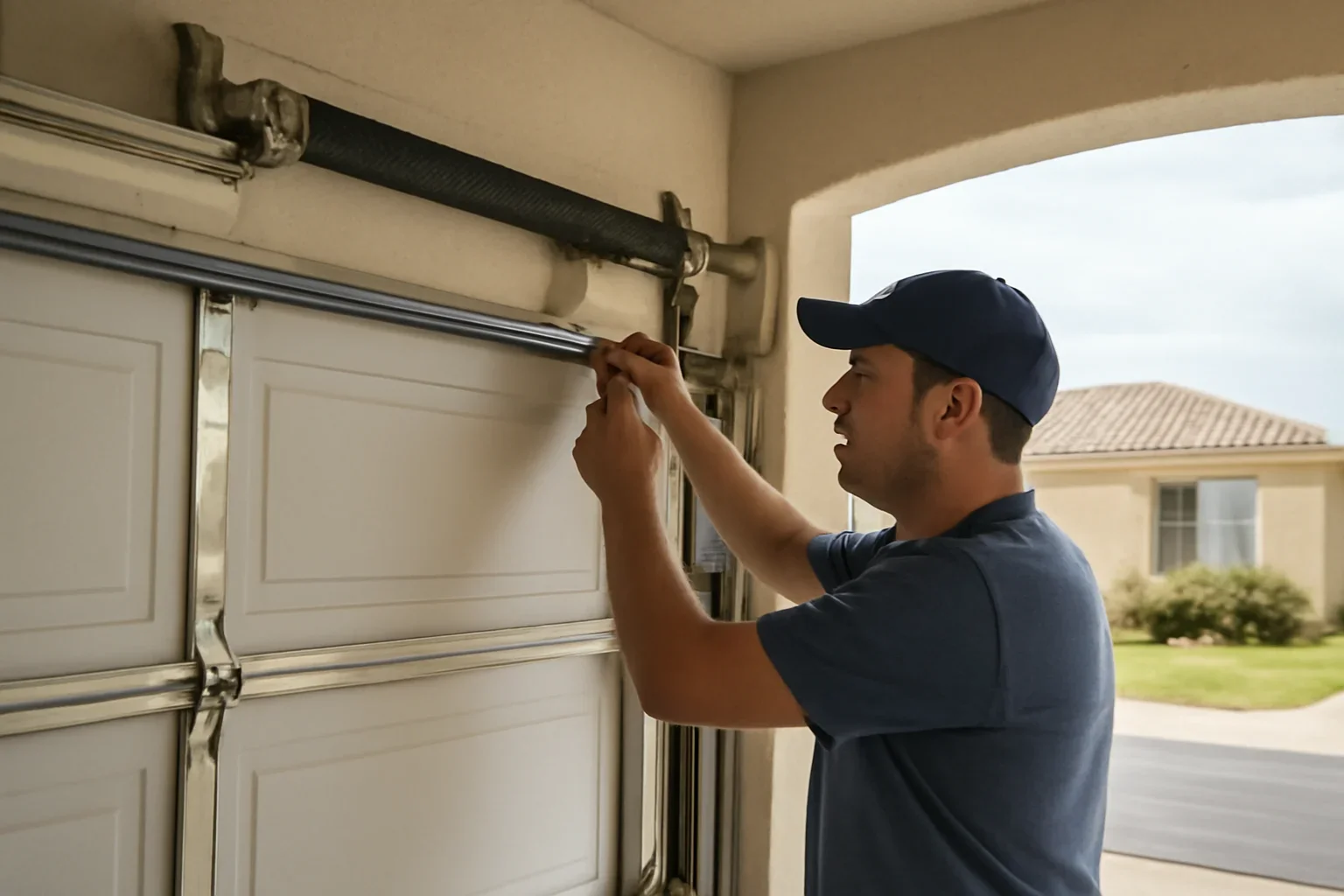
Avoid repeatedly operating the garage door. Do not touch, adjust or remove the spring, lift cables, drums or bottom brackets to confirm the problem. If the door is crooked, off track, unusually heavy or unstable, stop using it until the lifting system can be assessed.
You do not need to determine the exact replacement spring yourself. Start with what changed and what you can observe safely without handling the spring system.
Not sure it is the spring? Start with Mission garage door repairSprings can release abruptly when they fail. A sudden bang from the garage can therefore be the first sign of a spring problem.
The spring system counterbalances the garage door. When that support is lost, the door can become much more difficult and potentially unsafe to move.
A broken torsion spring above the door opening can leave a noticeable separation in the coil. Observe it from a safe distance and do not touch the spring or shaft.
A functioning opener can struggle when the door loses proper counterbalance. That symptom does not automatically mean the opener motor needs replacement.
Uneven movement may involve the springs, lift cables, drums or another part of the lifting system. Stop repeated operation of a visibly unstable door.
Garage-door springs form part of the counterbalance system. They store and release energy as the door moves so the opener is not expected to overcome the full unbalanced weight of the door.
This is why a garage-door opener can appear weak even though the real problem is a broken or improperly functioning spring system.
Identifying the general system can help describe the problem when requesting service. Selecting, adjusting and tensioning the spring itself should be left to trained service.
Torsion systems generally use one or more springs mounted around a shaft above the opening. The shaft, drums and lift cables work together as the door travels.
When a torsion spring breaks, a distinct gap can sometimes be seen in the coil. Do not handle the spring, shaft, winding hardware or cables to verify the failure.
Extension-spring systems place the springs beside the horizontal tracks and use a different counterbalance arrangement from torsion systems.
Industry safety guidance calls for containment safety cables on extension-spring systems so a failed spring is less likely to travel uncontrolled.
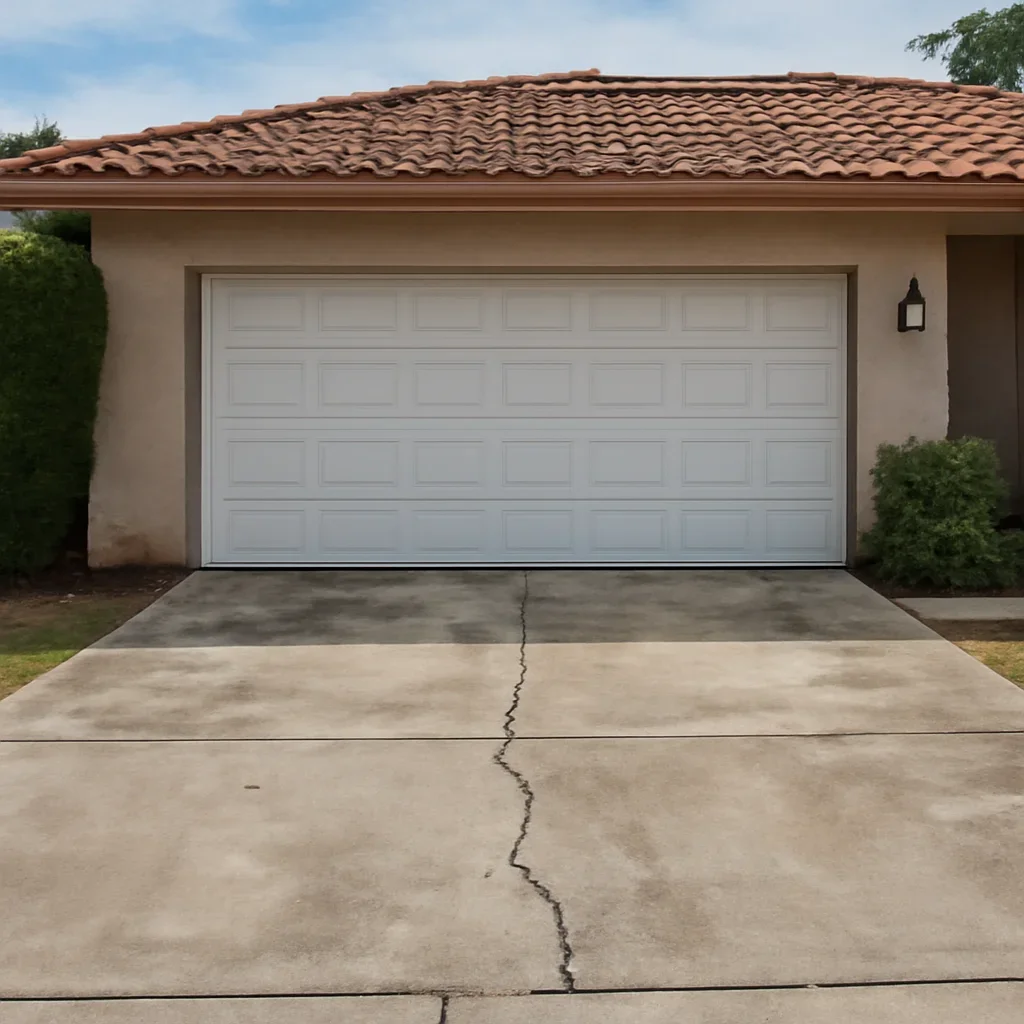
Mission sits on a southern coastal mountain slope overlooking the Fraser Valley. The City specifically describes substantial variation in its hillsides and gullies, while the northern municipality includes forested areas around Steelhead and north of Stave Falls.
That creates real differences in garages and site access, but spring repair still needs to be based on the actual door, spring arrangement and lifting system.
Spring service should consider the counterbalance and lifting system as a whole rather than replacing the most obvious broken component and ignoring related conditions.
Determine whether the door uses torsion or extension springs and whether the existing setup uses one, two or another spring arrangement.
The replacement needs to match the actual counterbalance requirements of the door rather than simply looking similar to the failed spring.
Cables, drums and their connection points should be inspected for fraying, damage, displacement or conditions associated with uneven movement.
Bearings, brackets, supports and other connected hardware should be checked for visible damage, wear or corrosion where applicable.
After spring work, the door should be appropriately counterbalanced rather than relying on the automatic opener to compensate for excessive weight.
Once the mechanical door operates correctly, the opener can be assessed under normal load to determine whether any separate opener problem remains.
Spring repairs cannot responsibly be reduced to one universal price. The spring arrangement, door and condition of related lifting hardware all influence the repair scope.
Review garage door pricing informationDirect answers about broken springs, heavy doors, two-spring systems, opener symptoms, Mission properties and repair costs.
Common signs include a loud bang, a garage door that suddenly feels much heavier, a visible gap in a torsion spring, uneven movement or an opener that can no longer lift the door normally. Do not touch or adjust the spring to confirm the problem.
Avoid repeatedly operating a door that may have lost its counterbalance. If the door is heavy, crooked, off track, unstable or partly open, keep people and vehicles clear and request service instead of forcing it.
Garage-door springs and their connected cables and brackets can be under substantial tension. Spring replacement, winding and related adjustment are not routine homeowner maintenance and should be handled by trained door-system service.
On a two-spring garage door, DASMA recommends replacing both springs when one fails. Both springs normally operate through the same door cycles and work together as part of the counterbalance system.
Yes. A broken spring can make the door significantly heavier, causing a functional opener to strain, stop or lift only part way. The mechanical door and counterbalance system should be assessed before assuming the opener needs replacement.
The basic safety principles are the same, but detached garages and accessory buildings can have different door dimensions, spring arrangements and access conditions. The spring specification needs to match the actual door rather than the property type.
They should not be treated as an automatic cause. Mission has pronounced hillside terrain and generally mild, wet winters, so site access, dampness and visible corrosion may be relevant on a particular property. Spring condition, door configuration and the counterbalance system still need to be assessed directly.
Cost depends on the spring type, door configuration, number and specification of springs and whether cables, drums, bearings or other hardware also need attention. Review the garage door pricing information and request a spring-specific assessment rather than relying on one universal figure.
Share your Mission location, whether the garage is attached or detached, whether the door is open or closed, what changed and whether you heard a bang or snap. Mention steep or restricted access where relevant and include safe photos from a distance if available. Do not move springs, cables or unstable hardware to take a photograph.
Tell us what changed, whether the door is open or closed, whether you heard a bang or snap, and whether the garage is attached, detached or reached by restricted access. If possible, include photos taken safely without touching springs, cables or unstable hardware.