Springs and Door Balance
Check whether the counterbalance system is intact and appropriate rather than expecting the opener to lift an unusually heavy door.

If your garage door is stuck, crooked, unusually noisy, reversing or no longer opening and closing normally, start with the symptom rather than guessing which component failed. Springs, cables, rollers, tracks and openers can create overlapping problems.
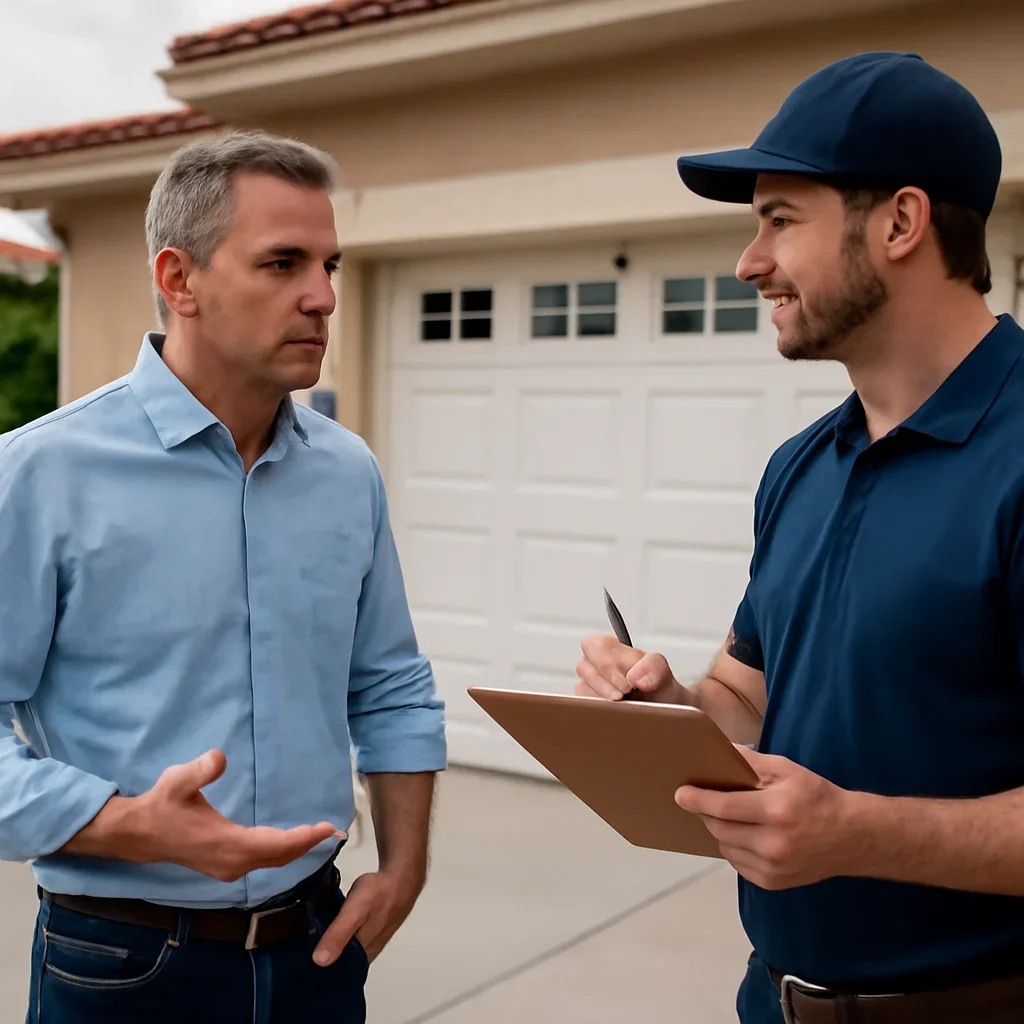
Tell us what changed, whether the garage can still be secured, whether normal vehicle access is affected, and what you can see safely. For detached garages or outlying Mission properties, include the building and access details as well.
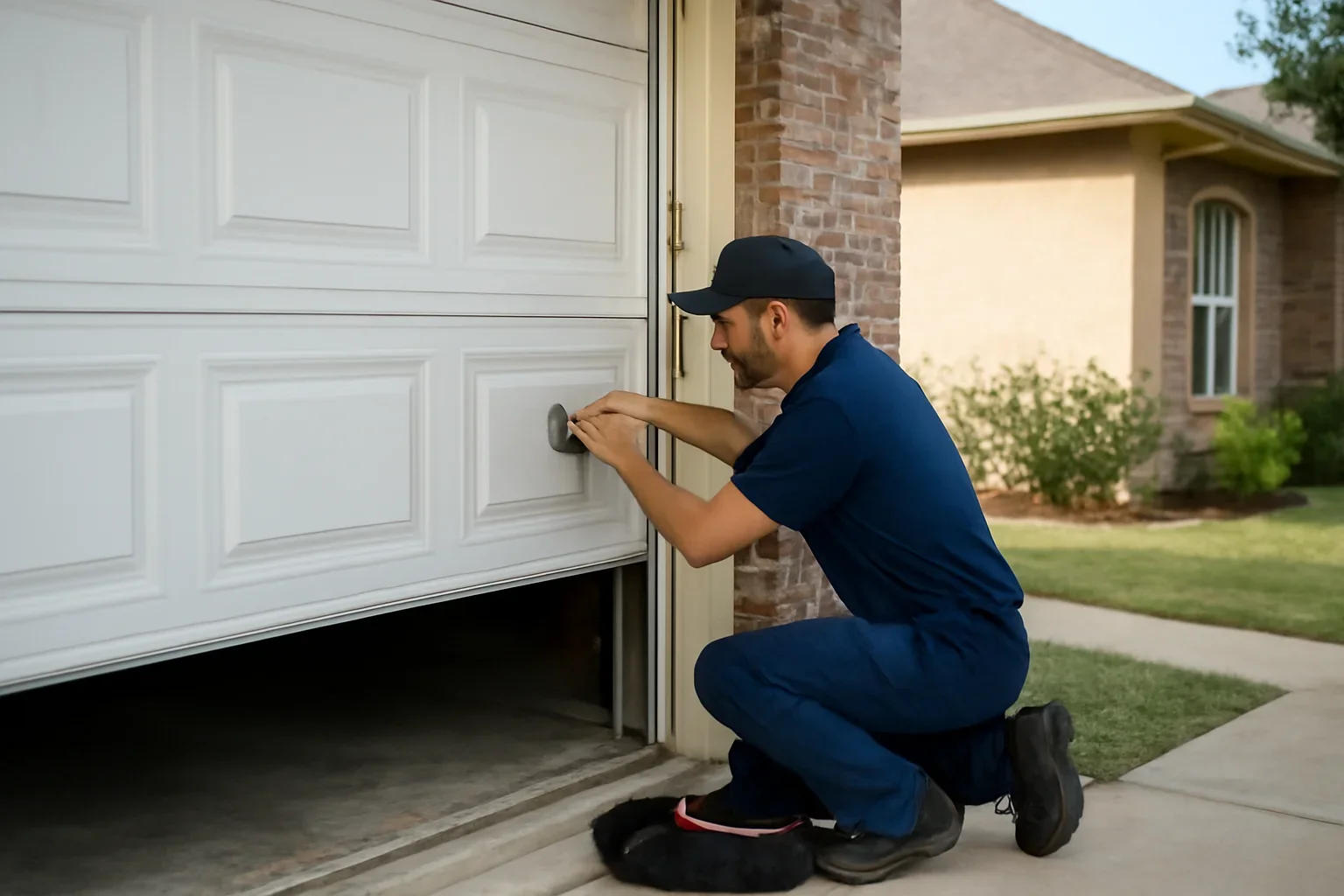
Stop repeatedly operating a garage door that is crooked, unusually heavy, off track or visibly unstable. Do not loosen, remove or adjust garage-door springs, lift cables or bottom brackets yourself. These parts can be under substantial spring tension.
Several components can create similar symptoms. A useful repair assessment starts with the way the complete door behaves instead of assuming the first visible problem is the only one.
A broken spring or another counterbalance problem is possible, particularly when the change was sudden or followed a loud bang.
Spring repairA cable may have slipped or failed, or a drum, roller, track or other lifting-system problem may be pulling one side differently.
Cable & track repairWorn rollers, hinges, track issues or opener components can create abnormal noise. A new sound is more significant when movement has also changed.
MaintenanceThe opener could have a fault, but a broken spring, mechanical resistance or another door-system problem can produce a similar symptom.
Opener repairAn obstruction, applicable safety sensors, opener controls or resistance in the door itself may need diagnosis. Do not bypass safety equipment to make the door close.
Check opener issuesLocalized damage may be repairable, while extensive distortion or deterioration can make complete replacement worth comparing.
Panel replacement
Mission sits on a coastal mountain slope overlooking the Fraser Valley, and the City describes substantial variation in its hillsides and gullies. It also includes established rural communities alongside planned urban growth.
Those differences matter for property access, garage configuration and the conditions around the door. They do not identify the failed component for you.
The spring, cables, rollers, tracks, hinges, panels and opener all affect how the garage door moves. Repair should address the root problem rather than one isolated symptom.
Check whether the counterbalance system is intact and appropriate rather than expecting the opener to lift an unusually heavy door.
Fraying, displacement, slack or damage can contribute to uneven travel and unstable door movement.
Look for damaged track, poor alignment, debris and roller wear that could cause binding, resistance or abnormal noise.
Loose hinges, damaged hardware or distorted panels can affect the way sectional doors bend and travel through the tracks.
Once the mechanical door is understood, the opener, applicable sensors, remotes and wall controls can be assessed for a separate problem.
Torn seals, debris, threshold problems or damage around the opening can affect everyday closing and weather protection even when they are not the main repair.
You do not need to diagnose the failed part before requesting service. Describing the change clearly is usually more useful than guessing.
Note whether the issue appeared suddenly or gradually, what the door does now, unusual sounds and whether access or security are affected.
Review the symptom together with the connected door components so an obvious fault is not mistaken for the complete diagnosis.
Determine which components require repair and whether related damage or wear needs attention at the same time.
After repair, relevant balance, travel, alignment, closing and opener interaction should be checked before regular operation resumes.
A broken spring, damaged cable, worn roller, bent track, opener fault and damaged panel are different repairs. Cost depends on the diagnosed problem and the actual door system.
Review garage door pricing factorsOne failed component does not automatically mean the entire garage door needs replacing. Consider the overall condition of the door before making that decision.
Repair deserves consideration when the problem is isolated and the existing garage door still suits the building and opening.
Replacement becomes more relevant when deterioration or damage is widespread, major repair needs keep recurring or the existing door no longer works well for the property.
Use this general repair page when the cause is uncertain. Once the failed system is clear, the dedicated page provides a more focused next step.
Direct answers about common garage-door failures, safety, costs and Mission property considerations.
Several problems can cause this. A broken spring, damaged cable, binding door, opener fault or disconnected component may all prevent normal opening. If the door suddenly became unusually heavy or you heard a loud bang, a spring problem is one possibility.
Uneven movement can involve a lift cable, drum, spring, roller or track problem. Stop repeatedly operating a visibly tilted or unstable door because additional movement can worsen the damage.
Springs, spring-connected cables and bottom brackets can involve substantial stored tension. DASMA recommends trained technicians for service involving these components. Use Mission garage door spring repair when a spring failure is suspected.
Rollers, hinges, tracks, loose hardware and opener components can all create abnormal noise. If the sound arrived with jerky, crooked or difficult movement, diagnose the complete door rather than assuming lubrication alone will solve it.
They can affect service planning rather than the mechanical diagnosis itself. Mission has substantial hillside terrain and rural communities, so driveway access, detached garages, workshops and multiple-door properties may need to be described before service. The actual spring, cable, track or opener still has to be diagnosed directly.
It can influence exposure conditions, but it should not be blamed automatically for a particular failure. Where moisture, debris, deteriorated seals or visible corrosion are actually present, those conditions should be included in the repair assessment.
Cost depends on what failed, the door configuration and whether related components require attention. A spring replacement, cable problem and opener-control fault are different repairs. Review the garage door pricing information and request an assessment based on the actual symptoms.
Repair generally deserves consideration when the failure is isolated and the door remains fundamentally serviceable. Replacement becomes more relevant when damage or deterioration is widespread or significant repairs keep recurring. See the garage door repair vs. replacement guide.
Share your Mission location, whether the garage is attached, detached or part of another building, what the door is doing, when the problem started and whether access or security are affected. Mention steep or restricted driveway access when relevant and include safe photos if available. Do not handle springs, cables or unstable hardware to photograph them.
Describe the movement problem, noise or visible damage, when it started, and whether the garage can still be secured. For a rural property, detached garage or steep driveway, include that context so the service request reflects the actual site.