A Loud Bang or Snap
A torsion spring can release abruptly when it breaks. A sudden bang from the garage is one common reason homeowners first discover the failure.

Heard a sharp bang, found the garage door suddenly too heavy to lift, or noticed the opener can no longer move it normally? A broken or failing spring can leave the door without the counterbalance it needs for controlled movement.
Garage-door springs, lift cables and related hardware can be under substantial tension. Do not loosen, wind, disconnect or remove these components yourself. If the door is crooked, unstable or partly open, keep people and vehicles clear.
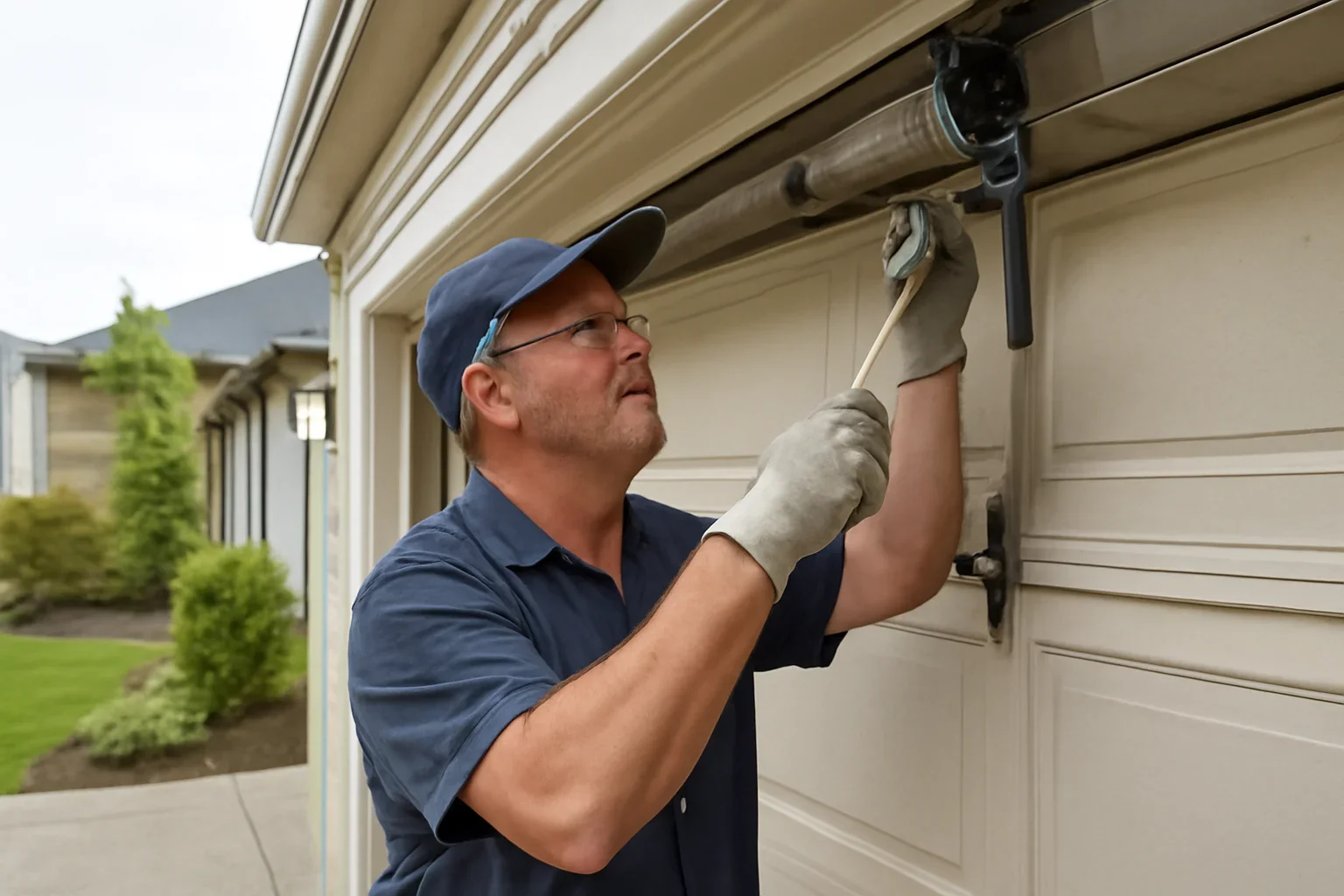
Avoid repeatedly operating the garage door. Do not touch, unwind, adjust or remove the spring, lift cables, drums, bottom brackets or other tensioned hardware. A visibly unstable door should be left alone until the lifting system can be assessed safely.
You do not need to identify the replacement spring yourself. Start with what changed and what can be observed safely from a distance.
Not sure it is the spring? Start with Pitt Meadows garage door repairA torsion spring can release abruptly when it breaks. A sudden bang from the garage is one common reason homeowners first discover the failure.
The spring system provides counterbalance for the garage door. When that support is lost, the door may become difficult or unsafe to move.
A broken torsion spring above the opening can leave a visible separation in the coil. Look only from a safe position and do not handle the spring to confirm the failure.
A working opener may struggle or stop when the garage door has lost proper counterbalance. That does not automatically mean the opener motor needs replacement.
Uneven movement can involve springs, lift cables, drums or another part of the lifting system. Stop operating a visibly unstable door until the cause is identified.
Garage-door springs form part of the counterbalance system. They store and release energy as the door moves so the opener does not have to lift the full weight of an unbalanced door.
That is why a struggling opener can sometimes be a symptom of a spring problem rather than a motor problem.
The systems use different spring arrangements and connected hardware. Identifying the general type can help describe the problem, but spring selection and tensioning should be handled professionally.
Torsion systems normally position one or more springs on a shaft above the garage door. The shaft, drums and lift cables work together as the door travels.
When a torsion spring breaks, a distinct separation may be visible in the coil. Do not touch the spring, shaft or connected hardware to verify the problem.
Extension springs are typically positioned beside the horizontal tracks and stretch as the garage door operates. They use a different counterbalance arrangement from torsion springs.
Extension-spring systems should incorporate containment safety cables so a broken spring is less likely to travel uncontrolled.
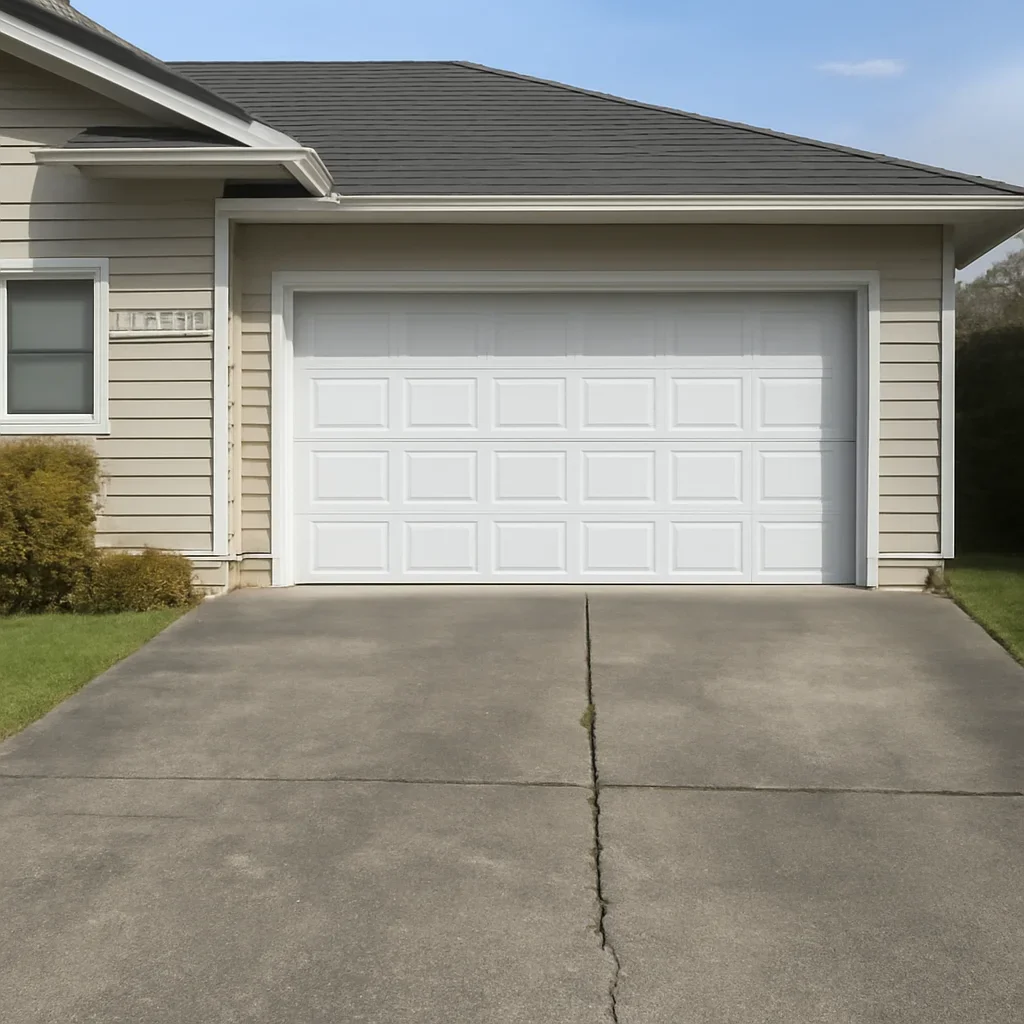
Pitt Meadows is primarily lowland and includes both an urban area and a much larger agricultural and rural landscape. The municipality also relies on extensive diking and drainage infrastructure.
For spring repair, those facts matter mainly when they affect the individual garage, access or condition of related hardware. The spring itself still needs to be assessed around the actual door and counterbalance system.
The objective is not just to replace a visibly failed component. The counterbalance and lifting system should be considered together so the door is not left operating against another problem.
Identify whether the door uses torsion or extension springs and determine the existing single, paired or other spring configuration.
Replacement spring selection should match the door's actual counterbalance requirements rather than being based only on visual similarity.
Cables, drums and their connection points should be checked for fraying, damage, slack or conditions associated with uneven travel.
Related counterbalance hardware should be reviewed for wear, damage and visible corrosion where applicable.
After spring work, the garage door should be appropriately balanced rather than depending on the automatic opener to overcome excessive weight.
Once the mechanical door is functioning correctly, the opener can be assessed under normal load for any separate motor, control or sensor problem.
There is no responsible universal price without knowing the door and spring system. Torsion and extension systems, single- and multi-spring arrangements, and related hardware conditions can require different parts and work.
Review garage door pricing informationDirect answers to common questions after a garage door becomes heavy, uneven or suddenly stops operating normally.
Common signs include a loud bang, a garage door that suddenly feels much heavier, a visible gap in a torsion spring, uneven movement or an opener that lifts the door only a short distance. Do not touch or adjust the spring to confirm the problem.
Avoid repeatedly operating a door that may have lost its counterbalance. A failed spring can leave the door much heavier and less predictable than normal. If the door is crooked, unstable or partly open, keep people and vehicles clear and request professional service.
Garage-door springs and their connected cables and brackets can be under substantial tension. Spring replacement and adjustment are not appropriate routine DIY repairs and should be handled by a trained door-system technician.
If the garage door uses two springs, industry safety guidance recommends replacing both when one fails. Both normally experience the same operating cycles, and the completed spring system still needs to be correctly specified for the door.
Yes. When a spring fails, the door can become much heavier and cause the opener to strain, stop or move the door only a short distance. The spring and mechanical door should be assessed before assuming the opener motor needs replacement.
No direct conclusion should be made from location alone. Pitt Meadows is predominantly low-lying and relies heavily on drainage and diking infrastructure, so dampness or corrosion may be relevant where they are actually present. The spring specification, condition, usage and complete counterbalance system still need to be assessed directly.
Cost depends on the spring system, door configuration, number and specification of springs, and whether cables, drums, bearings or other hardware also require service. Review the garage door pricing information and request a spring-specific assessment instead of relying on one universal price.
Share your Pitt Meadows location, whether the garage is attached or detached, whether the door is open or closed, what happened before the problem appeared, whether you heard a bang or snap, and any safe photos taken from a distance. Do not move springs, cables or unstable hardware to take a photograph.
Tell us what changed, whether the door is open or closed, whether you heard a bang or snap, and what you can see safely. If possible, include photos taken from a safe distance without touching springs, cables or related hardware.
