Springs and Door Balance
Check whether the spring system remains intact and whether the door is appropriately counterbalanced instead of forcing the opener to handle excessive weight.

If your garage door is stuck, crooked, unusually loud, reversing, or no longer opening and closing normally, start with what changed rather than guessing which part failed. Springs, cables, rollers, tracks and openers can produce overlapping symptoms.
Tell us whether the garage can still be secured, whether a vehicle is trapped, and what the door does when you try to operate it. Safe photos of visible damage can help provide context.
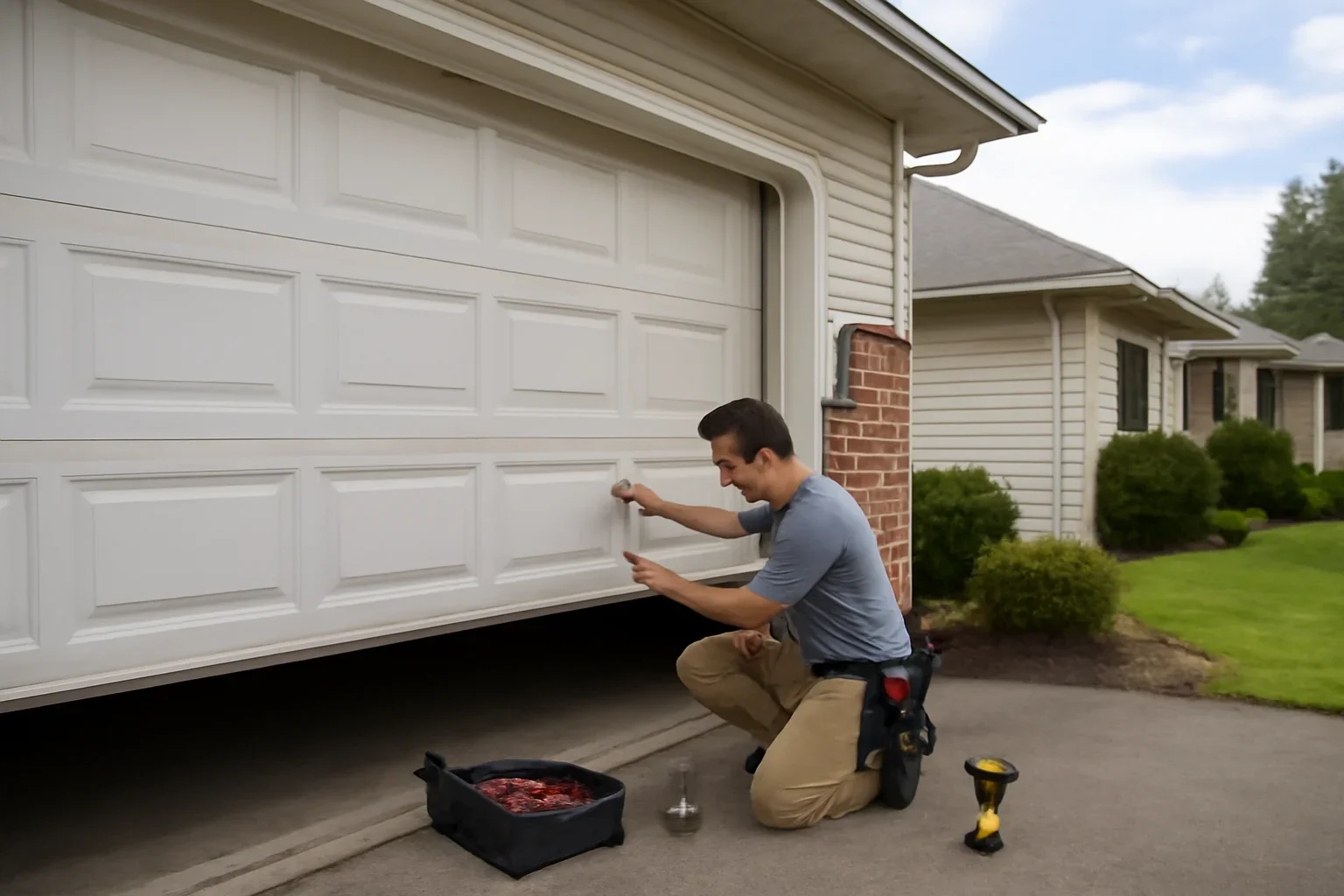
Stop repeatedly operating a garage door that is crooked, off track, unusually heavy or visibly unstable. Do not loosen or remove springs, lift cables or bottom brackets yourself. Those parts can be under substantial tension and require appropriate repair procedures.
The same symptom can have more than one cause. A useful garage door repair assessment looks at the whole operating system before deciding which component should be repaired or replaced.
A broken spring or other counterbalance problem is one possibility, particularly if the change happened suddenly or followed a loud bang.
Spring repairA cable may have slipped or failed, or a problem with the drum, track, rollers or lifting system may be pulling one side differently from the other.
Cable & track repairWorn rollers, loose hinges, track problems or opener components can all create abnormal noise. A new noise matters more when it arrives with poor movement.
MaintenanceThe opener may have a fault, but a broken spring, disconnected trolley or another mechanical problem can create similar symptoms.
Opener repairSafety sensors, an obstruction, opener behaviour or resistance from the garage door itself may need to be checked.
Pitt Meadows servicesLocalized damage may be suitable for panel replacement, while widespread deterioration or several damaged sections can make complete replacement worth comparing.
Panel replacement
Pitt Meadows combines a compact urban residential area with a much larger rural landscape. The City reports that about 85% of residents live within its 404-hectare urban core, while the remaining population is distributed across the rural portion of the municipality.
The municipality is also largely low-lying and protected by an extensive diking and drainage system. Those facts can affect site and moisture context, but a spring, cable or opener failure still needs to be diagnosed on the actual garage door.
Springs, cables, rollers, tracks, hinges and the opener work together. The goal is to identify the root cause without turning every symptom into a full-door replacement.
Check whether the spring system remains intact and whether the door is appropriately counterbalanced instead of forcing the opener to handle excessive weight.
Frayed, slack or displaced cables and related drum problems can cause uneven travel and may leave the door unstable.
Look for damaged track, poor alignment, worn rollers, debris or another condition that can cause binding, resistance or grinding.
Damaged hinges, loose hardware or distorted panels can interfere with the way the door bends and travels through the track.
Once the mechanical door condition is understood, the opener, wall controls, remotes and safety sensors can be evaluated for a separate fault.
If water, debris, daylight or drafts are entering around the closed door, inspect the bottom and perimeter seals as part of the broader service discussion.
You do not need to know the failed part before requesting service. Describing what changed is often more useful than attempting to diagnose the garage door yourself.
Note whether the problem appeared suddenly or gradually, what the door does, unusual sounds and whether normal access or security is affected.
Review the affected component together with the connected hardware so an obvious symptom is not mistaken for the entire fault.
Determine which components require repair and whether related wear or damage should be addressed at the same time.
After repair, the relevant balance, travel, alignment, closing and opener interaction should be checked before normal use resumes.
A broken spring, frayed cable, worn roller, damaged track, opener fault and damaged panel are different jobs. A useful quote should follow the diagnosed problem rather than one generic garage-door repair price.
Review garage door pricing informationA failed spring, roller, cable or opener does not automatically mean the complete garage door needs replacing. Look at the condition of the door itself before making that decision.
Repair is generally worth considering when the problem is isolated and the existing door still fits the opening and property's needs.
Replacement becomes more relevant when several sections are badly damaged, deterioration is widespread or significant repair needs are recurring.
Use this general repair page when the cause is uncertain. If the failed system is already clear, the more specific service page will keep the next step focused.
Direct answers to common questions when a garage door suddenly stops working normally.
A broken spring, cable problem, binding track, opener fault or another mechanical issue may be responsible. If the door suddenly became unusually heavy or you heard a sharp bang, a spring failure is one possibility. Avoid repeatedly forcing the opener until the cause is identified.
Uneven travel can involve a cable, drum, spring, roller or track problem. Stop operating a visibly tilted or unstable door because continued movement can worsen the damage or create an unsafe condition.
Garage-door springs, spring-connected cables and bottom brackets can be under substantial tension. Industry safety guidance recommends trained door-system technicians for work involving these components.
Worn rollers, loose hinges, track problems and opener components can all create abnormal noise. A sound that appears suddenly or occurs with jerky, uneven or binding movement deserves closer inspection.
It can affect the property's moisture and drainage context, but floodplain geography should not be treated as the cause of a mechanical garage-door failure. Pitt Meadows is largely within the Fraser and Pitt River floodplains, so if water entry, dampness, deteriorated seals or corrosion are actually present in the garage, include those conditions in the inspection.
Cost depends on what failed, the door configuration and whether related components also require service. A broken spring and an opener-control fault involve different parts and work. Review the garage door pricing information and request an assessment based on the actual problem.
Repair generally makes sense when the failure is isolated and the existing door remains suitable. Replacement deserves comparison when damage or deterioration is widespread, significant failures keep recurring or the existing door no longer suits the garage. See the repair vs. replacement guide.
Share your Pitt Meadows location, the property or garage type, what the door is doing, when the problem started, any unusual noise or visible damage, and whether access or security is affected. If safe, include photos. Do not handle springs, cables or unstable hardware to take them.
Describe the movement problem, unusual sound or visible damage, when it started and whether the garage can still be secured. If a vehicle is trapped or the door appears unstable, include that when you request service.