Vancouver Garage Door Repair

Garage Door Repair in Vancouver, BC

If the garage door is stuck, crooked, unusually heavy, noisy, reversing or no longer closing securely, start with the symptom. The cause may be in the spring system, cables, rollers, tracks, opener or another part of the door.

Vancouver properties can also introduce rear-lane access, detached garages, laneway housing and older building configurations. Share those details when they affect access or the repair—not as a substitute for diagnosing the door itself.

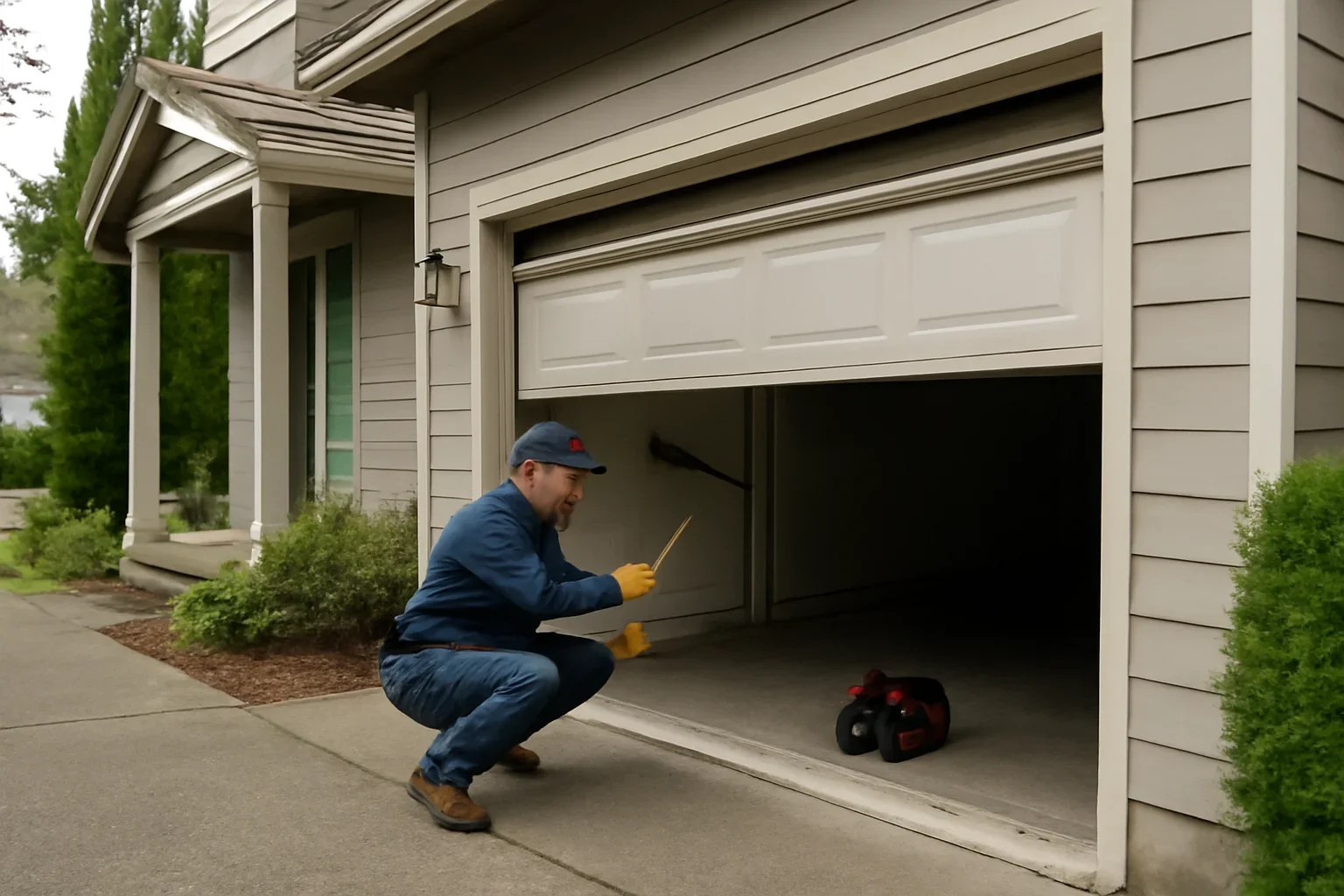
Garage door repair at a home in Vancouver
Door will not move normally Start with the full door system
Opener runs but door struggles Do not assume the motor is the cause
Door looks unstable Stop repeated operation

Start with the symptom

What Is the Garage Door Doing?

The same symptom can have more than one cause. Describe what changed before deciding whether the problem is a spring, opener, cable, roller or track.

01 Door will not open or only moves a short distance

A spring, counterbalance, opener or mechanical obstruction may be involved. Avoid repeatedly forcing the opener if the door appears unusually heavy.

Spring guidance →
02 Door closes, reverses or refuses to close

Check for an obvious obstruction in the door path and note the safety-sensor lights. Sensor alignment, opener settings or a mechanical door issue can produce similar behaviour.

Opener repair →
03 Door is crooked or one side is lower

Cable, roller, track or counterbalance problems may be involved. A visibly uneven or unstable door should not be forced through repeated cycles.

Cable, roller & track repair →
04 Scraping, shaking or rough movement

Worn rollers, damaged track, loose hardware or another alignment problem can create rough travel. The full movement path should be considered rather than treating the noise alone.

Movement hardware guidance →
05 Remote or wall control is not operating the door

The issue may be limited to the opener, remote, controls or sensors, but the door itself should still move correctly and remain balanced.

Vancouver opener repair →
06 Door closes but leaves a visible perimeter gap

Check whether the problem is worn weatherstripping, door alignment or the way the floor and threshold meet the closed door.

Weather-seal guidance →
Stop operating the door if a spring is visibly broken, a cable is loose or displaced, the door is off track, or the door appears unstable.

Springs, cables and related brackets can be under significant tension. Do not loosen, wind, reposition or remove that hardware while trying to diagnose the problem.

Urgent Vancouver repair
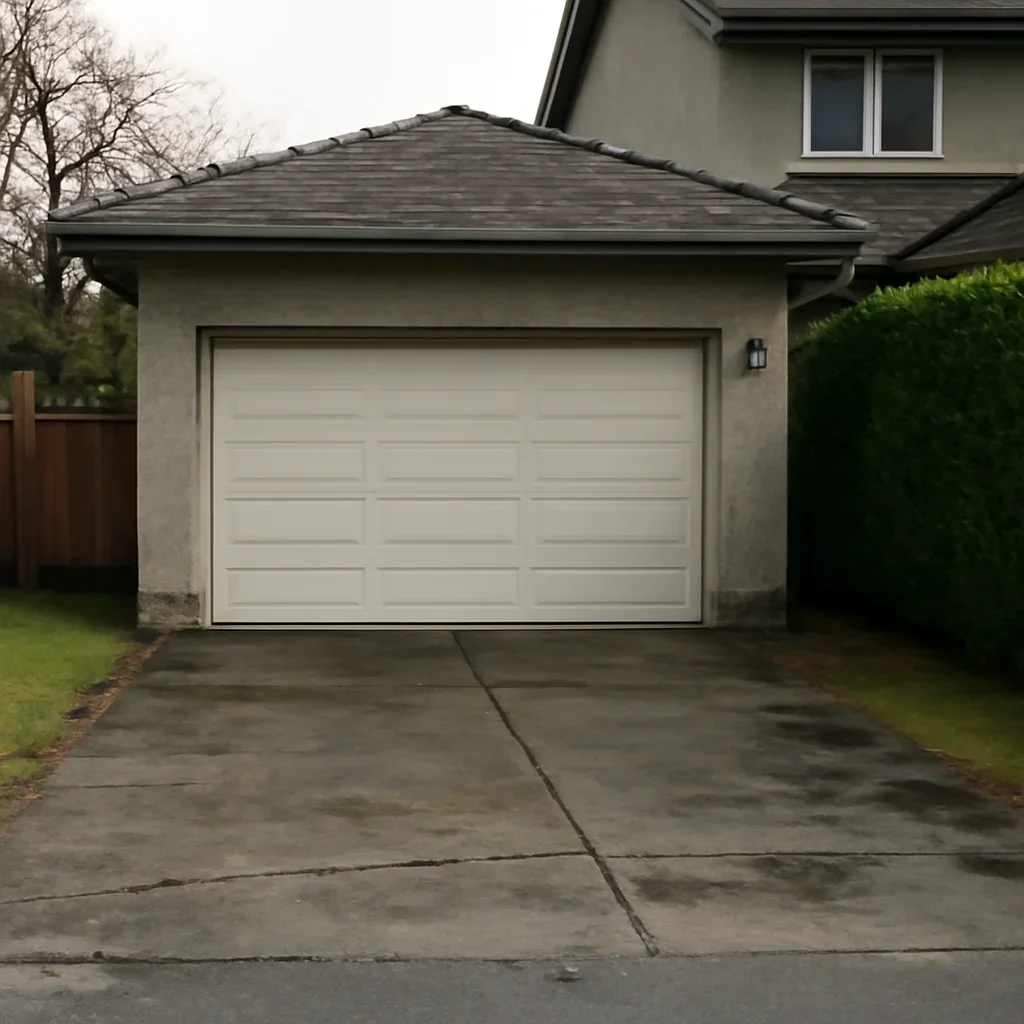
Garage door and driveway conditions at a Vancouver home
Vancouver context should change logistics—not invent the diagnosis. Mention rear-lane access, a detached garage, limited working space or protected heritage status only when it applies to the property.

Vancouver repair context

What Can Matter Beyond the Failed Part?

Vancouver's housing mix includes laneway houses, detached rear-yard structures, established homes and redevelopment projects. These conditions can change access and repair planning even though they do not determine which component failed.

01
Laneway and rear access

If the garage is reached from a lane or sits behind the main residence, describe vehicle access, working space and any restrictions that affect reaching the opening.

02
Detached and infill configurations

Detached garages and newer infill or laneway configurations can have different opening, ceiling and opener layouts from a conventional attached garage.

03
Older openings and hardware

Existing framing, tracks, headroom and older door construction should be evaluated before assuming a current repair component or replacement configuration is interchangeable.

04
Heritage status if repair becomes replacement

Mechanical repair normally does not need to become a heritage discussion. If the project expands into a significant exterior alteration or replacement on a protected property, verify the property's status and applicable City requirements first.

A useful diagnostic split

Is the Problem in the Garage Door or the Opener?

An automatic opener moves a correctly functioning door; it does not replace the springs and mechanical system that support and guide the door.

Door / mechanical system

Look here when movement itself looks wrong

Mechanical door problems can involve the counterbalance, cables, rollers, tracks, hinges or panels.

  • Door suddenly feels unusually heavy
  • Visible broken spring
  • Loose or displaced cable
  • One side moves differently from the other
  • Roller has left the track
  • Door scrapes, binds or hangs crooked
Explore mechanical repair →
Opener / control system

Look here when the door appears mechanically normal

Opener faults can involve controls, sensors, travel settings, internal components or compatibility.

  • Remote does not respond
  • Wall control behaves differently from remote
  • Door reverses during closing
  • Safety-sensor indicator shows a problem
  • Opener runs but behaves inconsistently
  • Motor or operator makes unusual sounds
Vancouver opener repair →

Repair by system

Common Garage Door Repair Categories

The page should help narrow the system involved without pretending a web page can diagnose the exact failed part from one symptom.

Spring system

Broken or suspect garage door spring

A loud failure event, visible spring break or a door that suddenly becomes unusually heavy may indicate a counterbalance problem. Avoid operating a door with a visibly broken spring.

Vancouver spring repair →
Cables / rollers / tracks

Crooked, scraping or unstable movement

Frayed or displaced cables, damaged rollers and bent or misaligned tracks can affect how the door travels and whether it remains safely supported.

Cable, roller & track repair →
Opener

Controls, sensors or operator problems

When the mechanical door appears sound, remote controls, sensors, travel settings or internal opener components may be the more relevant repair path.

Vancouver opener repair →
Door / perimeter

Panel damage, gaps or weather sealing

Localized panel damage or worn seals may have their own repair path. If the wider door is extensively damaged, compare replacement rather than treating each visible issue separately.

Panel replacement guidance →

Repair process

Diagnose the System Before Replacing Parts

Good repair planning starts by separating the observable symptom from the root cause and considering how the door, counterbalance and opener interact.

01
Start with the reported symptom

Note when the problem began, what direction the door was moving and whether there was unusual noise, visible damage or a sudden change.

02
Inspect the complete movement system

Springs, cables, rollers, tracks, panels, hinges and supporting hardware can affect one another.

03
Separate opener behaviour from door behaviour

A struggling opener may be reacting to a mechanical door problem rather than being the original failure.

04
Identify the appropriate repair scope

Once the cause is clearer, repair can focus on the affected system rather than replacing unrelated components.

05
Check operation after the repair

The door should travel consistently and the automatic opener and safety functions should operate correctly with the repaired door.

Repair vs. replacement

A Broken Part Does Not Automatically Mean You Need a New Door

01 / LEAN REPAIR

The problem is isolated

Repair remains the natural starting point when a serviceable spring, opener, roller, cable, track or other component is responsible and the wider door remains in suitable condition.

Review repair services →
02 / COMPARE BOTH

Problems are becoming broader or repetitive

Compare the repair scope with replacement when several major components need attention or repair history is becoming part of the ownership decision.

Repair vs. replacement →
03 / LEAN REPLACEMENT

The door itself is extensively damaged or no longer fits

Replacement becomes more relevant when the door panels or overall system are broadly compromised, or the existing door no longer meets the property's practical or design requirements.

Vancouver door replacement →

Before requesting repair

Send the Symptom and the Useful Vancouver Context

You do not need to identify the failed part yourself. A concise description and safe photos can make the first conversation more useful.

Symptom
Stuck, heavy, crooked, noisy, reversing, not responding, damaged or leaving a visible gap.
Timing
Say whether the change happened suddenly or became progressively worse.
Access
Mention rear-lane access, a detached garage or restricted working space if it affects reaching the door.
Urgency
Explain whether the garage cannot be secured, the car is trapped, essential access is blocked or the door looks unstable.
Photos
If safe, photograph the full door, visible damage, the tracks, spring area and opener model label without touching tensioned hardware.

Vancouver Garage Door Repair Questions

Answers Before You Request Repair

The goal is to recognize the right service path without encouraging unsafe DIY work or pretending one symptom proves one diagnosis.

Why won't my Vancouver garage door open?

Several faults can cause that symptom. A broken spring, counterbalance problem, obstruction or opener issue may be involved. If the door appears unusually heavy or a spring is visibly broken, stop operating it and use the Vancouver spring repair page .

Why does my garage door close and then reverse?

An obstruction, safety-sensor problem, opener travel setting or another door condition can cause closing problems. Clear anything obviously blocking the opening and note the sensor indicators, but do not adjust spring or cable hardware while troubleshooting.

See Vancouver garage door opener repair .

Is a crooked garage door safe to keep operating?

A visibly crooked or unstable door can indicate cable, roller, track or counterbalance problems. Repeated operation can make an unstable condition worse, so arrange inspection rather than forcing the door through additional cycles.

Can I repair a broken garage door spring myself?

High-tension spring and cable systems should not be loosened, wound, removed or adjusted as a homeowner repair. If a spring is visibly broken, stop operating the door and use the dedicated spring-repair path.

Does laneway access matter for garage door repair in Vancouver?

It can affect service logistics when a garage is reached from the rear lane, has limited working room or sits in a detached laneway/infill configuration. It does not by itself determine which component needs repair.

Does a heritage home change ordinary garage door repair?

Routine mechanical repair is different from changing a protected exterior feature. Heritage status becomes more relevant if the work expands into significant exterior alteration or full door replacement. In that situation, confirm the property's status and applicable City requirements before finalizing the change.

Should I repair or replace my garage door?

An isolated serviceable fault usually supports starting with repair. Replacement becomes more useful to compare when damage is widespread, several major systems need work or the existing door no longer fits the property.

See garage door repair vs. replacement .

What counts as an urgent garage door problem in Vancouver?

Treat the issue as urgent when the property cannot be secured, essential access is blocked, a vehicle is trapped or the door appears mechanically unstable. Use the Vancouver emergency garage door repair page and confirm current service availability.

Request Vancouver Garage Door Repair

Tell Us What the Door Is Doing. You Do Not Need to Diagnose It First.

Share the symptom, when it started, whether the garage can still be secured, whether a vehicle is trapped, and any rear-lane or access condition that affects the property. If safe, include photos of the door and visible damage.

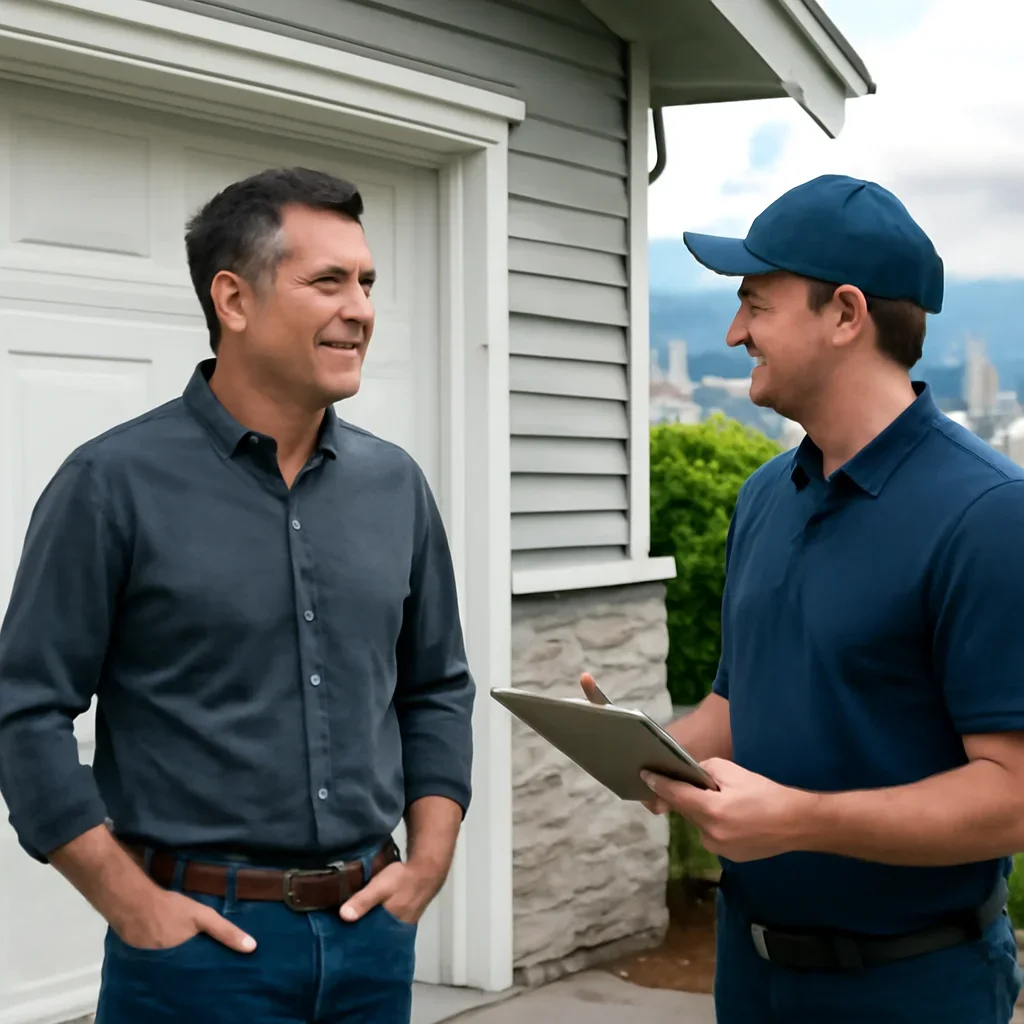
Homeowner in Vancouver discussing garage door repair needs

Get a Quote